Ischemic strokes can destroy brain tissue, leaving empty cavities that the body cannot naturally repair. Now, biomedical engineers at Duke University have created an injectable biomaterial scaffold that helps the brain heal itself, according to a study published in Cell Biomaterials.
How the Biomaterial Works
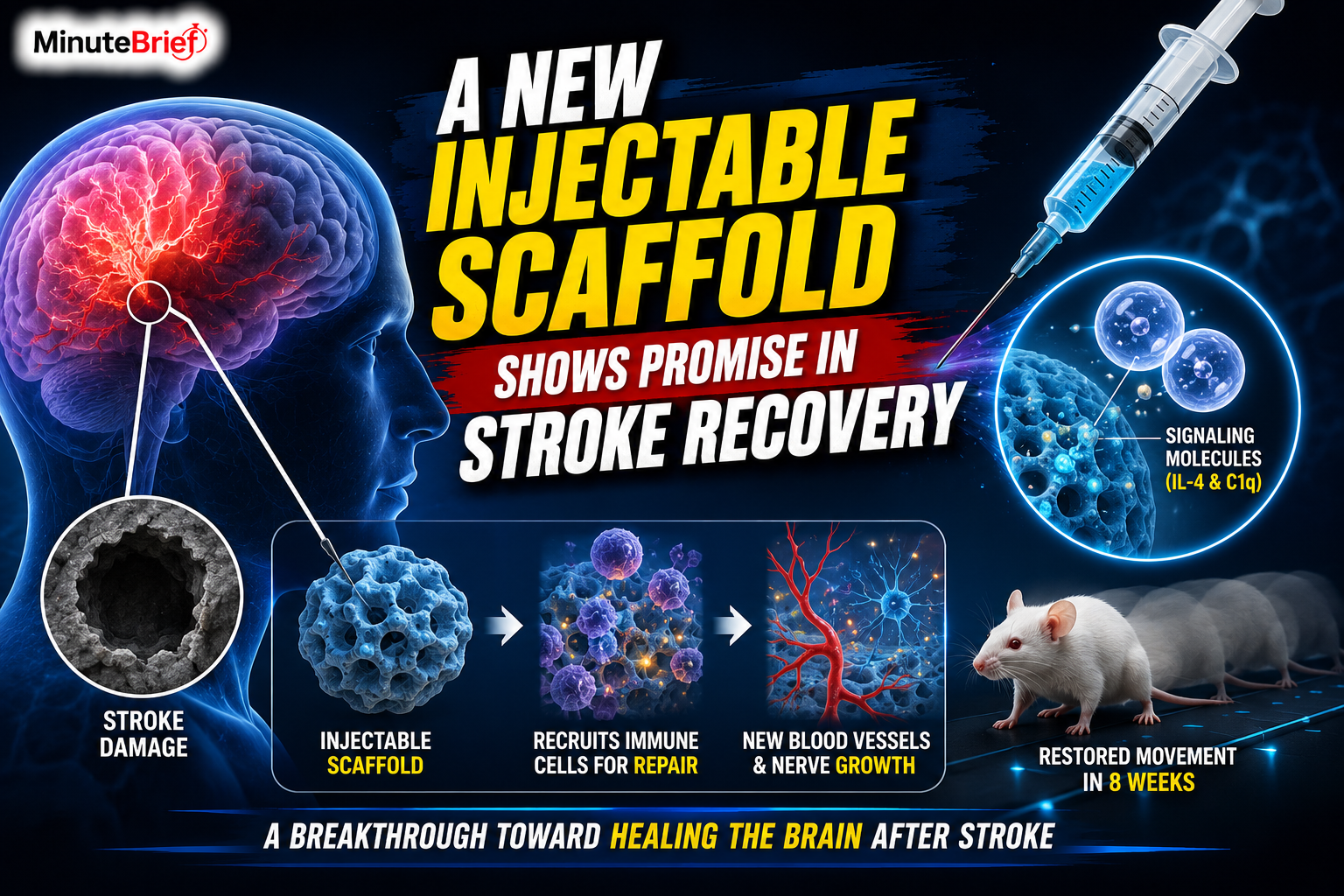
- Structural Framework: The treatment uses microporous annealed particle scaffolds (MAPS)—tiny hydrogel particles that assemble into a porous matrix, providing incoming cells a physical structure to latch onto.
- Targeted Signals: Researchers attached astrocyte-derived extracellular vesicles (EVs) loaded with signaling molecules (IL-4 and C1q) to the hydrogel. Anchoring these signals kept them concentrated inside the damaged cavity rather than washing away.
Key Breakthroughs
- Reprogramming Immune Cells: The scaffold recruits immune cells like neutrophils. While typically linked to early stroke inflammation, neutrophils act as repair agents when guided by this scaffold, directly aiding tissue regeneration.
- Restored Brain Function: In mouse models, the treatment stimulated new blood vessel formation and nerve fiber regrowth. Within eight weeks, treated mice regained motor control, performing as well as healthy controls on movement tests.
Injecting the signaling molecules without the hydrogel framework failed to trigger significant repair, proving the physical scaffold is essential. Researchers plan to test the treatment in larger models and explore using human stem cells for clinical application.