For decades, daily calcium and vitamin D supplements have been widely recommended to strengthen bones and prevent injury in older age. However, a major systematic review published in The BMJ shows that for most older adults, these routine supplements offer little to no meaningful protection against falls or broken bones.
What the Data Shows
Researchers in Canada analyzed data from 69 randomized controlled trials involving 153,902 older adults to evaluate the impact of taking calcium alone, vitamin D alone, or both combined compared to a placebo or no treatment.
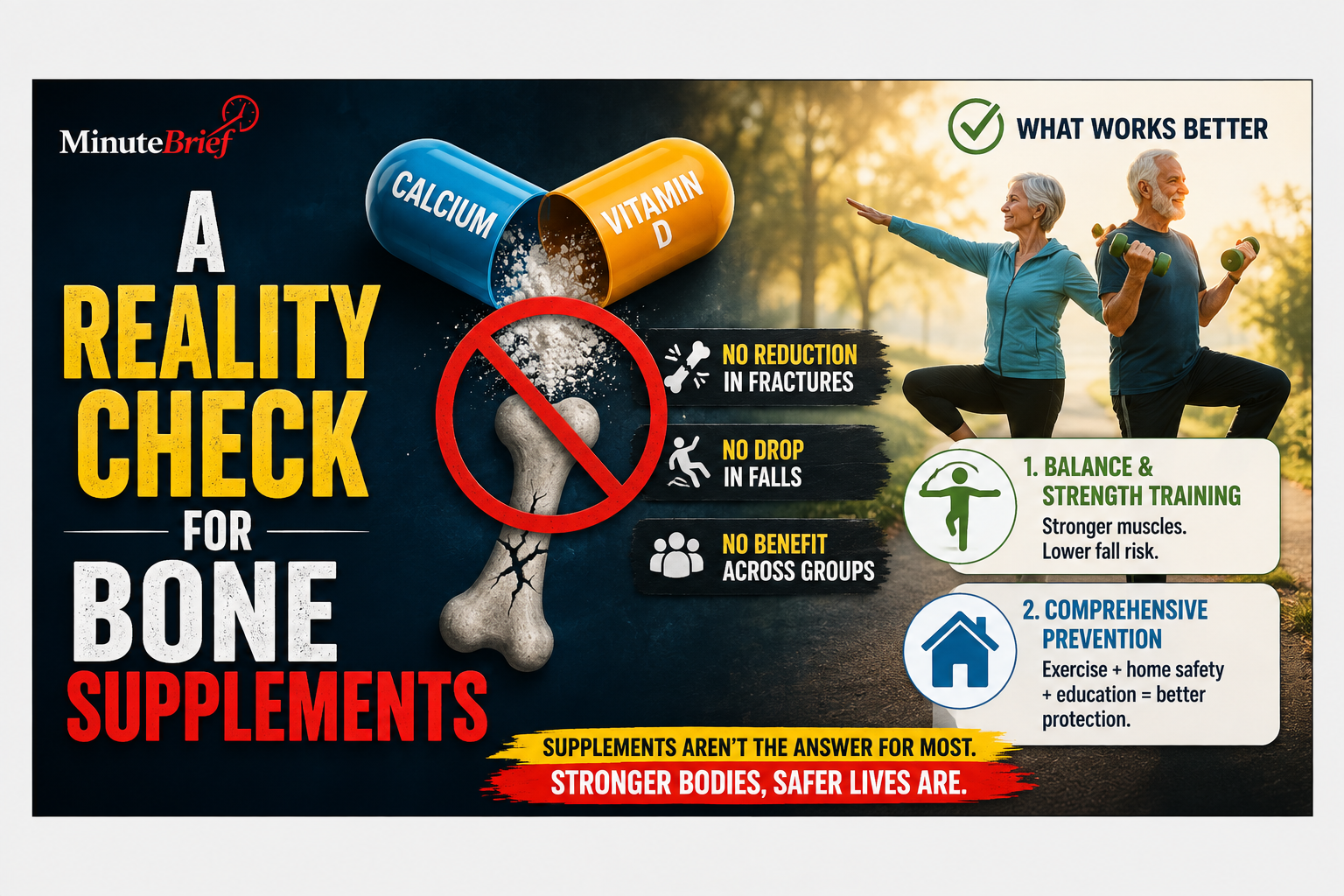
- No Reduction in Fractures: Neither calcium nor vitamin D—whether taken individually or together—showed a clinically meaningful reduction in overall bone fractures, including hip fractures.
- No Drop in Falls: Supplementation did not lower the frequency of falls among participants.
- Consistent Across Groups: The findings remained consistent regardless of an individual's age, sex, prior history of falls or fractures, or dietary calcium intake.
Important Exceptions
The study's authors emphasize that these broad findings do not apply to everyone:
- Diagnosed Conditions: Individuals with osteoporosis, specific bone disorders, or those currently taking prescribed osteoporosis medications should continue following their personal treatment plans.
- High-Risk Subgroups: People with severe deficiency or specific medical vulnerabilities may still require targeted supplementation under direct medical supervision.
What Works Better?
Rather than relying solely on daily pills, public health experts and researchers suggest focusing on interventions with proven physical benefits:
- Balance and Strength Training: Exercises that focus on muscle strength, stability, and physical function are far more effective at reducing fall risks.
- Comprehensive Prevention Programs: Combining targeted physical exercise with home safety assessments and fall-prevention education provides stronger protection against injuries.
The researchers recommend that clinical guidelines and regulatory bodies re-evaluate routine calcium and vitamin D recommendations for general fracture prevention in older adults.