In Brief
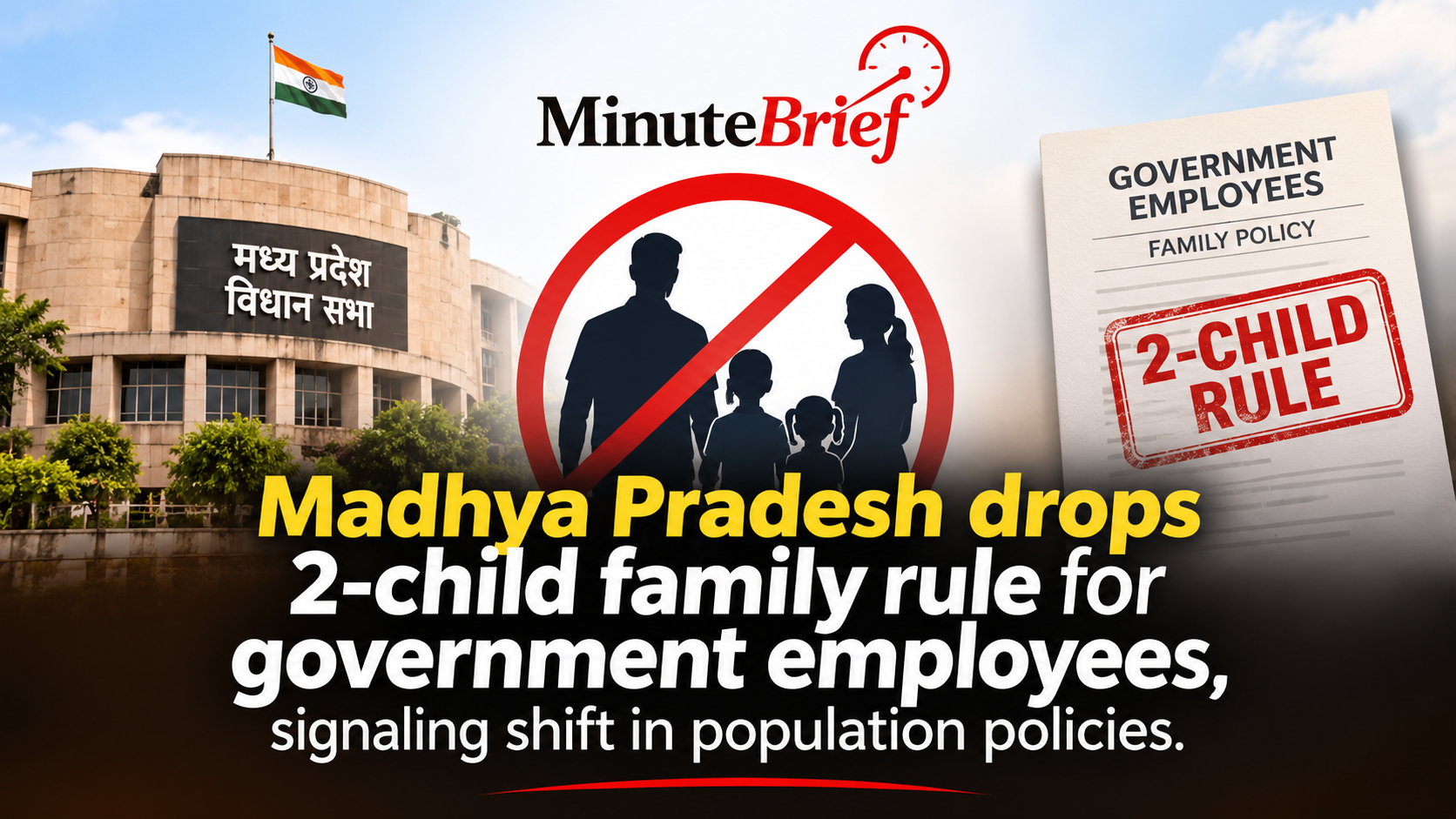
- Madhya Pradesh ends the two-child policy for government employees.
- The policy was introduced in 2001 to control population growth.
- This policy had been in place for 25 years before being scrapped.
- The decision marks a significant shift in state population control measures.
Policy change in Madhya Pradesh After 25 Years
The Madhya Pradesh government has officially scrapped the two-child policy for its employees after 25 years of implementation. The policy, which limited government employees to having no more than two children, was introduced in 2001 by the Congress government headed by then Chief Minister Digvijaya Singh. The intent was to check population growth within the state.
Since its implementation, the policy played a crucial role in shaping the state's approach to family planning among public servants. The removal of the restriction represents a notable policy shift by the current administration, reflecting changes in government priorities related to population management.
The two-child policy was adopted by several Indian states as a measure to control population growth and encourage smaller families among government employees, often linking service benefits to compliance. Madhya Pradesh's decision to end this policy may influence similar policies in other regions.
While aimed specifically at government employees, the policy's removal could alter perceptions and approaches to population control policies both within the state and nationally. Observers will be watching for responses from other states, as well as any changes in administrative rules or incentives related to employee welfare and family size.