In Brief
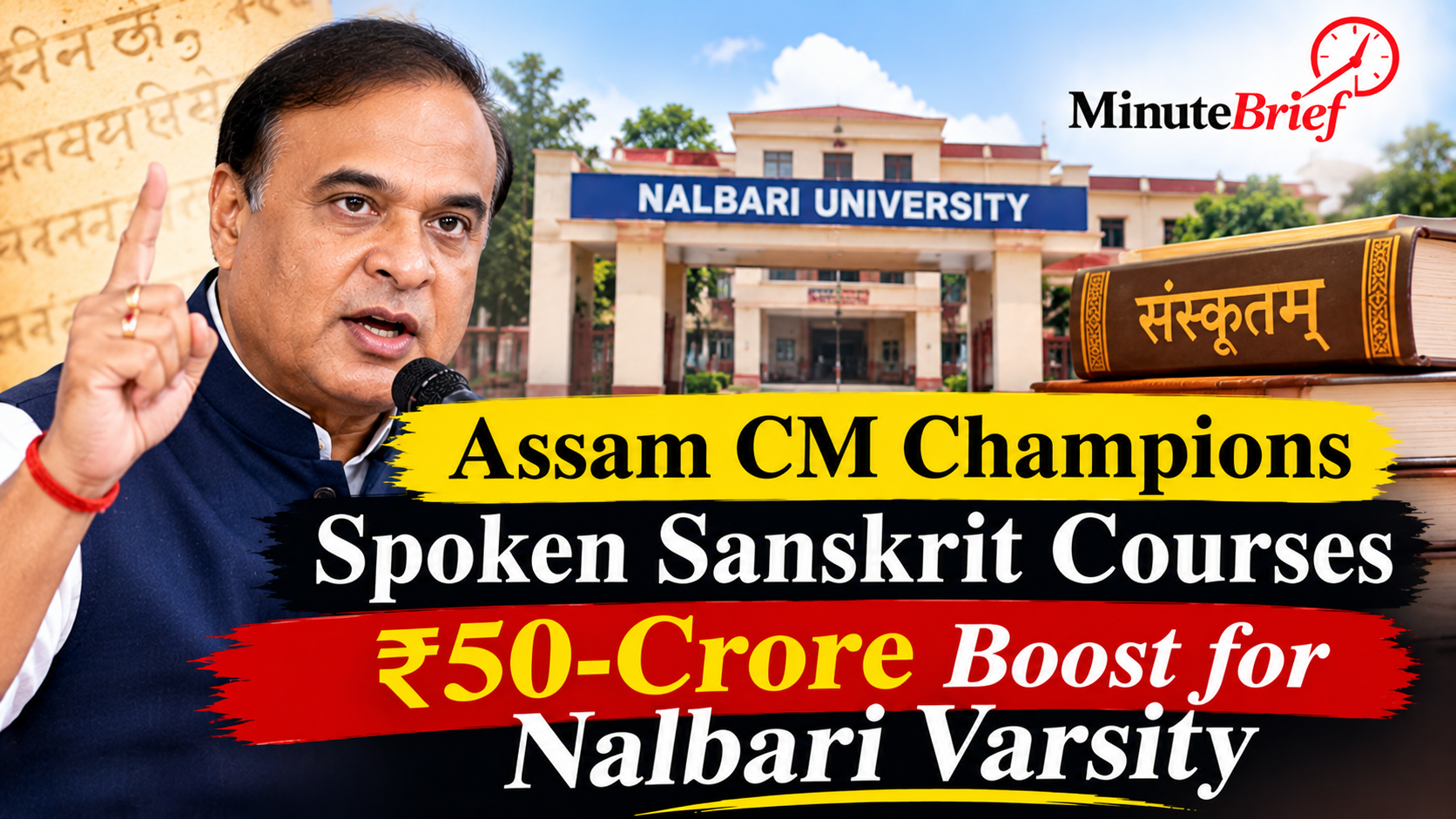
- CM Sarma proposed a three-month course to help students build conversational proficiency and make Sanskrit part of daily campus communication.
- The state earmarked ₹50 crore for campus development and pledged full support to scale enrolment from around 1,800 to 3,000 students.
- Sarma advised the university to adopt five villages and teach all residents of at least one village each year to speak Sanskrit.
- He also recommended short-term courses in Vedic Mathematics, Ayurveda, Naturopathy, and Astrology, while highlighting parallels between Panini’s Sanskrit grammar and machine learning in AI.
Bringing Sanskrit Into Everyday Campus Life
Speaking as Chief Guest at the third convocation of Kumar Bhaskar Varma Sanskrit and Ancient Studies University in Nalbari, Chief Minister Himanta Biswa Sarma emphasized moving Sanskrit beyond purely textual scholarship. Pointing to a village in Assam's Sribhumi district where residents communicate in Sanskrit, Sarma noted that spoken proficiency is achievable within a short timeframe.
"Spoken Sanskrit is not so tough. One can learn it within a month. In Sribhumi, there is a village where people communicate in Sanskrit. If something similar can be done here, it would be good," Sarma said, proposing a structured three-month spoken Sanskrit course for students.
₹50-Crore Upgrade and Academic Expansion
Outlining plans to transform the university into a premier center of learning, Sarma announced a ₹50-crore infrastructure allocation alongside the recent merger of Guwahati’s Krishna Kanta Handique Sanskrit College as a constituent college to bolster faculty strength. He assured state backing if the university—which currently enrolls nearly 1,800 students and over 200 research scholars—targets 3,000 admissions.
The Chief Minister also called on the institution to adopt five neighboring villages to promote grassroots Sanskrit literacy and suggested introducing skill-oriented programs in Vedic Mathematics, Yoga, Naturopathy, Astrology, and manuscript preservation to create new livelihood opportunities.