In Brief
- Amazon lost 40 Leo satellites after ULA's Vulcan rocket failed post-launch.
- The mishap challenges Amazon’s competition plans against Starlink's satellite internet.
- Amazon is diversifying launch strategies including Blue Origin’s New Glenn.
- Arianespace is another satellite launch option Amazon has invested in.
Amazon's satellite launch fails due to rocket anomaly
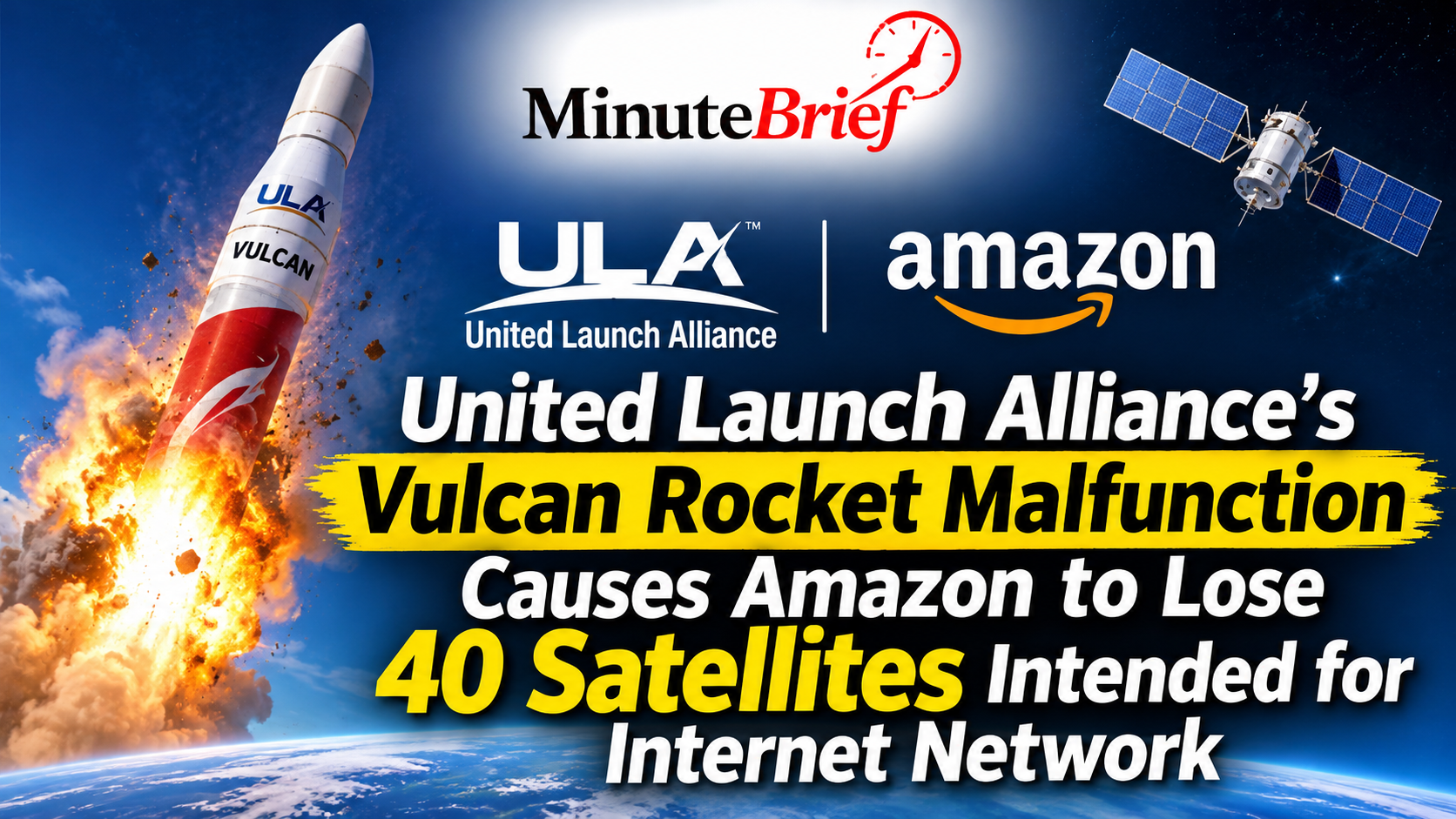
Amazon suffered a significant setback when United Launch Alliance's (ULA) Vulcan rocket encountered an anomaly about 10 minutes after liftoff, resulting in the loss of 40 satellites intended for its Low Earth Orbit (Leo) internet constellation. The event occurred during the rocket's mission to deploy these satellites designed to compete in the growing satellite internet market.
The Vulcan rocket's failure comes at a critical time as Amazon aims to establish its Leo network to provide broadband connectivity and rival existing systems like Elon Musk's Starlink. According to officials, the anomaly prevented the successful deployment of the full satellite payload, raising concerns about the program's near-term progress.
In response to such risks, Amazon has diversified its satellite launch plans. The company has invested in launch services from Blue Origin, specifically the New Glenn rocket, as well as from Arianespace. These investments indicate a broader strategy to mitigate launch failures by securing multiple access points to space.
This latest incident underscores the challenges in deploying large satellite constellations and the importance for Amazon to maintain varied launch arrangements to meet its connectivity objectives.