In Brief
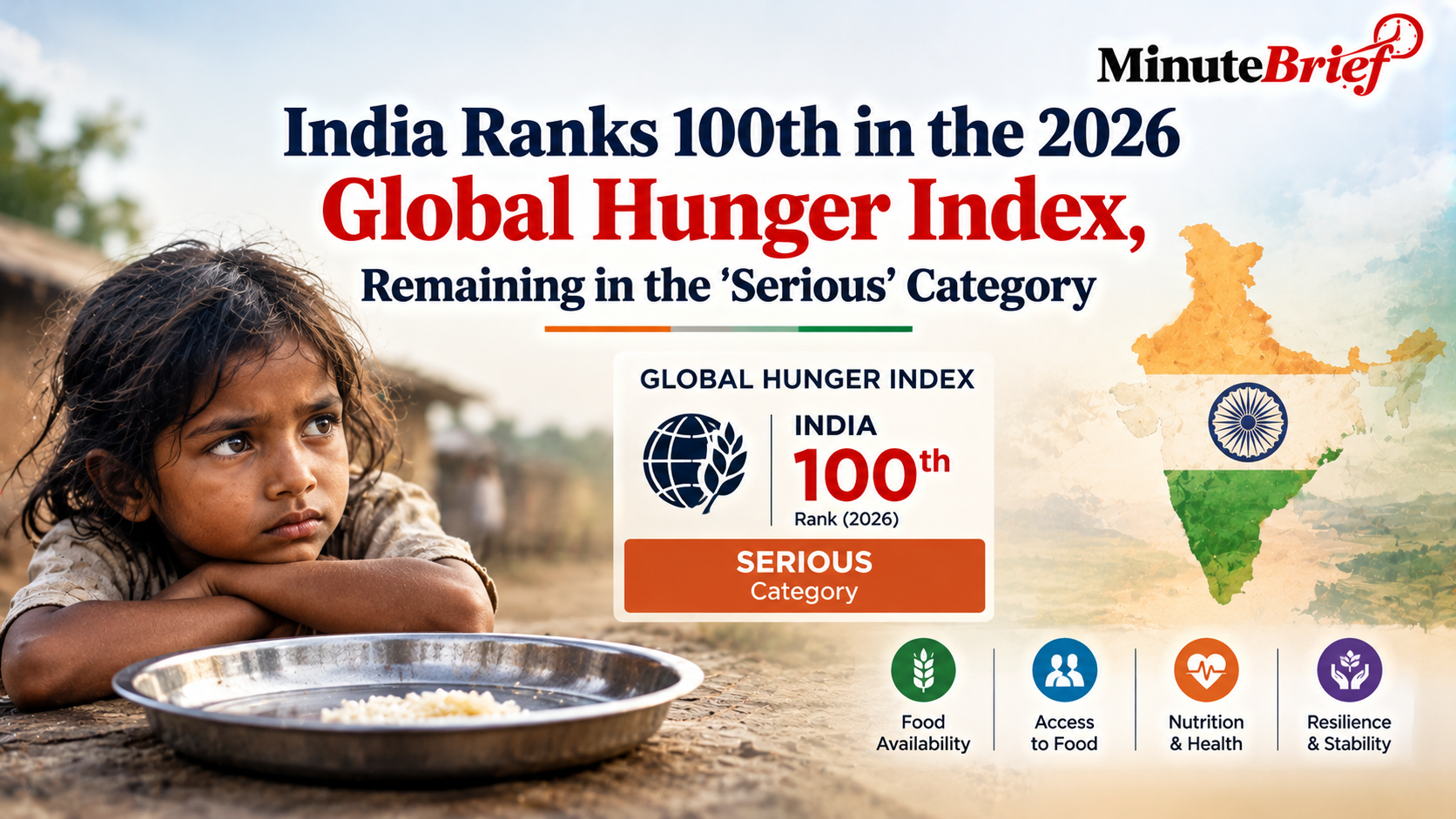
- India stands at 100th place globally out of 122 evaluated nations, recording a GHI score of 24.1.
- The report highlights persistent challenges, notably a high child wasting rate of 19%—the highest globally—alongside 9.8% undernourishment.
- While outperforming neighbors like Pakistan (106th) and Afghanistan (108th), India trails behind Sri Lanka (53rd), Nepal (72nd), and Bangladesh (84th).
Key Findings of the 2026 Report
Released under the theme “No Security Without Food Security”, the 2026 Global Hunger Index evaluates nations based on four core indicators: undernourishment, child stunting, child wasting, and child mortality. India's score of 24.1 keeps it categorized within the "serious" severity bracket (scores ranging from 20.0 to 34.9).
While India's score reflects substantial progress compared to historical figures—such as a drop in child stunting from 50% in 2000 down to 29.3% in 2026, and a decline in under-five mortality down to 2.7%—acute nutritional vulnerabilities remain.
Breakdown of India's Core Metrics
| GHI Indicator | Metric Value | Public Health Implication |
| Undernourishment | 9.8% | Percentage of the population with insufficient caloric intake. |
| Child Stunting | 29.3% | Children under five experiencing chronic undernutrition (low height-for-age). |
| Child Wasting | 19.0% | Children under five experiencing acute malnutrition (low weight-for-height). |
| Under-Five Mortality | 2.7% | Proportion of children dying before reaching their fifth birthday. |
Regional Context and Broader Implications
The report highlights a mixed picture across South Asia, where the regional GHI score averages 23.5. India performs better than some of its immediate neighbors, such as Pakistan (ranked 106th with a score of 25.5) and Afghanistan (ranked 108th with a score of 28.6). However, it lags behind Sri Lanka (53rd), Nepal (72nd), and Bangladesh (84th).
Experts note that addressing India's high rate of child wasting—which remains a severe public health hurdle—will require coordinated interventions focusing on dietary quality, maternal health, sanitation, and localized nutrition monitoring to align with global Sustainable Development Goal targets.