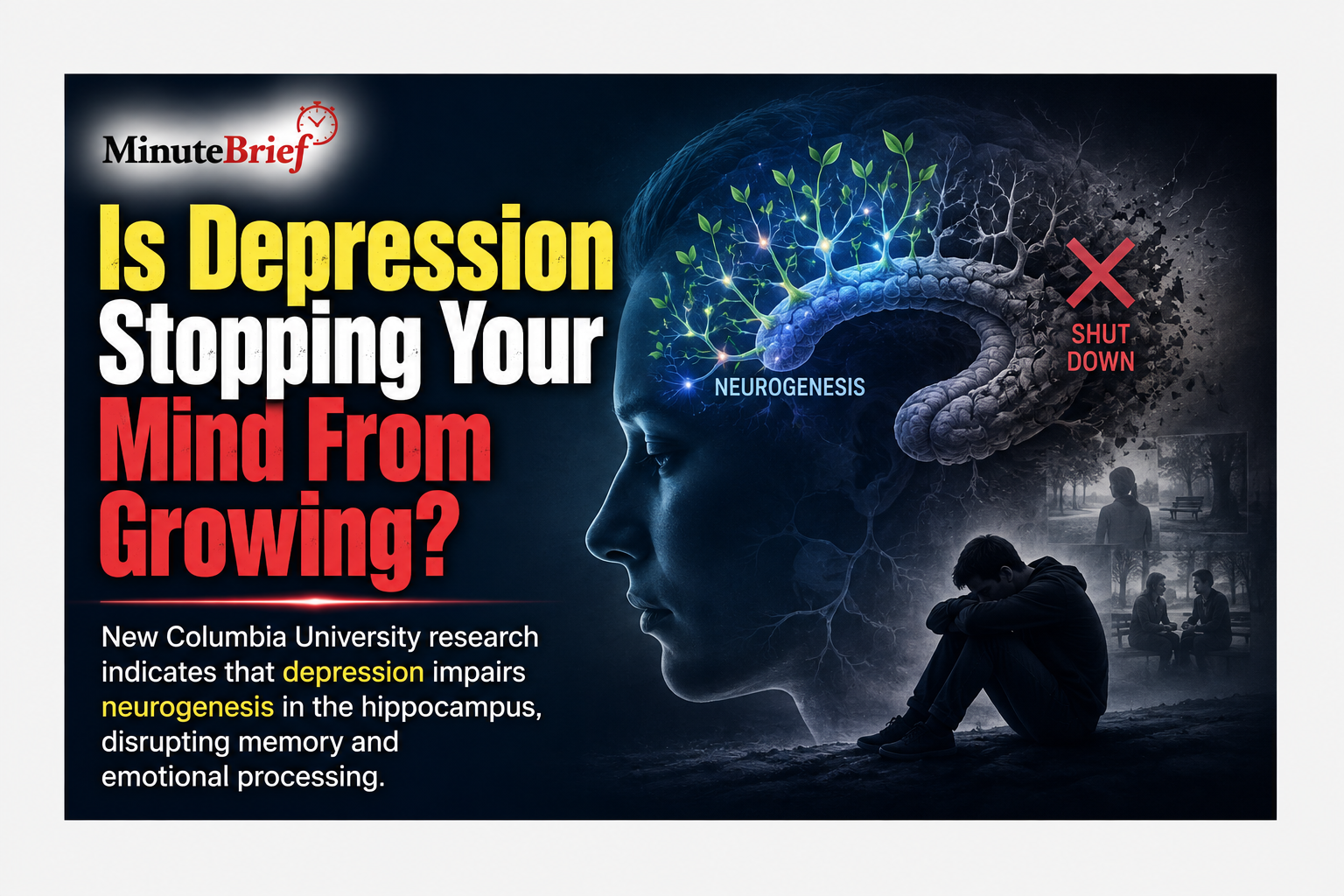
For decades, depression was widely viewed as a simple chemical imbalance—primarily a lack of serotonin. However, new research from Columbia University published in Nature Medicine points to a different biological driver: depression may actively shut down neurogenesis, the adult brain's ability to produce new neurons.
- Stalled Neuron Production: Researchers analyzed nearly half a million brain cells from post-mortem donors and discovered that adults with major depressive disorder experience a severe disruption in creating new brain cells within the hippocampus—the center for memory and emotion.
- Loss of "Pattern Separation": Newborn neurons are uniquely flexible and help the brain separate current events from old memories. Without them, pattern separation breaks down. Neutral or minor negative experiences (like a friend being quiet during lunch) get blurred with past memories of rejection or trauma, leading individuals to view everyday events through a negative lens.
- Widespread Cellular Stress: The study revealed that depression affects far more than just new cell growth. Molecular disruptions, cellular stress, and inflammation occurred throughout the hippocampal circuit, altering genes that regulate energy supply, internal transport, and neural connectivity.
- Epigenetic "Dimmer Switches": Environmental stressors adjust gene activity via epigenetic mechanisms without altering underlying DNA sequences, demonstrating how life experiences directly influence depression risk at a cellular level.
- Path to Targeted Therapies: Because molecular disruptions varied widely among subjects, researchers suggest depression may not be a single uniform condition. Classifying depression into distinct biological subtypes—similar to modern oncology—could pave the way for treatments designed to restart neurogenesis and repair specific neural circuits.
Source: Science Daily