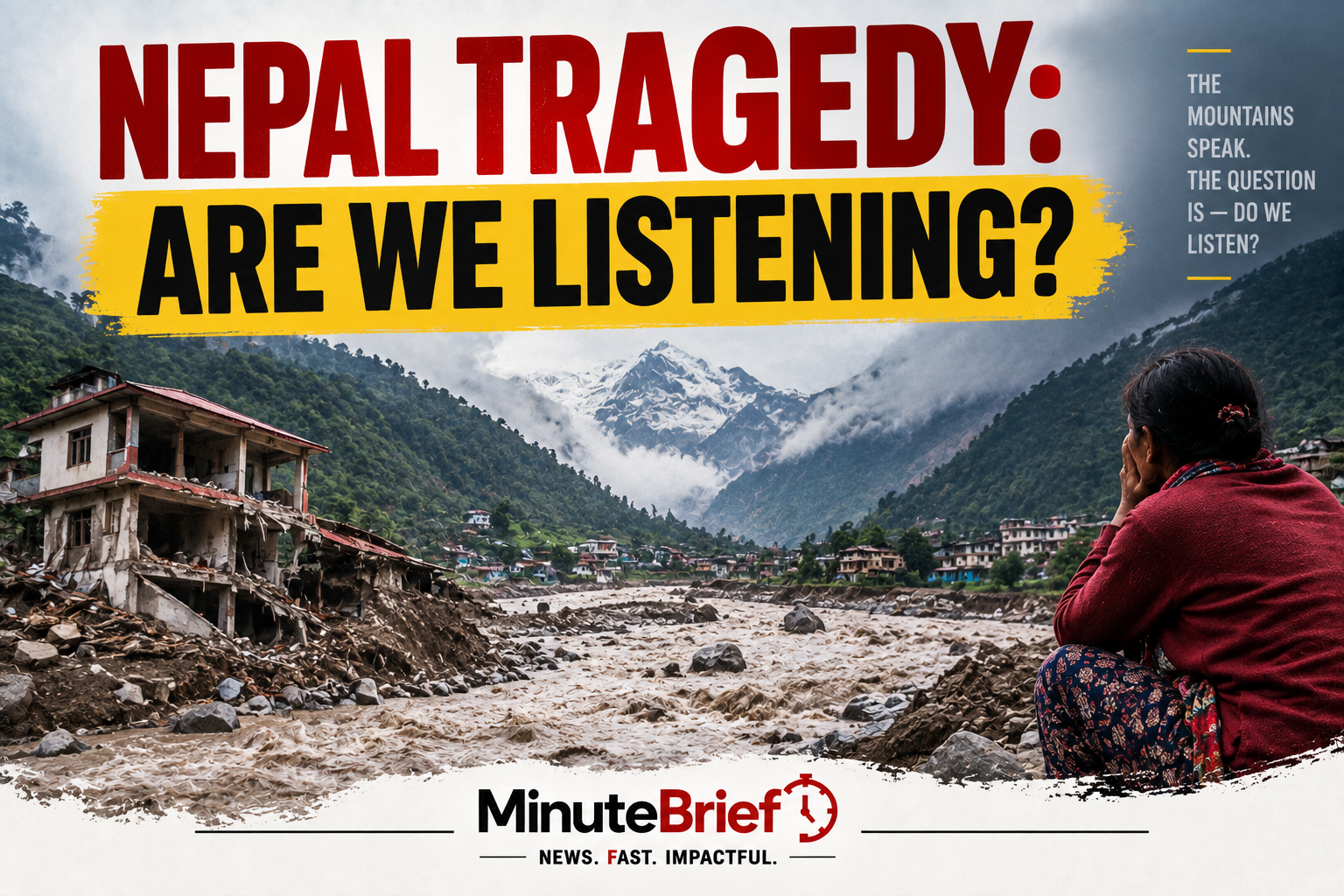
On August 26, a massive collapse of ice and rock near the Nepal-China border triggered a torrent of water, mud and debris through the river system. Homes, bridges, roads and power infrastructure were swept away within seconds. Tourist and pilgrimage routes were devastated. It was initially suspected to be an earthquake but later understood to be seismic activity generated by the collapse itself.
By August 30, the disaster had killed more than 700 people across Nepal and Tibet, with nearly 3,000 reported missing. The numbers remain fluid as rescue teams continue to search through some of the worst-affected areas. The scale is shocking. But perhaps the bigger question is: What do we do with what we already know?
It would be easy to describe the tragedy as another consequence of a warming Himalayas. Rising temperatures are changing glaciers, snow and permafrost, potentially making high-altitude slopes less stable. Glaciers and glacial lakes across the Hindu Kush Himalaya are being monitored. Governments and scientific institutions have systems and agencies tasked with tracking mountain hazards. Early-warning mechanisms have also prevented loss of life in some previous glacier-related events.
So the question is not simply whether we are watching the mountains. It is whether we are listening to what that is telling us.
A warning system is useful only if a warning reaches the people who need it, in time for them to act. Scientific data is valuable only when it informs decisions on where people live, where roads are built, where hydropower projects are located and how tourism is developed. That is where the Himalayan challenge becomes more complicated.
Mountain communities cannot simply be told to move away from rivers. Valleys are where roads, settlements, tourism and economic activity naturally concentrate. Development is essential for people living in remote regions. But development cannot ignore geography. The question should not be whether we should build in the Himalayas. It should be where, how and with what safeguards we build.
Nepal is not the first warning. India has seen the Kedarnath disaster in 2013, the Chamoli flash flood in 2021 and the South Lhonak glacial lake outburst flood in Sikkim in 2023. Each event has demonstrated a different aspect of Himalayan vulnerability.
The lesson should not be that every mountain disaster can be predicted. It cannot. The lesson should be that uncertainty itself has to become part of disaster planning.
If a hazard cannot be predicted precisely, settlements and critical infrastructure should not be planned as though the hazard does not exist. If a warning may provide only minutes, evacuation plans must already exist. If a bridge is likely to be the first point of failure, alternative routes must be identified. If tourists are entering high-risk terrain, they must know what to do when communication systems fail.
Sikkim has already experienced a catastrophic glacial lake outburst flood. Arunachal Pradesh shares the wider Himalayan environment while simultaneously seeing expanding connectivity, tourism and infrastructure.
The Nepal tragedy therefore raises a question India cannot afford to postpone:
Are we building a safer Northeast, or merely a more connected one?
Connectivity is important. Development is necessary. But roads, bridges, hydropower projects and tourist infrastructure must be planned with the possibility that the terrain itself can change suddenly.
Preparedness cannot mean having more departments, more reports or more monitoring alone. It must mean turning scientific knowledge into decisions that can save lives. The Himalayas will remain unpredictable. We may never know exactly when a glacier will collapse, a slope will fail or a river will suddenly change its course. But we can decide where we build. We can decide how we warn. We can decide how quickly communities can evacuate.
The Nepal tragedy is therefore more than a disaster to be mourned. It is a test of whether years of scientific observation, government planning and lessons from previous disasters are reaching the ground.
The question is not whether we are watching the Himalayas.
It is whether we are listening!