In Brief
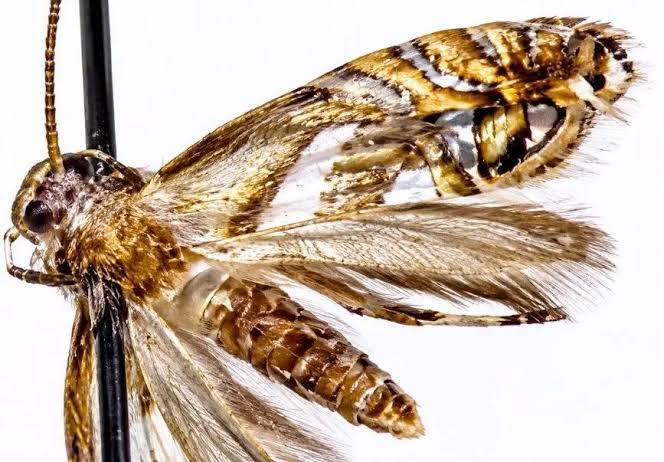
- Identified as Glyphipterix brevimucronata near Hollongapar Gibbon Sanctuary in Jorhat, Assam.
- Marks India’s first taxonomic addition to the sedge moth family (Glyphipterigidae) in almost 100 years.
- Has a 6.5 mm wingspan with brown forewings, a yellowish metallic sheen, and white markings.
- Described by ICAR–IARI scientist Kishore Chandra Sahoo following a field survey near the sanctuary.
A Rare Taxonomic Milestone in Jorhat
While more than 530 species of the sedge moth family (Glyphipterigidae)—including over 400 under the genus Glyphipterix—have been documented globally, only 25 species had previously been recorded in India. The discovery of Glyphipterix brevimucronata near the tropical evergreen and semi-evergreen forests of Hollongapar Gibbon Sanctuary represents the first new addition to the family in India in nearly 100 years.
Measuring roughly 6.5 millimetres in wingspan, the tiny insect is distinguished by brown forewings accented with a yellowish metallic sheen and white markings, alongside unique male reproductive anatomy that confirmed its status as a distinct species.
Highlighting Northeast India’s Undocumented Insect Diversity
Welcoming the finding on social media on Friday, Chief Minister Himanta Biswa Sarma described it as "wonderful news for nature lovers," noting that Assam’s ecosystems continue to hold many undiscovered secrets.
Entomologists emphasized that micro-moths in Northeast India remain largely under-surveyed, and systematic taxonomic research around biodiversity hotspots like Hollongapar—already renowned as home to India’s only ape, the western hoolock gibbon—remains vital for documenting lesser-known fauna.