Could Micro-Awakenings Be an Early Subtle changes in your sleep quality might reveal clues about your long-term brain health—years before memory problems begin.
A study from the University of Liège examined sleep patterns in over 500 healthy individuals to see if night-time brain activity signals early vulnerability to Alzheimer’s.
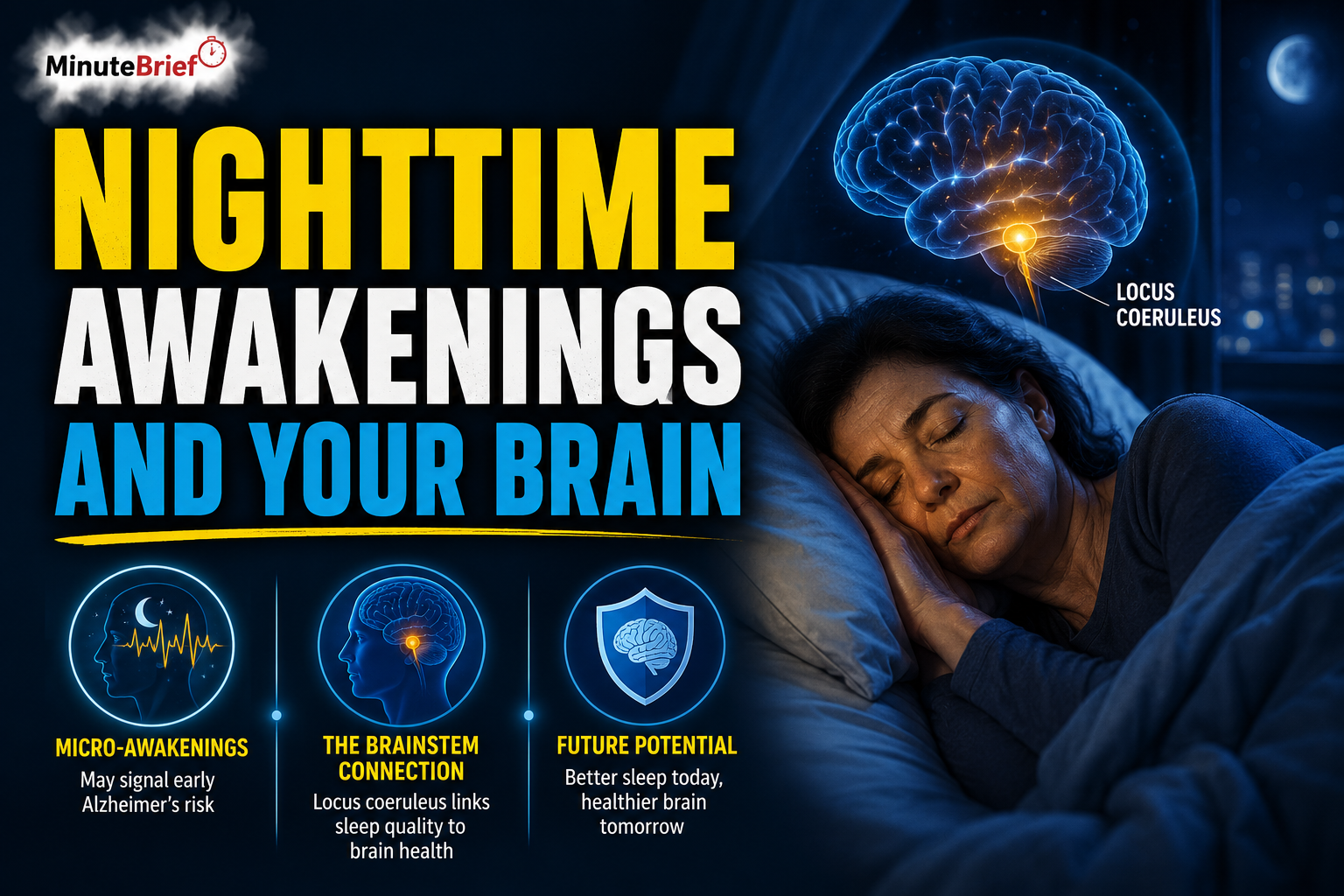
- Middle-Age Micro-Awakenings: Micro-awakenings are brief bursts of brain activity that interrupt sleep without fully waking you up. In middle-aged adults (ages 50–69), more frequent micro-awakenings correlated with a higher genetic risk for Alzheimer’s. This link was absent in younger adults (ages 18–31).
- The Brainstem Connection: Scientists focused on the locus coeruleus, a tiny brain region that regulates sleep and wakefulness. It is one of the earliest areas where abnormal Alzheimer's-related proteins accumulate—sometimes starting as early as adolescence. Proper functioning here was directly tied to high-quality REM sleep.
- Future Potential: While micro-awakenings do not guarantee someone will develop Alzheimer’s, measuring them could lead to non-invasive early screening. Moreover, targeting sleep quality might become an active tool for protecting long-term brain health.
Source: Science Daily