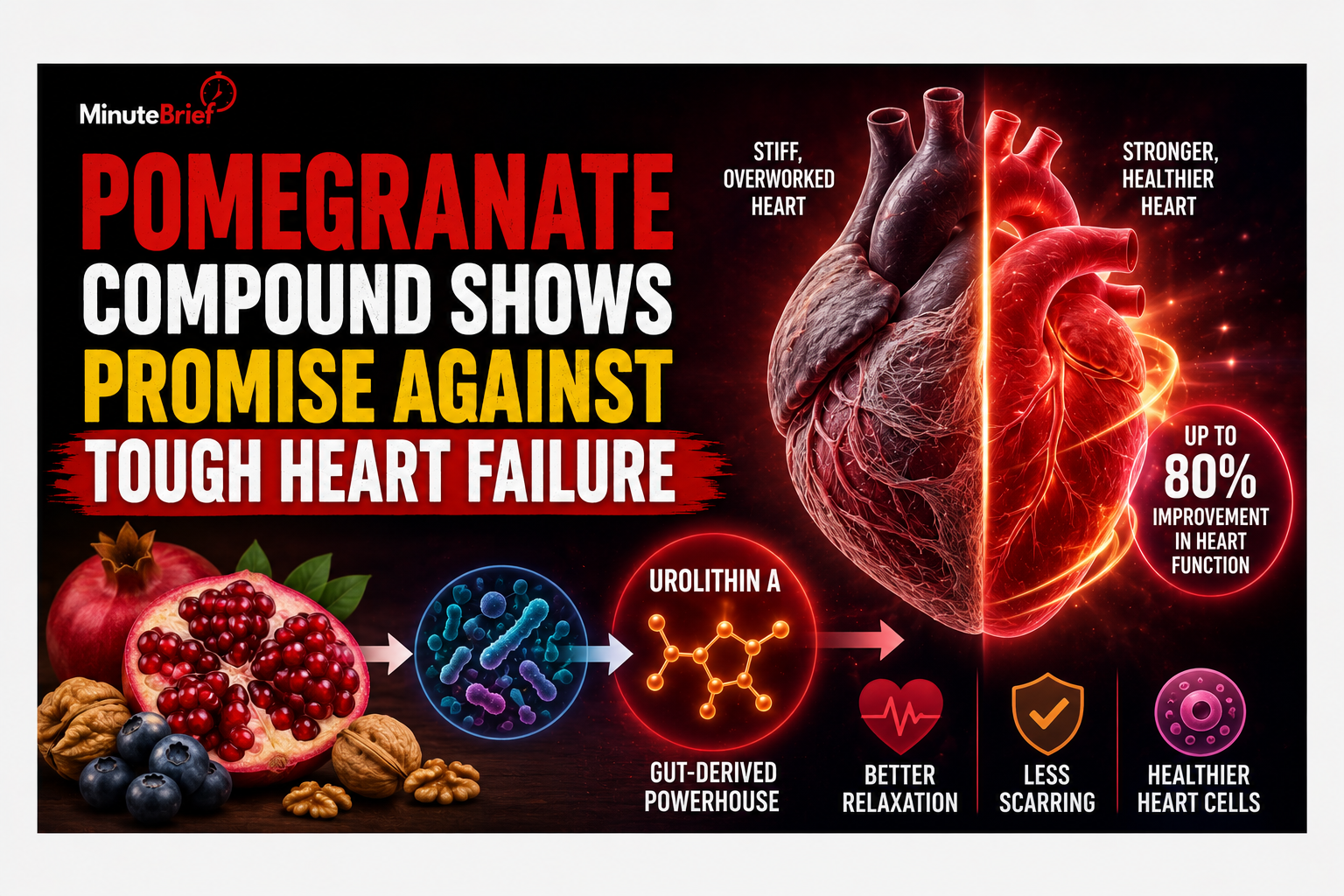
A natural compound produced in the gut after eating pomegranates, walnuts, and berries could offer new hope for a challenging form of heart disease. In a study published in Science Advances by researchers at King's College London, urolithin A improved heart function measures by up to 80% in experimental models.
A Hard-to-Treat Form of Heart Failure
The study focuses on heart failure with preserved ejection fraction (HFpEF), a condition affecting nearly half a million people in the UK and roughly half of all heart failure cases worldwide.
In HFpEF:
- The heart continues to pump blood out effectively.
- However, the muscle tissue becomes overly stiff, preventing the heart chambers from relaxing and filling properly between beats.
- Common symptoms include shortness of breath, chronic fatigue, and reduced exercise tolerance.
Because traditional heart failure medications target pumping ability rather than relaxation, treatment options for HFpEF have remained severely limited.
How Urolithin A Restores Heart Function
Researchers discovered that urolithin A targets and activates a specific protein called PKGIα, which plays a vital role in blood vessel regulation and heart muscle relaxation.
In laboratory models, treatment with urolithin A produced several striking improvements:
- Enhanced Relaxation: Heart tissue relaxed far more effectively between beats.
- Reduced Scarring: The compound significantly decreased fibrosis (harmful tissue scarring).
- Limited Enlargement: Urolithin A prevented the abnormal enlargement of individual heart muscle cells, helping them maintain healthier function.
Promising Results in Human Cells
To test whether these effects could translate to humans, the team applied urolithin A to engineered human heart tissue derived from stem cells. The compound successfully improved tissue relaxation in human cells as well.
Because urolithin A has already undergone safety evaluations in human dietary studies, it enters further research with a strong safety profile compared to unproven synthetic molecules.
What This Means for Your Diet
While the findings are a major breakthrough for cardiovascular science, researchers caution against viewing pomegranates as an immediate cure. The amount of urolithin A your body generates depends heavily on individual gut bacteria composition.
Instead, the discovery identifies a powerful new drug target and highlights how gut-derived metabolites could lead to effective therapies for complex heart conditions in the future.