In Brief
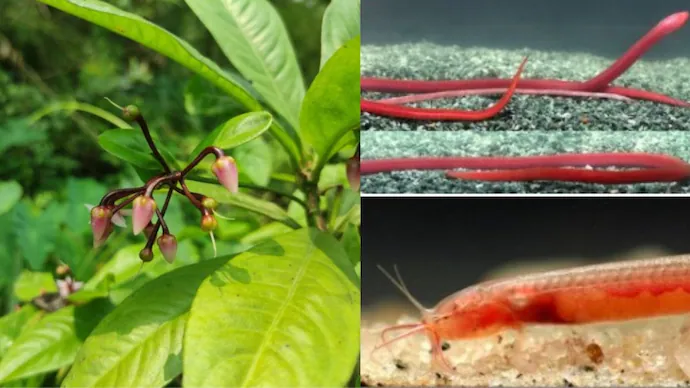
- Researchers from Gauhati University documented 12 plants of Ardisia colorata in Abhaypuri, Bongaigaon district, a shrub last recorded by British horticulturist George Loddiges in 1821.
- In addition to the botanical find, scientists discovered two new fish species—the blind red loach Gitchak nakana and the swamp eel Rakthamichthys anchi—living inside local water wells in Goalpara.
- Highlighted by state leaders, these discoveries underscore the rich, hidden biodiversity of Northeast India's forests and alluvial aquifers.
A Botanical Ghost Returns in Bongaigaon
In a remarkable win for Indian botany, researchers in Assam have officially documented the return of Ardisia colorata, a rare flowering shrub from the primrose family that had been missing from Indian scientific records for over two centuries.
Originally described in 1821 by British horticulturist George Loddiges, the plant had essentially vanished from mainstream Indian botanical literature. However, field surveys conducted by Gauhati University botanists between 2020 and 2025 across Assam led to the sighting of 12 surviving plants in the Abhaypuri area of the Bongaigaon district. State officials formally announced the verification, emphasizing the critical importance of local habitat conservation to protect fragile ecosystems.
Hidden Beneath the Surface: Two New Fish Species
Complementing the plant's rediscovery, researchers also brought to light two brand-new vertebrate species discovered swimming in the dark, concrete-ringed groundwater wells of Goalpara:
- Gitchak nakana: A tiny, translucent, blood-red loach growing to just over 20 millimetres, featuring no visible eyes and a unique brain protected only by skin rather than a bony skull roof.
- Rakthamichthys anchi: A newly described snake-like swamp eel found inhabiting the same subterranean alluvial aquifers.
Ichthyologists note that these organisms split from their closest known evolutionary relatives millions of years ago, highlighting how little is understood about the dynamic groundwater ecosystems of Northeast India.
Why It Matters
These back-to-back discoveries prove that species thought to be lost or entirely unknown can persist undetected in well-hidden forest patches and local water systems. Experts stress that protecting these regional habitats is vital to ensuring that unique flora and fauna continue to thrive for future generations.