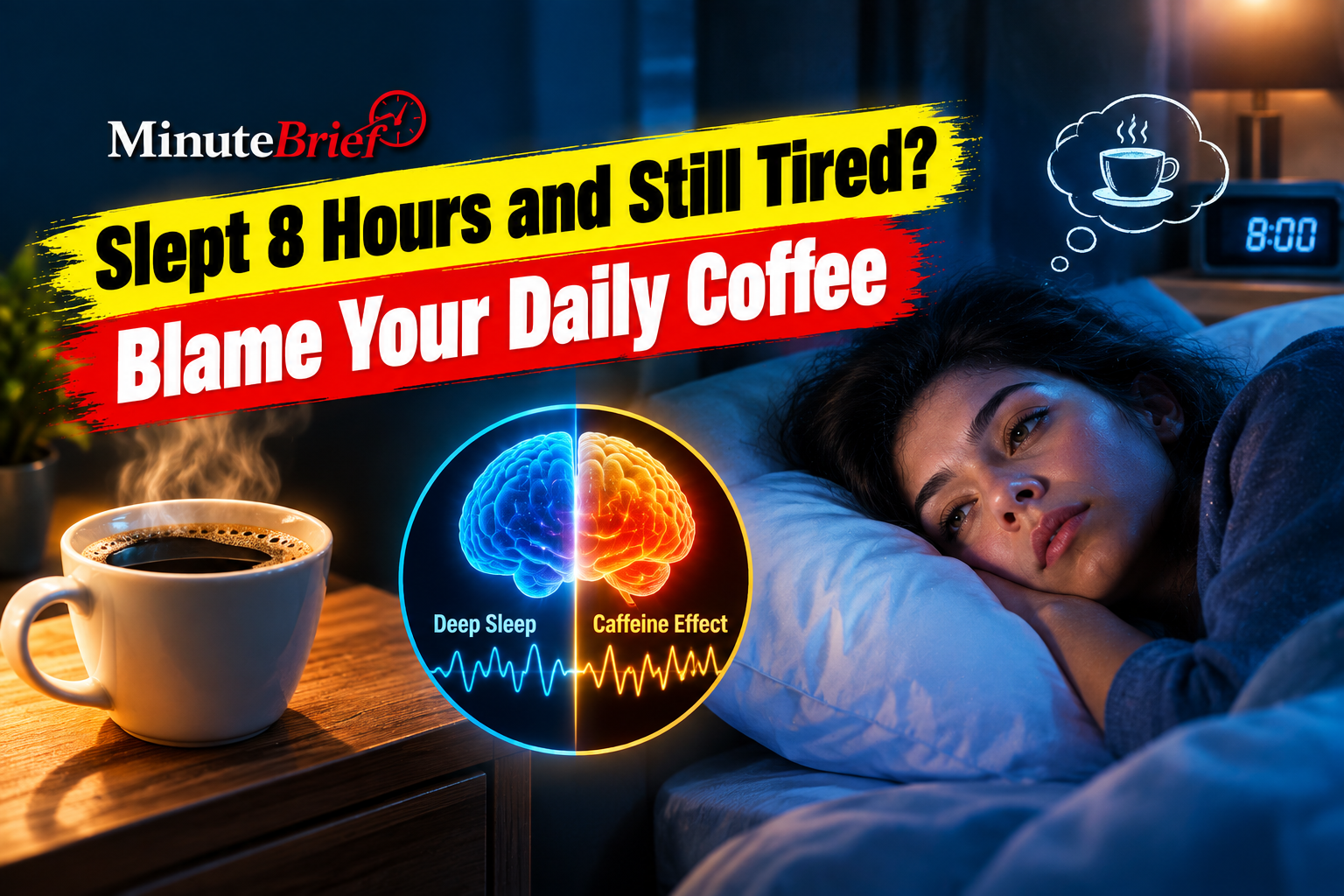
If you are someone who can drink a cup of coffee after dinner and still fall asleep the moment your head hits the pillow, you might think caffeine doesn't affect you. However, new research suggests that even if caffeine doesn't keep you awake, it could be quietly sabotaging the quality of your sleep.
Beyond Falling Asleep: What Caffeine Does to the Brain
When evaluating sleep, most people focus on two things: how quickly they fall asleep and how many hours they stay asleep. But scientists looking at electroencephalography (EEG) data—which measures the brain's electrical activity—are discovering that caffeine alters what happens after you drift off.
- Fewer Slow Waves: Deep sleep relies on "slow-wave activity," which is crucial for physical recovery, energy replenishment, and long-term brain health.
- A "Wakeful" Brain: Caffeine can reduce these slow brain waves, shifting your EEG patterns into a lighter, more active state.
- The Hidden Impact: You may stay in bed for eight hours without waking up, yet wake up without receiving the full restorative benefits of a good night's rest.
Why Individual Sensitivity Varies
Not everyone metabolizes caffeine at the same rate. Factors like genetics, age, stress levels, and overall fatigue play massive roles in how your body processes it.
- Daytime Consumption Matters: For sensitive individuals, a cup of coffee consumed early in the afternoon—or even in the morning—can still linger in the system by bedtime.
- Subjective vs. Objective Rest: Just because you feel like you slept well doesn't mean your brain got deep rest. Neurological recordings often reveal disruptions that you never consciously notice.
The Vicious Fatigue Cycle
Using caffeine to power through a busy day can easily create an unintended feedback loop:
- Caffeine Intake: You drink coffee to boost alertness and hide fatigue.
- Shallow Sleep: The caffeine reduces your brain's slow-wave activity during the night.
- Increased Fatigue: You wake up less restored, leading to higher tiredness the next day.
- More Caffeine: You reach for extra coffee to cope, repeating the cycle.
Finding the Right Balance
Caffeine isn't inherently bad, but its impact depends heavily on timing, dosage, and your personal biology. If you regularly wake up feeling unrefreshed despite getting eight hours of sleep, adjusting your daily caffeine intake might be the key to restoring true, high-quality deep sleep.