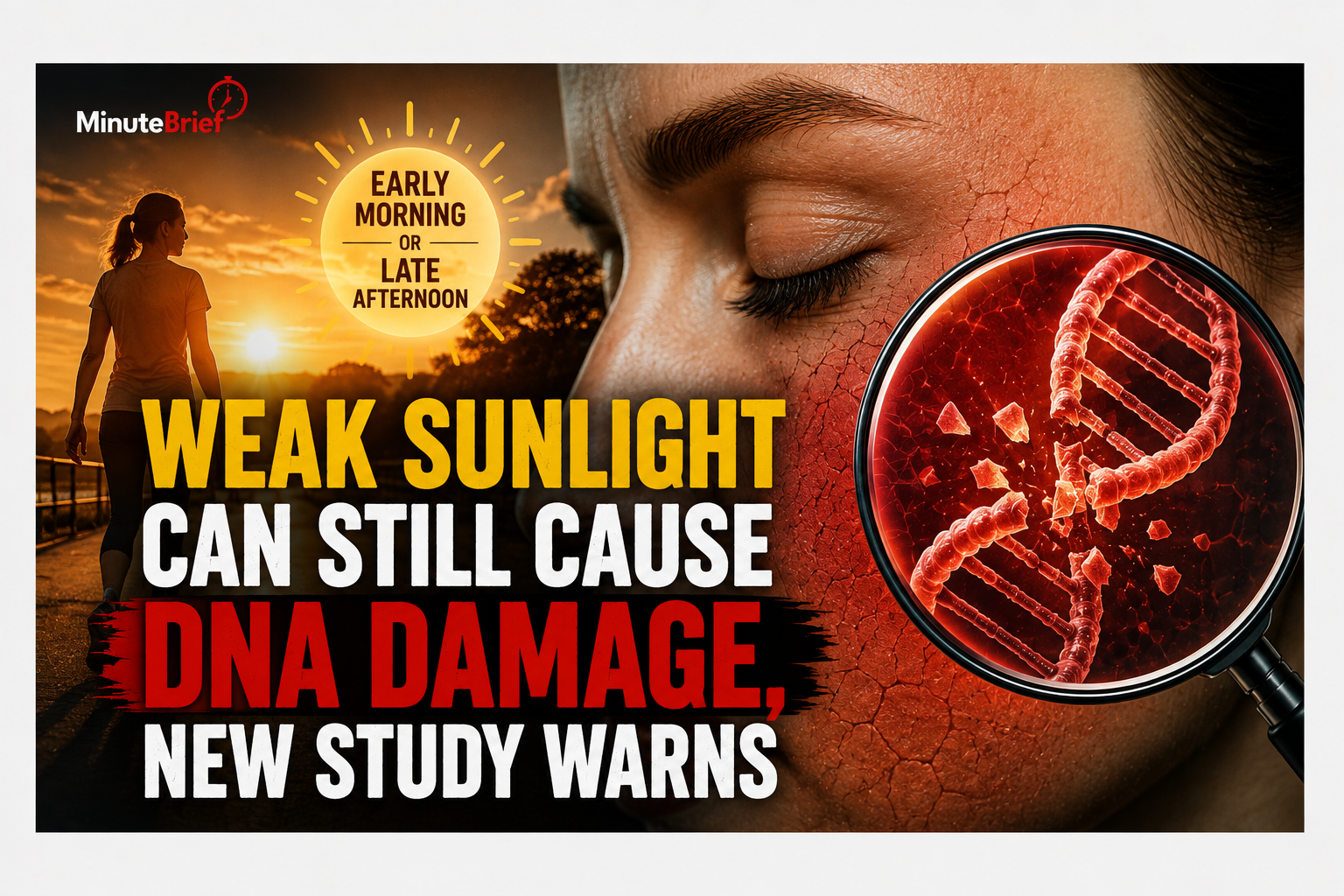
A landmark Australian study has overturned a long-held belief about sun safety: spending time outside during periods of weaker sunlight—such as early morning or late afternoon—is not as harmless as previously thought.
Researchers at the QIMR Berghofer Medical Research Institute found that even low-intensity ultraviolet (UV) radiation can cause invisible cellular damage to your skin, increasing long-term skin cancer risks.
It’s the Total UV Dose That Matters
The core finding of the study comes down to cumulative exposure. Whether you get exposed to a high dose of sunlight in a short amount of time at midday or absorb the same total amount over a longer period in the early morning, the resulting damage to your skin cells is identical.
"Our research has shown it is the total dose that is important — it doesn't matter how long it takes to get it," explained study co-lead Professor Rachel Neale. "People potentially get lulled into a sense of security when the intensity of sunlight is weak... We have shown that is a problem for skin damage."
Damage Occurs Before Your Skin Turns Red
To test how real-world sunlight affects human cells, the Low-Dose UV Study examined 58 participants with light to olive skin tones. Researchers exposed small patches of skin to both low and high UV intensities over several days, taking biopsies to measure cellular and molecular changes.
The findings revealed key insights about sub-visible sun damage:
- No Redness Required: DNA damage occurred even when the UV dose was far too low to cause visible sunburn or skin flushing.
- Cellular Stress: Tests revealed elevated levels of p53, a protein that rises when skin cells suffer DNA damage and stress.
- Cumulative Risk: While small amounts of damage won't trigger skin cancer immediately, study co-lead Professor David Whiteman noted that repeated incidental exposure adds up over months and years, eventually leading to mutations.
Rethinking Daily Protection
The researchers emphasize that these findings shouldn't scare people into staying indoors full-time—sunlight remains essential for vitamin D synthesis and overall well-being. However, health guidelines need to adapt to cellular reality rather than visual cues.
Key Takeaways for Everyday Protection:
- Make Sunscreen a Daily Habit: Apply sunscreen as part of your morning routine to guard against short, unexpected periods of sun exposure throughout the day.
- Don't Rely Solely on the UV Index: Current health advice usually recommends sun protection when the UV index reaches 3 or higher, but low-level exposure can still cause sub-surface damage.
- Stick to the Basics: Whenever you plan to spend extended time outdoors—regardless of the time of day—use full SunSmart practices (Slip, Slop, Slap, Seek, and Slide).