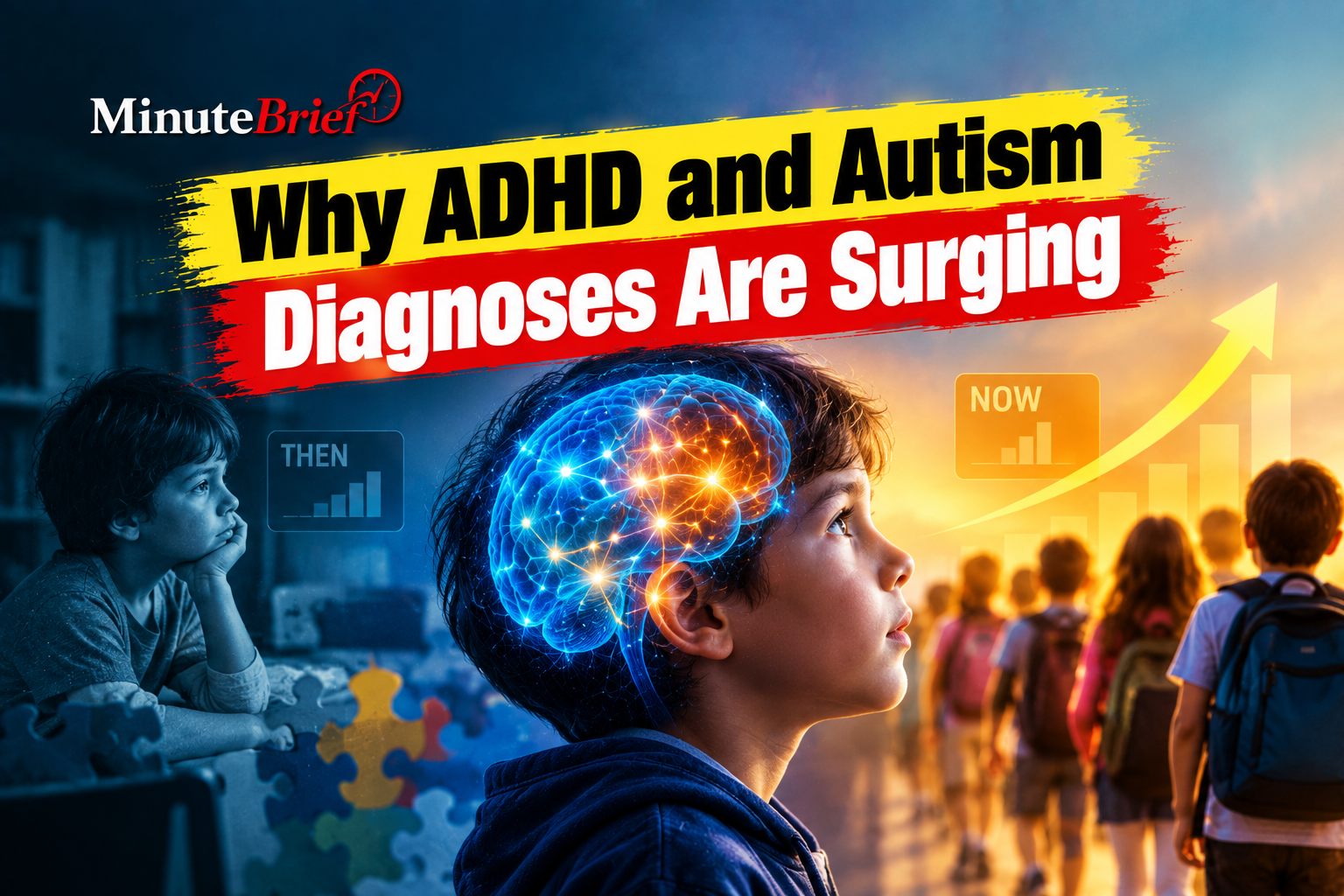
Diagnoses of Attention-Deficit/Hyperactivity Disorder (ADHD) and Autism Spectrum Disorder (ASD) have surged over the past decade. A study of over 2.1 million young people in Denmark—published in JAMA Psychiatry by researchers at ISGlobal and Aarhus University—helps explain why: the profile of who receives a diagnosis has fundamentally shifted.
A 10-Year Shift: Narrowing the Gap
Historically, children diagnosed with ADHD or ASD were significantly more likely than their peers to share specific background traits, such as low birth weight, premature birth, or lower parental income and education levels.
While these characteristics remain more common among neurodivergent youth today, the gap between diagnosed individuals and the general population has narrowed dramatically:
- Low Birth Weight: A decade ago, children born with low birth weight were 54% more likely to receive an ADHD or ASD diagnosis. Today, that difference has dropped to 17%.
- Socioeconomic Factors: Similar steep declines were observed for premature birth and parental socioeconomic disadvantage.
In short, young people receiving diagnoses today look much more like their peers in the general population than those diagnosed ten years ago.
What’s Driving the Increase?
The findings suggest that rising rates don't necessarily indicate an epidemic of new cases. Instead, the increase is largely driven by evolving clinical and social factors:
- Broader Recognition: Doctors, educators, and parents are better at spotting milder or non-traditional presentations.
- Expanded Healthcare Access: More young people can access diagnostic evaluations.
- Evolving Criteria: The threshold where neurodevelopmental traits are considered clinically impairing has broadened.
Why It Matters
Understanding this shift helps researchers interpret long-term health outcomes accurately, as apparent improvements may stem from changes in who is diagnosed rather than better prognoses. It also enables healthcare, education, and social services to better allocate resources for a broader, more diverse population.