A market survey conducted by the Maharashtra State Price Monitoring Resource Unit (MSPMRU) under the state Food and Drugs Administration (FDA) has revealed extreme price markups on basic inpatient medical supplies. The findings highlight significant differences between the actual procurement costs paid by hospitals and the Maximum Retail Prices (MRPs) billed to patients.
Key Price Markups Identified
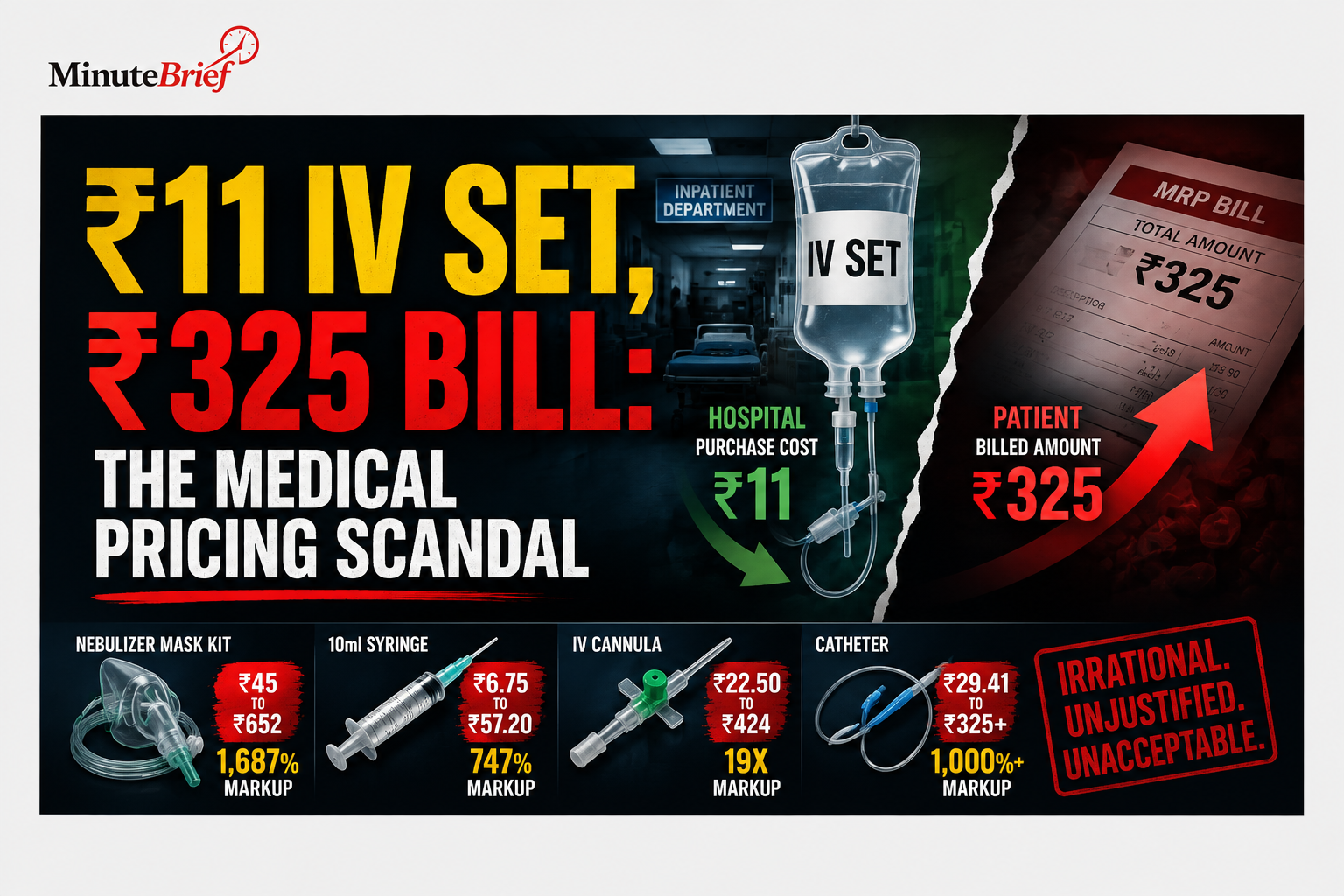
- IV Sets: A 'Medifusion IV set' with a purchase cost of ₹11.05 is billed to patients at ₹325—representing a 2,841% margin. Other brands showed markups exceeding 2,000%.
- Nebulizer & Oxygen Masks: An adult nebulizer mask kit costing ₹45 to manufacture/procure was billed at ₹652, marking a 1,687% increase.
- Syringes & Needles: Standard 10 ml syringes bought for ₹6.75 were priced at ₹57.20 (a 747% markup), while needles were routinely sold at triple their purchase cost.
- Cannulas & Catheters: An IV cannula bought for ₹22.50 was charged at ₹424 (nearly 19 times its cost), while catheters priced at ₹29.41 were marked up by over 1,000%.
Call for Government Intervention
Maharashtra FDA Commissioner Tukaram Mundhe described these markups as "irrational and unjustified," noting that procurement costs already cover manufacturing, distribution, and vendor profit margins. He highlighted that hospitalized patients in inpatient departments (IPDs) have no bargaining power when receiving non-negotiable treatments.
In a letter to the Secretary of the Department of Pharmaceuticals, Mundhe urged the Central Government to intervene by:
- Bringing common inpatient surgical consumables under the regulatory control of the Drugs (Prices Control) Order (DPCO), 2013.
- Capping trade margins on essential medical consumables.
- Strengthening regulatory monitoring systems to prevent trade-level profiteering.