A major ocean circulation system that acts as Earth’s global heat conveyor belt has been steadily losing strength for nearly two decades. According to a study from the University of Miami, this slowdown isn't just a temporary localized blip—it is a widespread shift that could ultimately impact weather patterns, storm activity, and sea levels across the globe.
What Is the AMOC and Why Does It Matter?
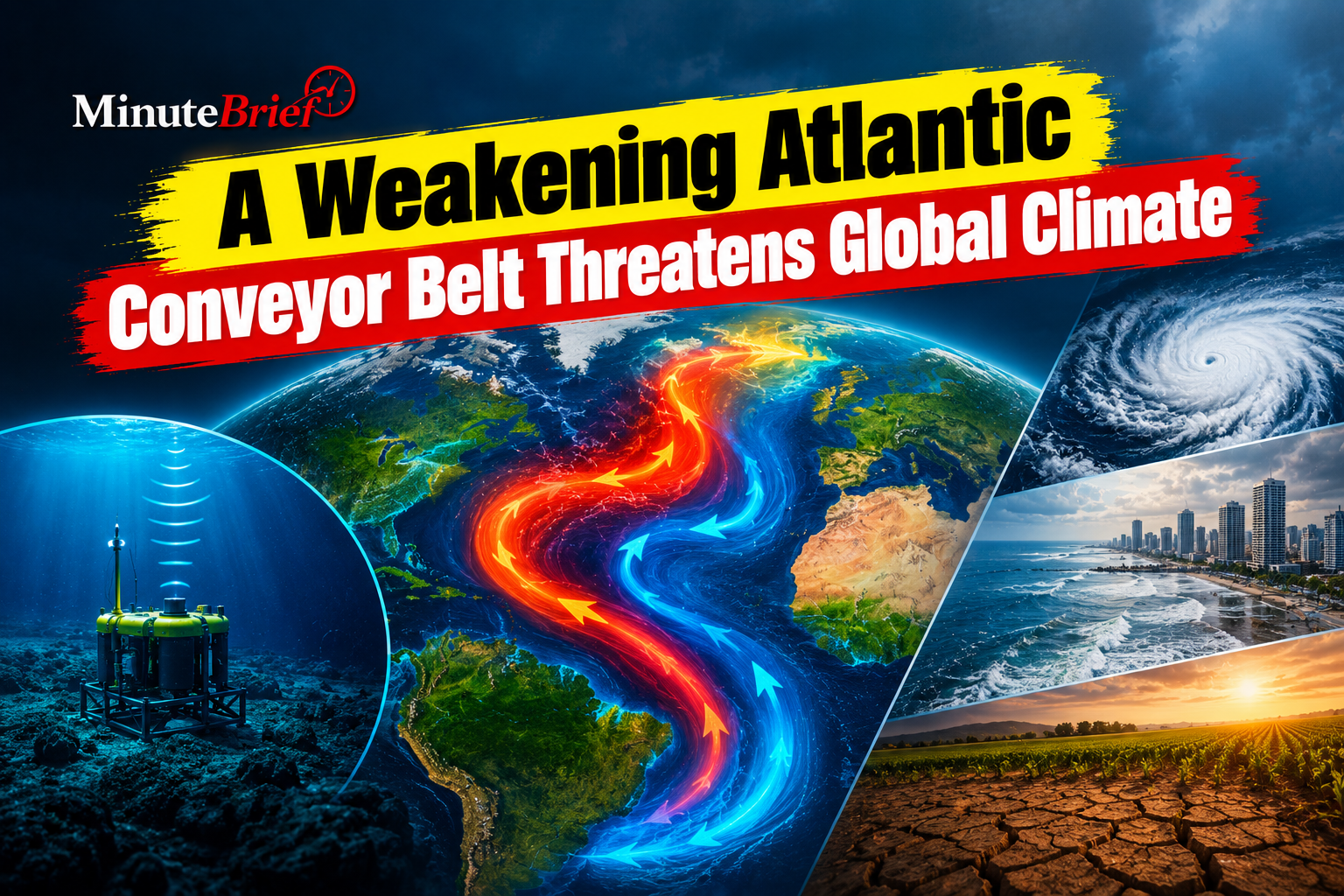
The Atlantic Meridional Overturning Circulation (AMOC) is a vast system of ocean currents. It functions like a giant conveyor belt, moving warm water northward along the ocean surface and carrying colder, denser water back south deep underwater.
By redistributing massive amounts of heat across the Atlantic, the AMOC plays a crucial role in:
- Regulating Regional Temperatures: It helps maintain milder climates in Europe and eastern North America.
- Influencing Rainfall: It shapes global precipitation belts and monsoon patterns.
- Controlling Sea Levels: It impacts coastal water levels along Atlantic shoreline communities.
Concrete Evidence from Deep Underwater
Scientists examined long-term observations from four deep-sea monitoring arrays positioned along the western boundary of the North Atlantic, spanning tropical waters to higher latitudes (16.5°N to 42.5°N).
- Seafloor Instruments: Using anchored sensors that measure deep-water pressure, temperature, and current velocity below 1,000 meters, researchers tracked ocean flow over time.
- Widespread Decline: The data revealed a consistent weakening trend across thousands of miles of ocean rather than a localized anomaly.
- An Early Warning System: Because changes along the Atlantic’s western edge appear so consistently, researchers view these monitoring sites as a "canary in a coal mine" for detecting broader climate shifts early.
What Happens If the Slowdown Continues?
If the ocean conveyor belt continues to weaken, the ripple effects could redefine weather systems on several continents:
- Extreme Weather & Storms: A altered heat balance could shift atmospheric jet streams, potentially leading to harsher winter storms and changes in hurricane intensity.
- Coastal Sea-Level Rise: As current dynamics shift, water can back up along North American and European coastlines, accelerating sea-level rise for coastal cities.
- Shifting Agricultural Belts: Altered rainfall patterns could disrupt water availability and farming in vulnerable agricultural regions.
Looking Ahead
Understanding whether this two-decade decline is part of a longer natural cycle or an ongoing climate-driven trend requires continuous observation. By maintaining these deep-sea monitoring networks, oceanographers hope to provide policymakers and coastal communities with the clear data needed to prepare for future environmental changes.