In Brief
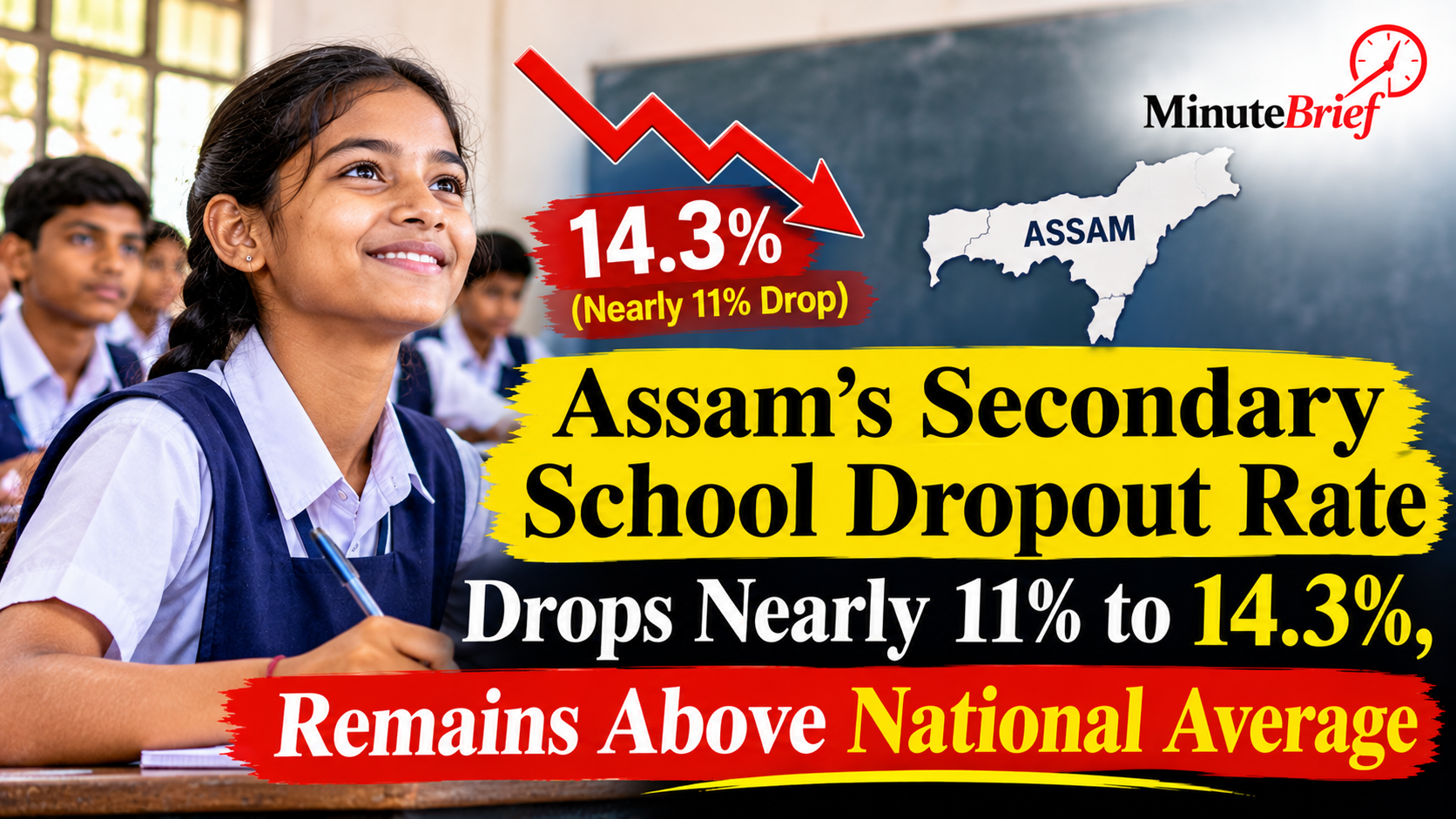
- Secondary school dropouts dropped sharply from 25.1% to 14.3% over two years, though still above the 9.5% national average.
- Current dropout figures stand at 1.4% at the primary level, 4.3% at upper primary, and 14.3% at the secondary level.
- Boys drop out at a higher rate than girls, and only 53.7% of students transition from Class X to Class XI—the lowest rate in India.
- Poverty, seasonal floods, early marriage, and infrastructure deficits remain primary causes, disproportionately affecting tea garden, char, hill, and SC/ST communities.
Steep Decline, Yet Structural Gaps Persist
Assam has registered notable progress in retaining students over the past two years, particularly at the crucial secondary stage (Classes IX to XII). According to UDISE records cited by Education Minister Dr. Ranoj Pegu, the state’s dropout numbers break down as follows:
| School Stage | Current Dropout Rate | Key Context |
| Primary Level | 1.4% | Lowest attrition across school tiers |
| Upper Primary Level | 4.3% | Moderate rise during middle school transition |
| Secondary Level | 14.3% | Down from 25.1% two years ago, but exceeds 9.5% national average |
Roughly one in seven students in Assam still exits school before completing Class X, while a second major drop occurs immediately after Class X, where only 53.7% advance to Class XI. Dr. Pegu also noted that dropout rates are higher among boys than girls.
Socioeconomic Pressures in Vulnerable Belts
Addressing the root causes behind early school exits, Dr. Pegu pointed to household poverty, recurring floods, early marriage, and school infrastructure gaps. He noted that students from tea garden belts, riverine (char) and flood-prone areas, hill districts, and SC/ST communities face the highest risk of leaving school early to supplement family income.
"We acknowledge the rate is still above the national average at every stage, and the secondary stage is our priority," Dr. Pegu stated.