In Brief
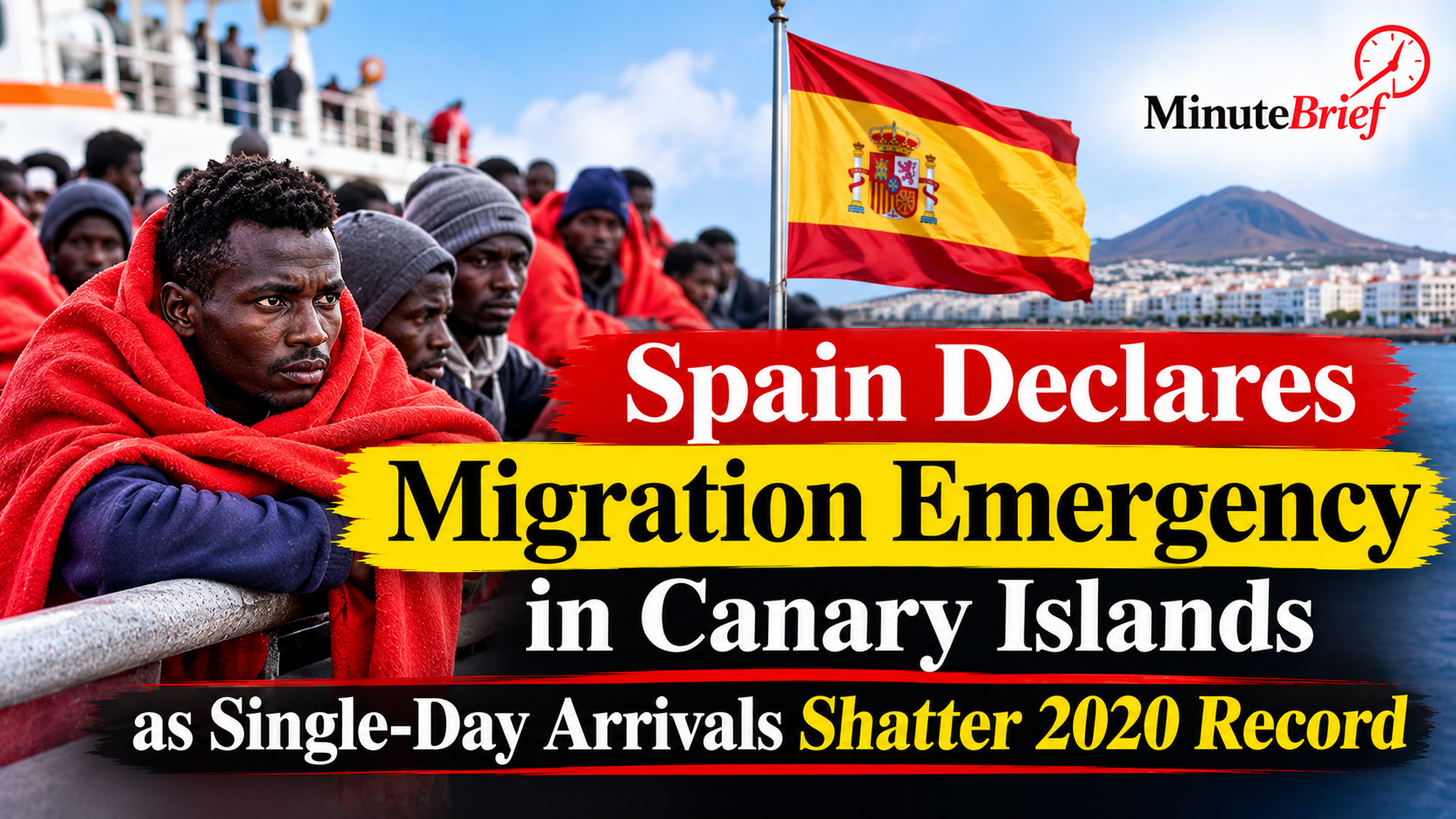
- Maritime rescuers brought 1,488 migrants ashore from 14 boats on Saturday, surpassing the previous daily high of 1,461 set on November 7, 2020.
- Over 9,000 people have reached the Canary Islands in the first two weeks of November alone.
- Home to roughly 11,400–12,000 residents, El Hierro absorbed 12 of Saturday’s 14 boats, straining local hospitals, buses, and temporary shelters.
- The IOM recorded at least 450 fatalities along the perilous West Africa–Canary Islands Atlantic route during the first 10 months of 2026.
Smallest Island Bears the Brunt of Record Arrivals
Operating across six rescue vessels and two Civil Guard patrol boats, Spain’s Maritime Rescue Service (Salvamento Marítimo) intercepted 14 overcrowded wooden fishing vessels—known as pirogues—off the Canary Islands on Saturday. One vessel alone carried 240 people, including 12 women and 36 children.
Twelve of the 14 boats landed on El Hierro—the archipelago’s smallest and westernmost island—while the remaining two reached Gran Canaria and Tenerife. Most passengers departed from Senegal, The Gambia, Mauritania, and Guinea-Conakry, enduring week-long ocean crossings.
Emergency Aid and Political Pressure Ahead of Elections
With local medical teams, reception centers, and public buses stretched to capacity on El Hierro, Canary Islands President Fernando Clavijo appealed for urgent national and European intervention. Madrid subsequently declared a migration emergency and sanctioned €16.18 million in relief—comprising €15.18 million to expand reception capacity and accelerate transfers to mainland Spain, plus €1 million for Red Cross port medical care.
| Metric | Figure | Context |
| Saturday Rescues (Nov 14) | 1,488 people (14 boats) | Breaks Nov 7, 2020 daily record of 1,461 |
| November 2026 Arrivals | 9,000+ people | Arrived in the first two weeks of the month |
| Route Fatalities (Jan–Oct 2026) | 450+ deaths | Documented by the International Organization for Migration |
The crisis unfolds just two weeks before Spain’s early general election, placing Prime Minister Pedro Sánchez’s government under intense political scrutiny over border enforcement and migrant housing.
Next Steps
Spanish Territorial Policy Minister Ángel Víctor Torres is visiting El Hierro to oversee emergency transfers and infrastructure support, while authorities deploy additional rescue vessels and interpreters to clear processing backlogs.