In Brief
- Omnidirectional Thermal Guiding: Unlike previous 2D models, this hybrid lattice guides heat around objects in three dimensions, preventing distortion in surrounding thermal signatures regardless of heat direction.
- Hybrid Material Design: Built via 3D printing, the device combines a high-conductivity aluminum lattice filled with low-conductivity rubber to control heat pathways precisely.
- Dual Protection and Concealment: Experimental tests confirmed the cloak maintains a stable internal temperature while rendering hidden geometries—including complex shapes like human faces—virtually invisible to infrared detection.
A Major Advancement in Thermal Metamaterials
In research published in Nature Communications, engineers have demonstrated the first fully functional 3D thermal cloak capable of operating across complex, non-spherical geometries.
While traditional insulation relies on blocking heat, thermal cloaking continuously redirects heat flow around an object. By allowing thermal energy to pass smoothy around a protected core and exit undisturbed on the far side, the device tricks infrared cameras into perceiving a uniform thermal environment.
Engineered Hybrid Architecture
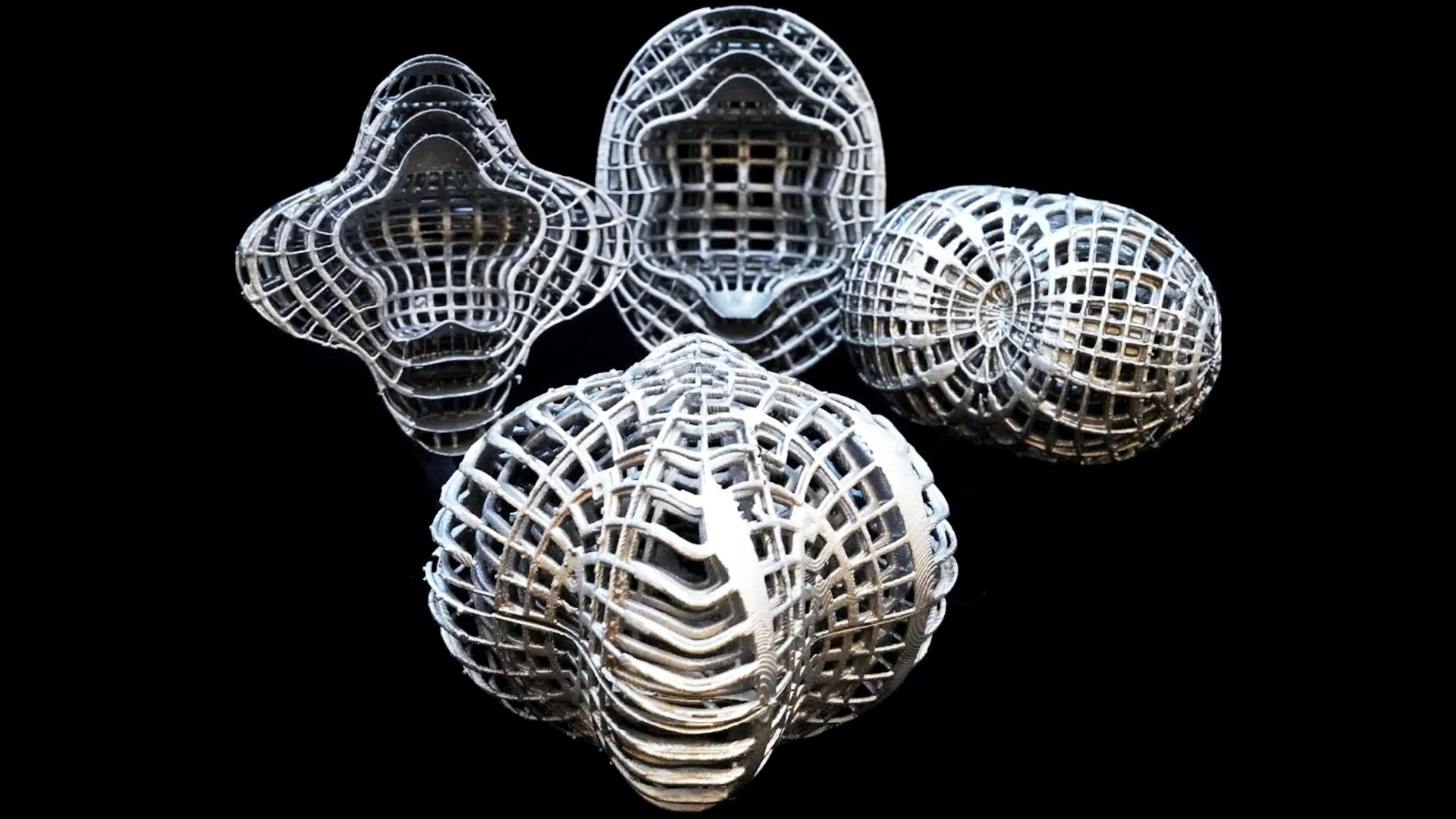
The breakthrough relies on a custom-designed hybrid lattice structure that balances high and low thermal conductivity:
- High-Conductivity Channels: A 3D-printed aluminum frame features carefully tuned strut thicknesses and orientations to accelerate heat along designated paths around the core cavity.
- Low-Conductivity Core: Moulded rubber fills the gaps within the lattice structure, insulating the interior space from thermal leakage.
Laboratory evaluations placed cloaked objects between hot 40 degree Celsius and freezing ice-water zones. Thermal imaging confirmed that temperature bands outside the cloak remained uniform and straight, while the temperature inside the concealed core remained virtually unaffected by the extreme external environment.
Potential Applications Across Industries
This development moves thermal metamaterials beyond theoretical limits into practical engineering applications:
- Electronics & Semiconductor Cooling: Redirects localized heat away from delicate microchips and sensitive processing components without requiring bulky cooling systems.
- Aerospace & Defense Stealth: Shields high-temperature military assets or aircraft components from targeted thermal tracking and infrared reconnaissance.
- Extreme Climate Shielding: Maintains stable operating temperatures for equipment used in deep space missions, arctic environments, or high-temperature industrial settings.