In Brief
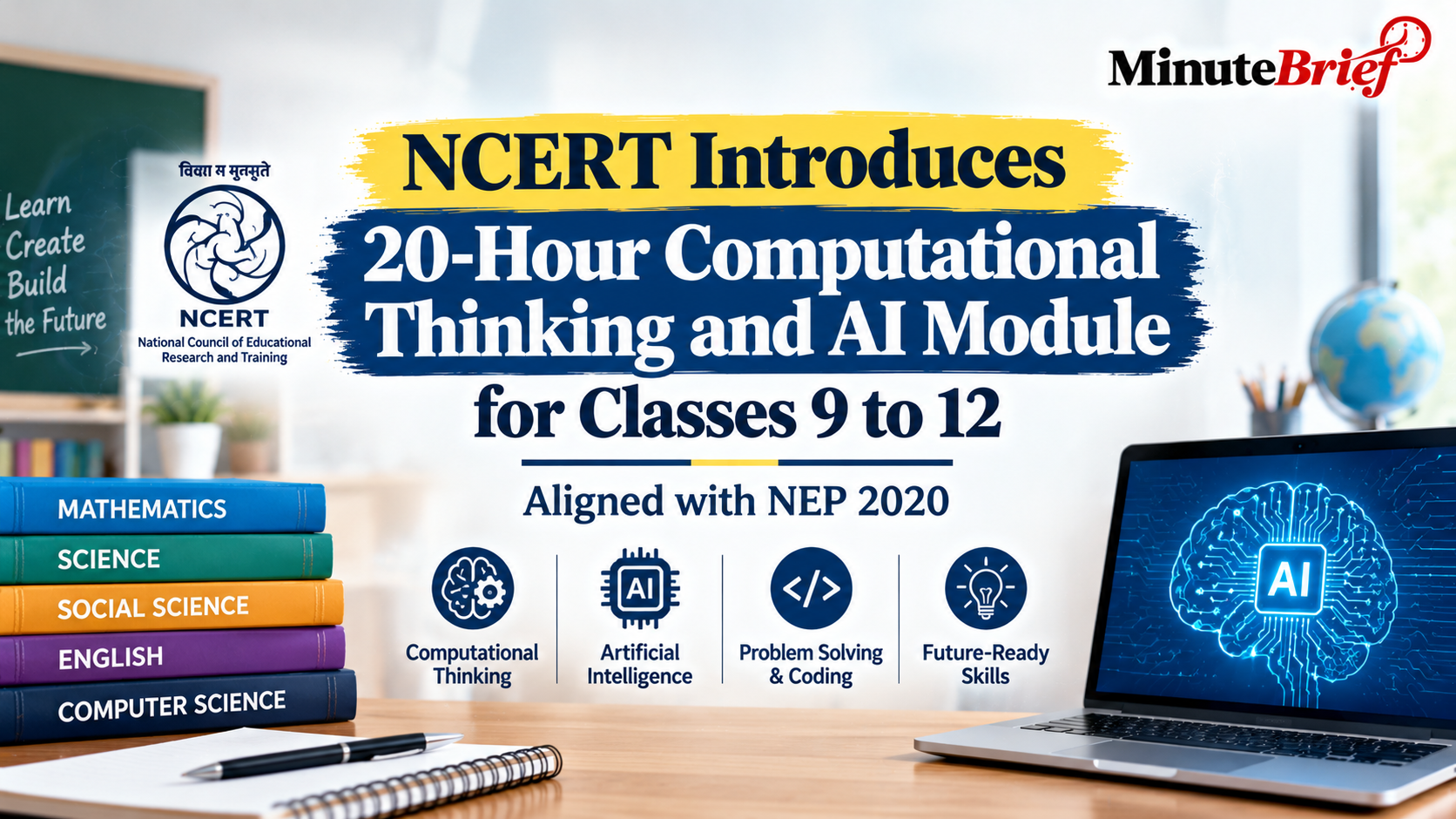
- Foundational AI Access: Developed in consultation with IIT Madras and IIT Jodhpur, the 20-hour module requires no prior technical knowledge and is designed for students entering secondary and senior secondary stages.
- Core Curriculum Focus: The framework spans five units covering everyday AI applications, machine learning concepts, AI limitations, data privacy, and the responsible use of modern AI tools.
- Combating Misinformation & Deepfakes: The curriculum actively addresses critical modern challenges such as spotting deepfakes, recognizing AI errors, and verifying content accuracy rather than accepting automated output blindly.
Bridging Technology and Secondary Education
In alignment with the National Education Policy (NEP) 2020, NCERT launched the comprehensive resource titled An Introductory Module on AI & CT (Secondary Stage Grade 9 to 12) in October 2026.
The curriculum is structured around an experiential, activity-based approach rather than rote memorization. Students are encouraged to maintain a "Curious Notebook"—a running portfolio documenting observations, structured reasoning, and reflections throughout the five-unit course.
Emphasizing Human Judgment and Digital Safety
A vital pillar of the newly introduced module is its emphasis on safe and responsible technology usage.
As generative AI tools and deepfakes become more widespread, the curriculum guides students to critically evaluate automated responses. The textbook explicitly reinforces that human judgment, creativity, and ethical responsibility must remain central to learning, encouraging students to treat AI as a learning assistant rather than a substitute for independent problem-solving.
Furthermore, the module is structured for flexible delivery across diverse classrooms across India, functioning effectively even in environments with limited digital infrastructure.