In Brief
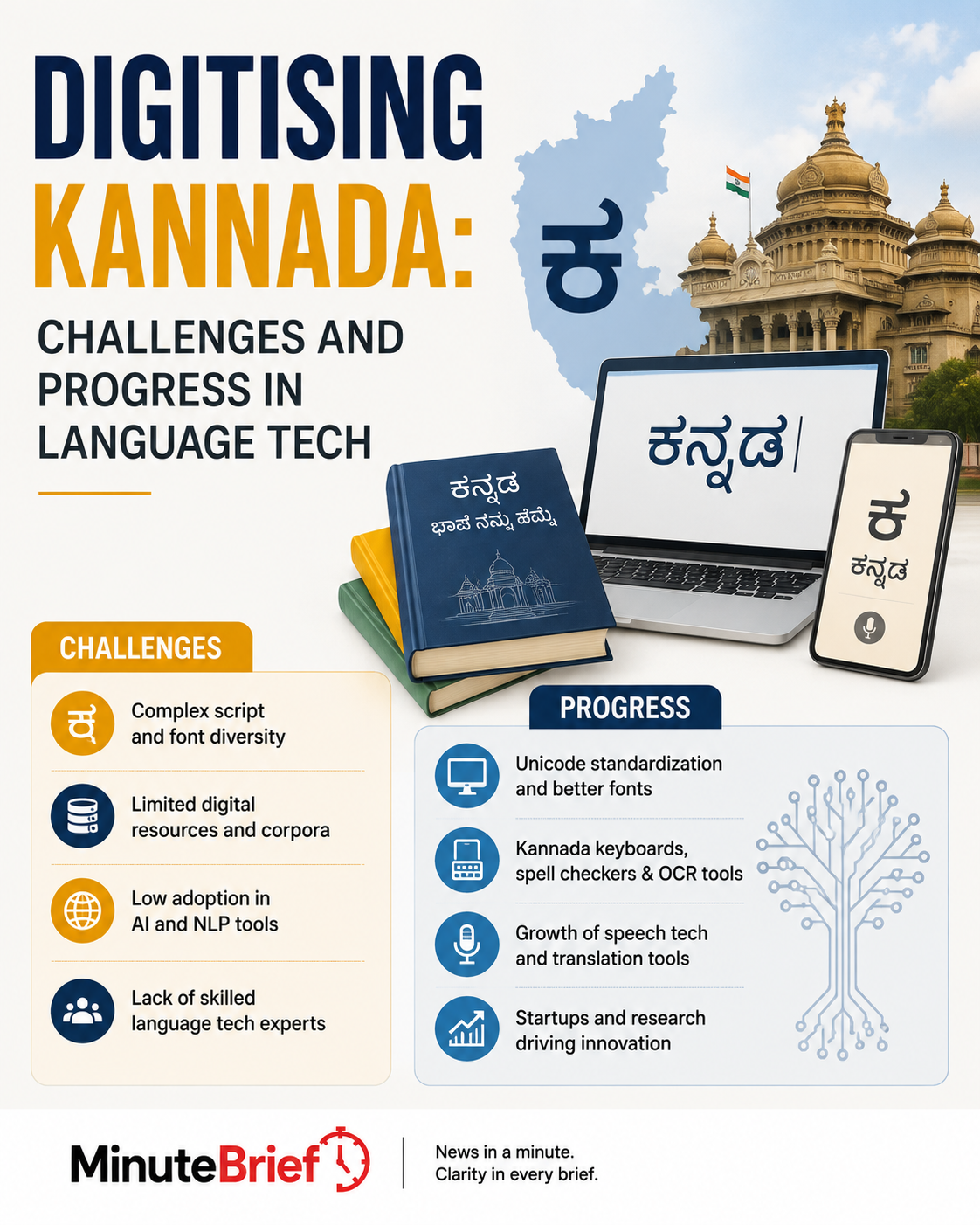
- Kannada's digital transformation began with electronic typesetting and ASCII-based fonts.
- Transition to Unicode and AI translation marks technological advancement in Kannada digital tools.
- Indian languages face unique technological challenges in a rapidly changing digital world.
- Efforts continue to improve Kannada language support and accessibility online.
Kannada has undergone significant changes in its digital representation, starting from the era of electronic typesetting to adopting ASCII-based proprietary fonts. These early efforts paved the way for standardisation through Unicode, facilitating broader compatibility across digital platforms.
Recent developments include the application of artificial intelligence to enable language translation, further expanding Kannada's digital presence.
Despite progress, Kannada and other Indian languages encounter specific challenges in the fast-evolving technology landscape. Issues such as script complexity, font standardisation, and integration with global technologies continue to require focused attention. The current work aims to bridge these gaps and enhance digital accessibility for Kannada speakers.
Stakeholders in academia, technology, and government collaborate to develop robust tools that support Kannada's digital growth. These initiatives are crucial for preserving linguistic diversity and ensuring inclusion in the digital age. Continued innovation is necessary to meet the needs of users and content creators in Kannada.