In Brief
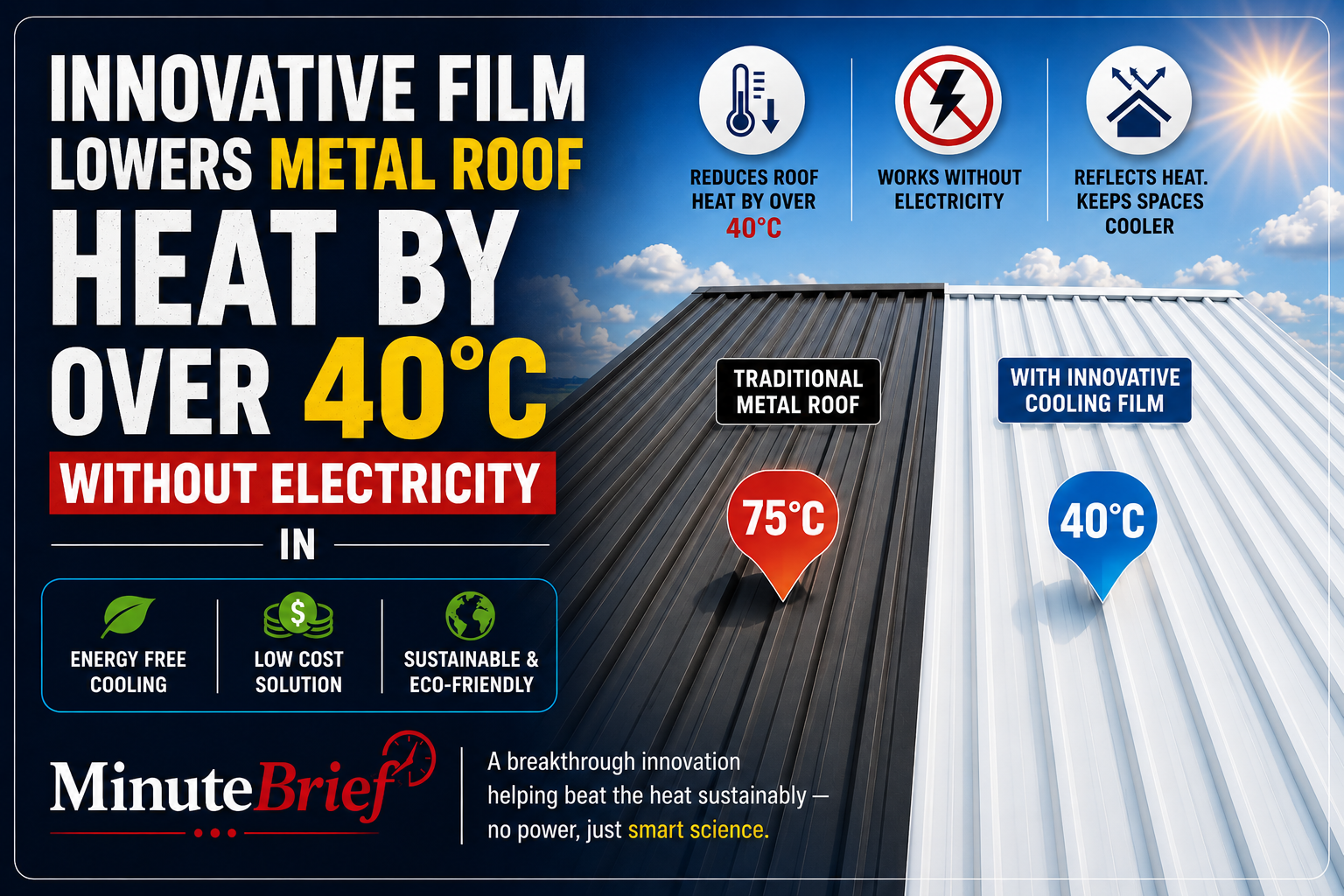
- A cooling film from the University of Illinois cooled Houston's metal roofs by 40°F.
- The film operates without electricity, enhancing energy efficiency in hot climates.
- The technology was tested on infrastructure during FIFA events in Houston.
- This advancement offers a sustainable solution to reduce urban heat and energy consumption.
The University of Illinois developed an innovative cooling film that can reduce roof temperatures by more than 40°F. This film was tested on metal roofs in Houston, Texas, particularly on infrastructure used during FIFA events. The significant temperature drop was observed under direct sunlight, achieved without the use of electricity.
The film reflects sunlight and emits heat efficiently, helping to maintain cooler surfaces. Its ability to function without electrical power presents a promising energy-saving option for buildings, especially in hot and sunny environments like Houston.
Such technologies can contribute to lowering urban heat islands, reducing cooling costs, and improving overall climate resilience in cities. The successful field test on Houston roofs demonstrates its practical applicability and potential for wider adoption.