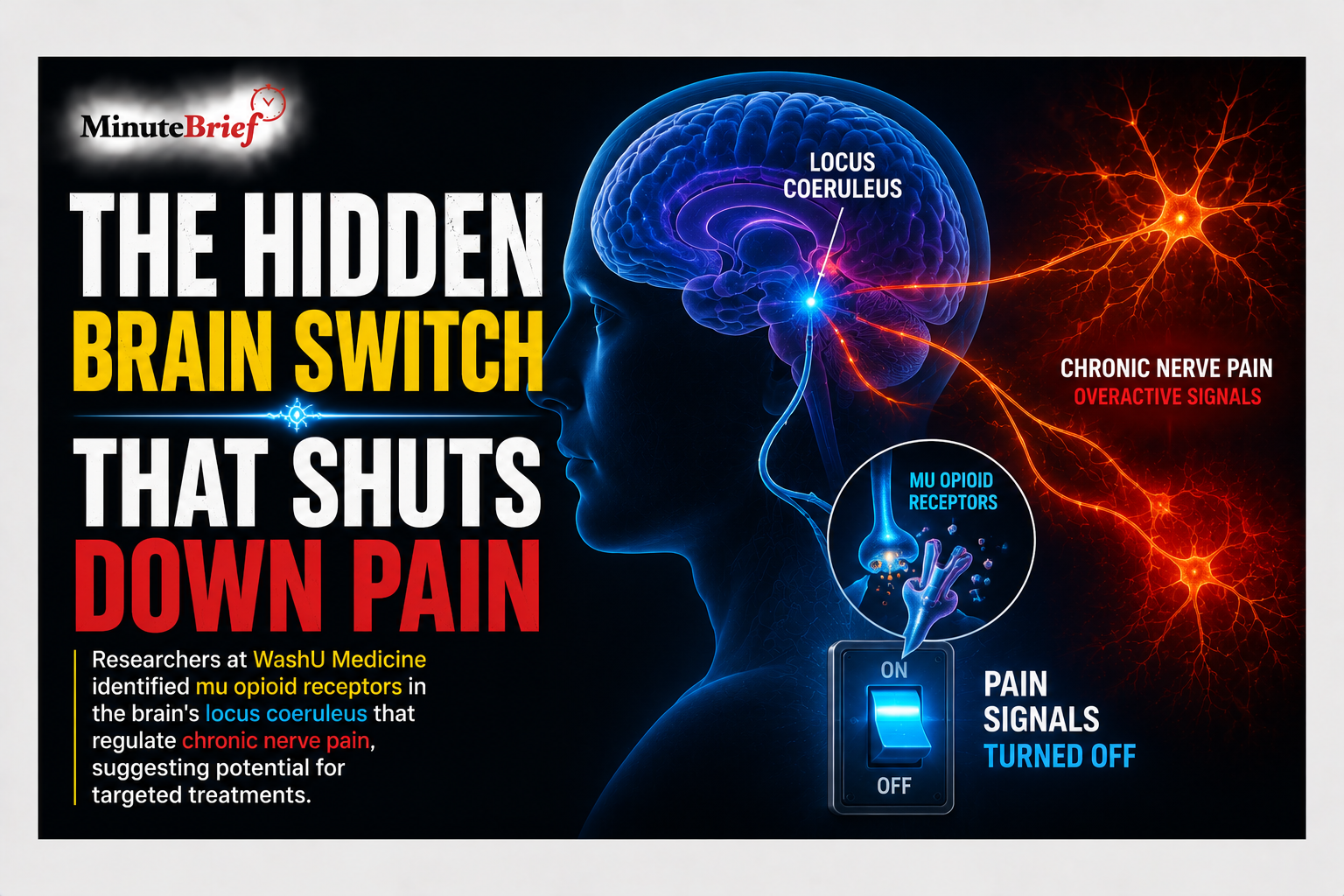
Researchers at WashU Medicine discovered a hidden pain-control switch deep inside the brain that could lead to targeted treatments for chronic nerve pain without system-wide opioid side effects.
The Brain's Pain Generator
In conditions like diabetes or nerve compression, damaged nerve fibers continuously fire. This turns the locus coeruleus—the brain's alert and stress center—into an overactive pain generator, sustaining chronic burning or shooting sensations.
Finding the Biological Brake
Published in Current Biology, the study identified mu opioid receptors in the locus coeruleus as crucial pain gatekeepers:
- Removing the Brake: Deleting these receptors from locus coeruleus cells in mice increased touch and heat sensitivity.
- Restoring Control: Replacing the receptors reversed heightened sensitivity, switching off the exaggerated pain response.
A Targeted Solution
Conventional opioids affect receptors across the entire body, risking addiction and severe side effects. By targeting mu opioid receptors solely within the locus coeruleus, future therapies could shut down chronic nerve pain at its source.
Source: Science Daily