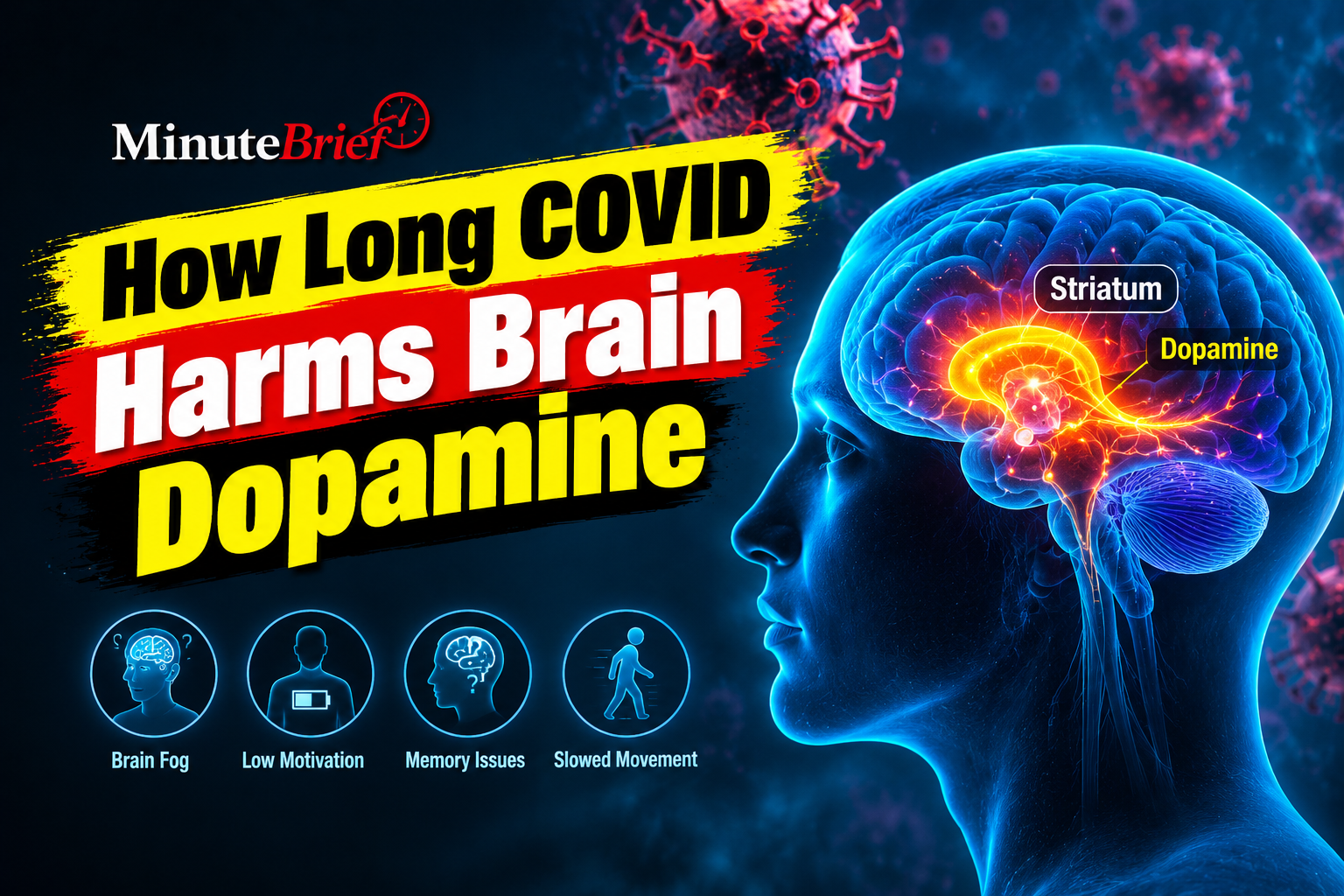
Scientists at the Centre for Addiction and Mental Health (CAMH) have uncovered compelling evidence explaining why long COVID causes persistent mental and physical fatigue. A study published in eBioMedicine reveals that long COVID may damage dopamine-releasing neurons in the brain, offering a biological basis for symptoms that have long been difficult to measure.
Long COVID affects roughly 5% of the global population, bringing symptoms like brain fog, low motivation, memory issues, and slowed movement. Using PET imaging, researchers compared long COVID patients against healthy individuals and discovered significantly lower levels of a key dopamine neuron marker in the striatum—the brain region regulating movement, motivation, and cognitive tasks.
Specific areas of dopamine loss directly matched patient symptoms:
- Ventral Striatum: Linked to a loss of motivation.
- Dorsal Putamen: Tied to slower physical movement.
- Caudate Putamen: Connected to memory difficulties.
These findings build on earlier research showing high levels of brain inflammation in long COVID patients, confirming that persistent inflammation appears to injure dopamine-releasing neurons in those same regions.
Because most previous long COVID research focused on general immune response, these results point toward a new approach. Targeting dopamine function—using existing medications that boost dopamine levels or slow its breakdown—could help alleviate symptoms. The researchers plan to launch a clinical trial with University Health Network (UHN) in the coming months to test whether boosting dopamine activity improves patient outcomes.