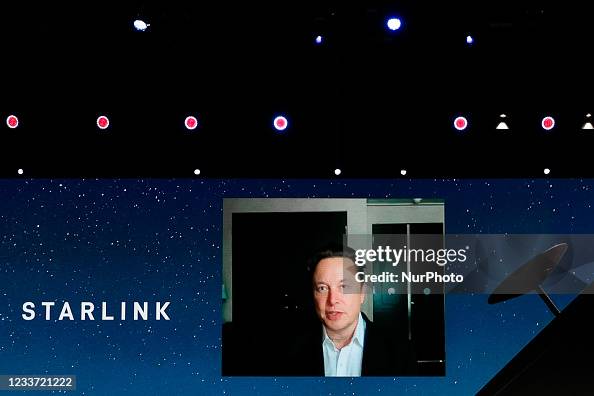
India’s government has rejected allegations of unfair competition after billionaire Elon Musk accused Reliance Industries chairman Mukesh Ambani of using political influence to delay the launch of Starlink’s satellite internet services in the country.
On October 9, Telecom Minister Jyotiraditya Scindia said India does not allow monopolies in any sector. His response came after Musk questioned on social media whether Ambani was the “real boss of India” and asked why Starlink had still not begun commercial operations despite years of regulatory compliance.
Why Is Starlink’s Launch Delayed?
Starlink, operated by Musk’s SpaceX, aims to provide internet access through satellites, particularly in remote areas where traditional broadband and mobile networks are difficult to establish.
India is an important potential market, with more than a billion internet users. However, the telecom sector is already dominated by Reliance Jio, owned by Ambani, and Bharti Airtel, led by Sunil Mittal. Both companies are also pursuing satellite internet services.
Although Starlink has received a licence to operate in India, it still needs to meet security requirements and obtain an assignment of spectrum before launching its commercial service.
Musk has accused unnamed powerful business interests of preventing Starlink from entering the market to protect their dominance. However, he has not provided evidence that Ambani personally interfered with the approval process. Reliance Jio did not respond to Reuters’ request for comment.
What Does the Government Say?
The government maintains that the approval process is fair and applies equally to all companies. Officials said Starlink and the other licensed satellite operators were at broadly the same stage of regulatory scrutiny, including security assessments.
The dispute has also attracted political attention, with opposition leaders raising concerns about monopolies and the influence of powerful businesses.
What Could This Mean for Indian Consumers?
If Starlink launches in India, satellite internet could offer another connectivity option, especially in rural and remote regions with limited network coverage. It could also increase competition in the growing satellite communications market.
However, the launch date remains uncertain. The immediate challenge is completing the remaining regulatory requirements.
The key takeaway: The dispute highlights the growing competition between global technology companies and established Indian telecom operators. Whether Starlink can enter the market will depend on completing the required approvals, while questions about alleged political interference remain unproven.