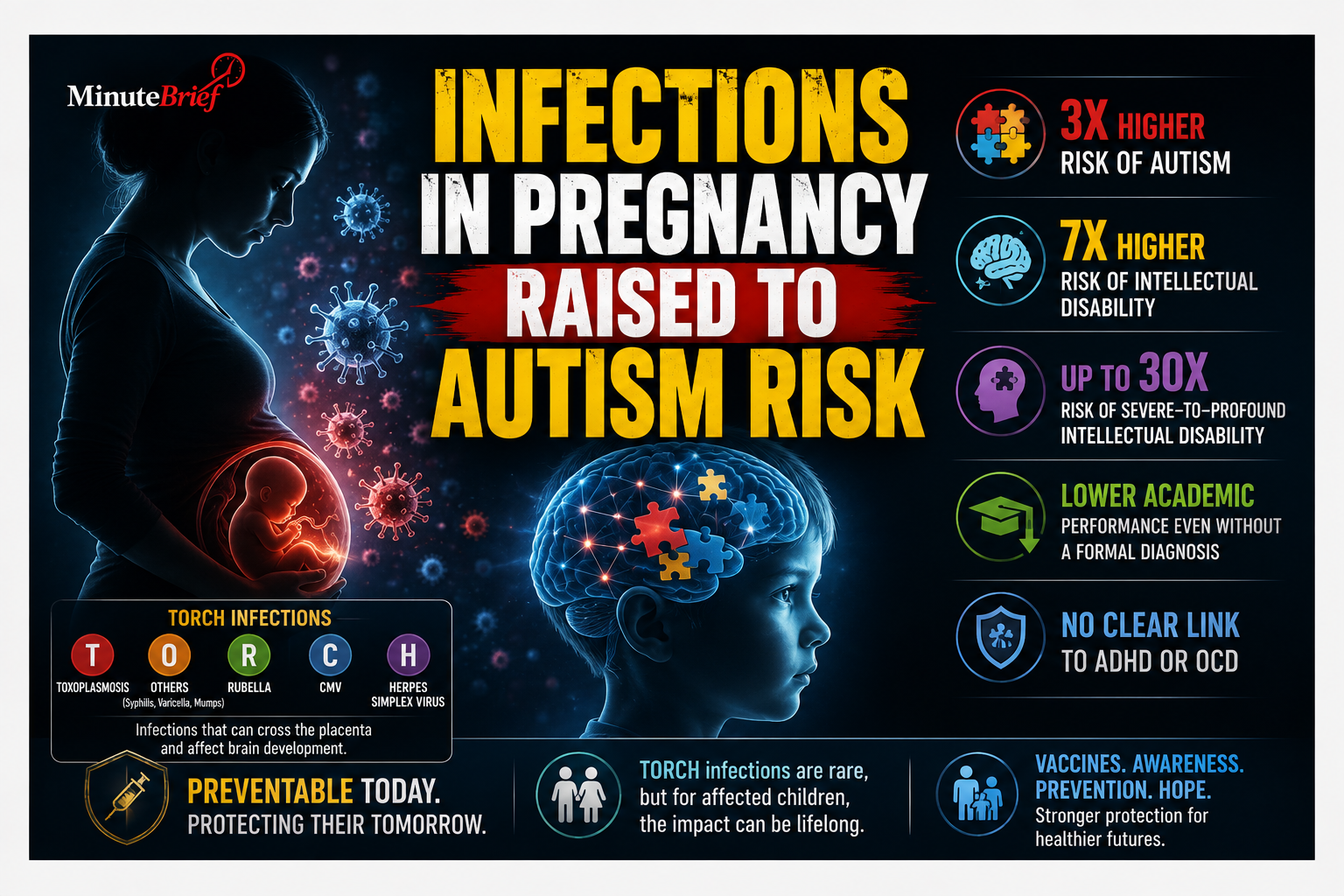
A major Swedish study from Karolinska Institute, published in JAMA Pediatrics, has uncovered a link between rare congenital infections during pregnancy and an increased risk of neurodevelopmental conditions in children. Investigating data from 3.7 million people, researchers found that children exposed to TORCH infections in the womb faced significantly higher chances of being diagnosed with autism and intellectual disabilities later in life.
What Are TORCH Infections?
TORCH is an acronym for a group of infectious diseases that can pass from a pregnant mother to her fetus across the placenta:
- Toxoplasmosis
- Other (such as syphilis, varicella, and mumps)
- Rubella
- Cytomegalovirus (CMV)
- Herpes simplex virus
While common maternal infections rarely affect a fetus directly, TORCH pathogens can cross the placental barrier and cause congenital conditions that impact brain development.
Key Findings of the Study
Following participants over three decades, researchers compared outcomes for children with and without congenital TORCH infections:
- Autism Risk: Children born with a TORCH infection were three times more likely to be diagnosed with autism.
- Intellectual Disability: The risk of developing an intellectual disability was more than seven times higher.
- Severe Impairment: For severe-to-profound intellectual disability, the risk jumped by up to 30-fold.
- Academic Performance: Even children without a formal neurodevelopmental diagnosis scored lower on average in school if they had experienced a fetal TORCH infection.
- No Link to Other Conditions: The study found no clear connection between TORCH infections and ADHD or obsessive-compulsive disorder (OCD).
Understanding the Numbers: Rare Overall, High Individual Impact
Despite the significant increase in relative risk, researchers emphasize that TORCH infections remain relatively rare:
- Population Level: TORCH infections account for only 1.2% of severe intellectual disability cases and 0.034% of autism cases across the broader population in Sweden.
- Individual Level: For an individual child born with a congenital TORCH infection, roughly 1 in 5 may later develop autism.
A sibling comparison—comparing affected children to their uninfected siblings—confirmed that shared genetic or environmental family factors alone do not explain the increased risk.
Prevention and Public Health Implications
Lead researchers stress that because many of these infections are preventable, public health measures play a critical role in protecting fetal brain health. Routine vaccination programs—such as those for rubella—have virtually eliminated certain congenital risks in countries with strong immunization coverage. Maintaining these programs and practicing infection prevention during pregnancy remain vital steps in safeguarding early child development.