In Brief:
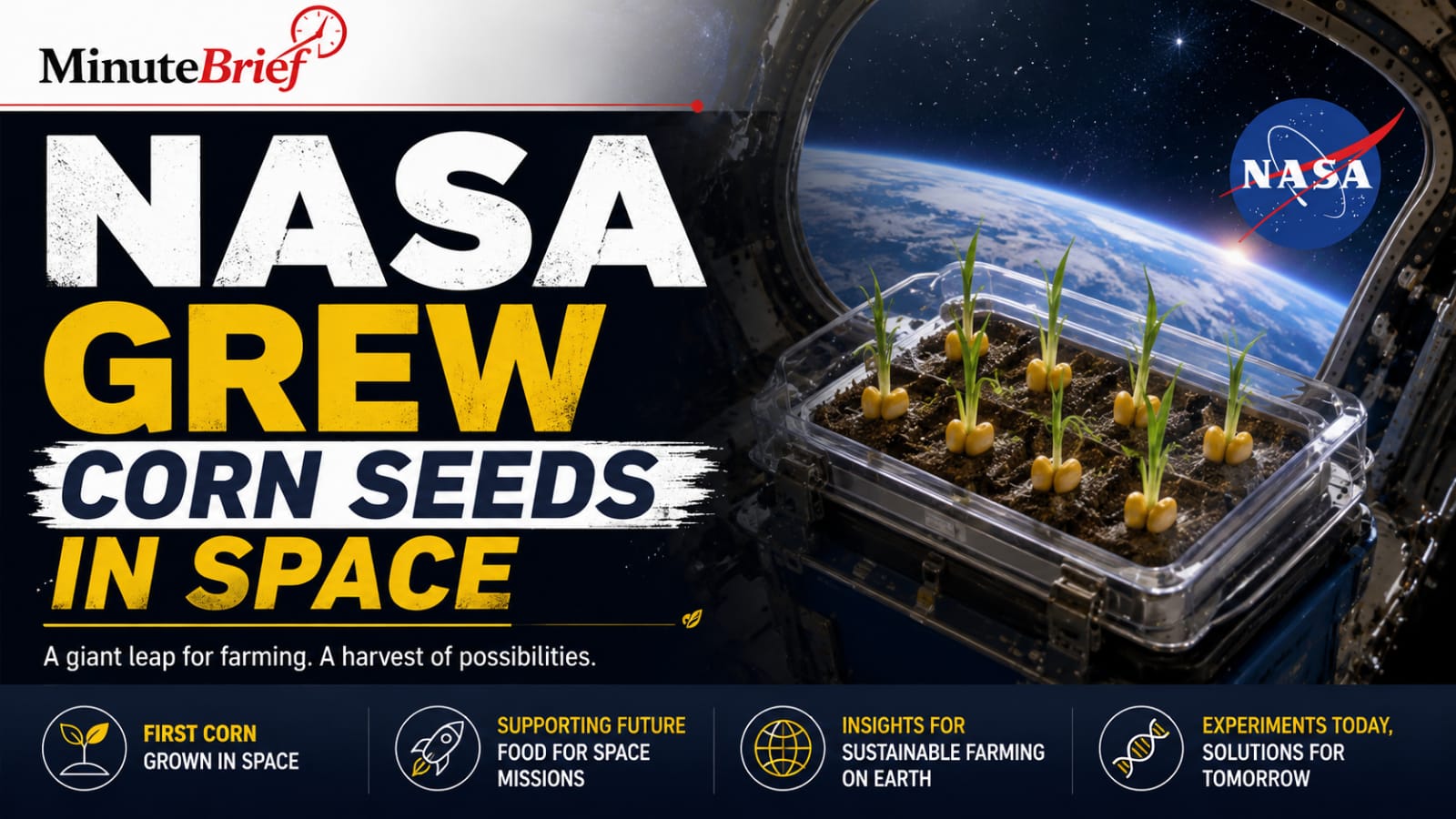
- Dry corn kernels were germinated for 5 days in complete darkness aboard a NASA space shuttle to isolate the effects of gravity on plant development.
- The seedlings successfully developed healthy tissue mass, normal weight, and standard hormone levels despite the microgravity environment.
- Lacking gravity as a cue, the roots and shoots failed to follow Earth's typical down-up orientation and instead grew in tangled, disoriented patterns.
In a 1990s space shuttle experiment conducted by NASA, researchers germinated dry corn kernels in microgravity to analyze plant behavior in space environments. Kept in total darkness for five days, the corn seedlings developed healthy physical weight, cellular tissue, and balanced hormone levels.
However, without gravity providing a directional cue (gravitropism), the plant stems and root structures grew tangled and disorganized, losing the classic downward-root and upward-shoot growth alignment seen on Earth. These pivotal scientific findings shed light on the fundamental role gravity plays in guiding plant architecture, serving as a critical foundation for ongoing off-world agricultural research and long-term space mission crop cultivation.