In Brief
- Scientific Identification: Botanists Barnali Das and Professor Namita Nath identified the new perennial shrub, which belongs to the Melastomataceae family.
- Research Timeline: The discovery stems from extensive field surveys and floristic explorations conducted across the park's grasslands between 2021 and 2025.
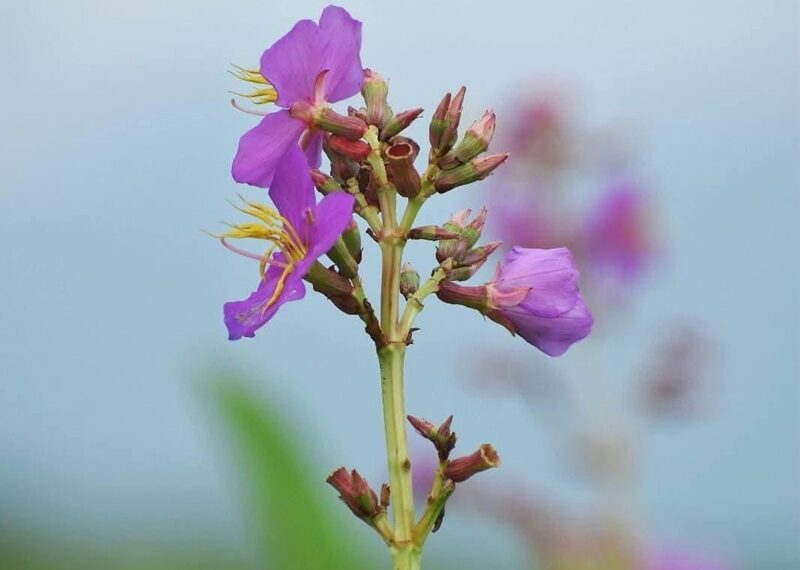
- Distinct Characteristics: Standing two to 2.5 meters tall, the plant features striking pink flowers and blooms seasonally between September and February.
Botanical Discovery in Assam's Manas National Park
A new chapter has been added to Assam's rich natural heritage with the formal identification of Osbeckia assamensis in Manas National Park.
The plant was discovered during rigorous field surveys conducted by researchers from Gauhati University between 2021 and 2025. The first reference specimen was successfully collected in the park on October 8, 2022, with subsequent documentation following in October 2025.
Detailed morphological comparisons and herbarium protocols confirmed that while the plant shares structural similarities with Osbeckia nayarii, unique differences in its stem structure, seed size, and calyx margins establish it as a distinct, separate species.
Physical Characteristics and Growth Cycle
Osbeckia assamensis is characterized by specific biological traits that distinguish it within its genus:
- Growth Habit: A perennial shrub growing to a height of approximately 2 to 2.5 meters.
- Floral Display: Bears vibrant pink flowers measuring about 3 to 3.5 centimeters, grouped in clusters containing roughly 30 to 35 flowers.
- Seasonal Cycle: The species actively flowers and produces fruit between the months of September and February.