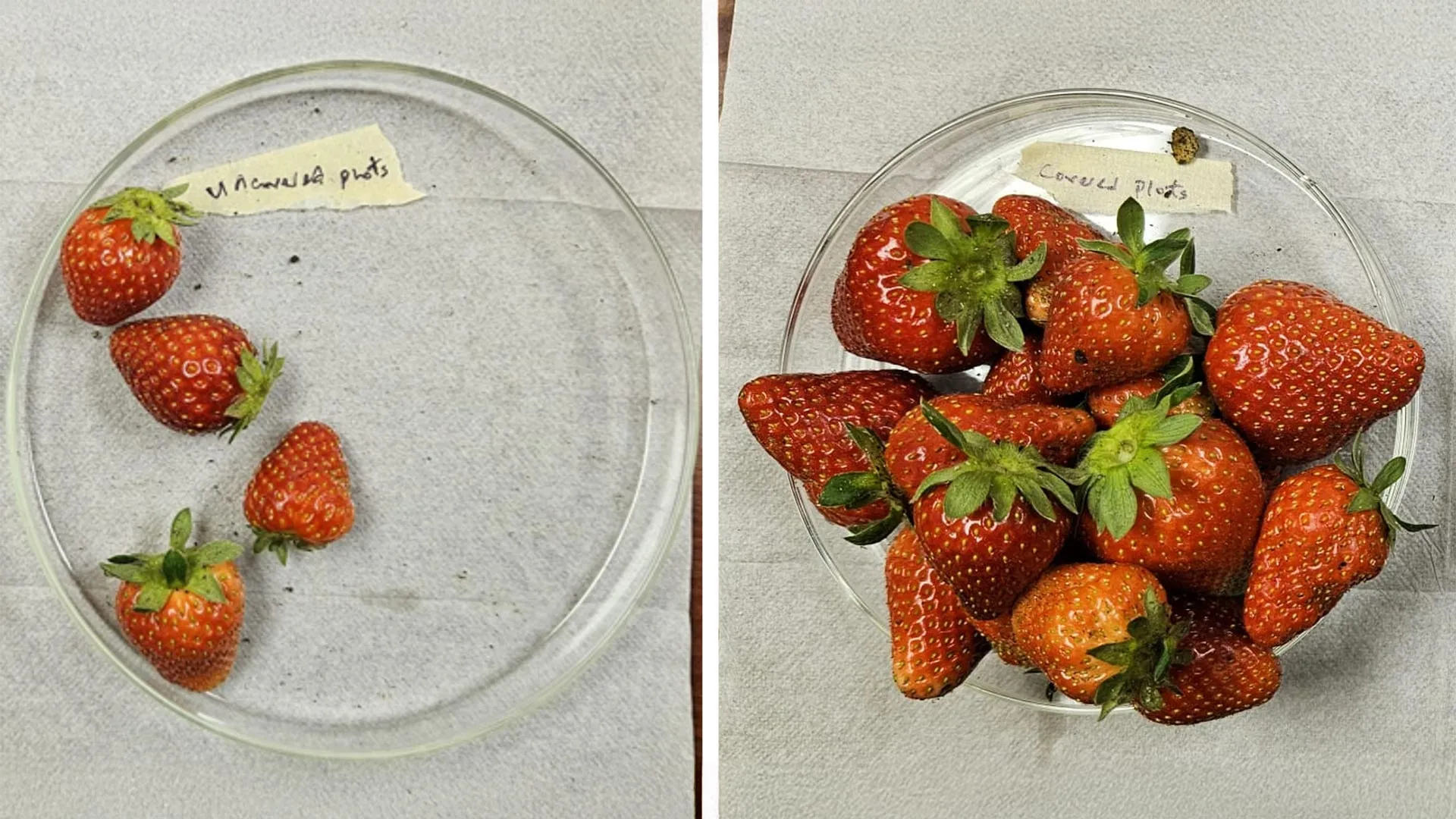
A new 3D protective textile developed by researchers at North Carolina State University could revolutionize strawberry farming. Called Plant Armor, the specially designed cover boosted strawberry crop output by up to 3.56 times in field trials while protecting plants from pests—all without blocking crucial sunlight, water, or air.
The study, published in the journal Agriculture, highlights a promising tool that could help farmers dramatically increase food production while reducing their reliance on chemical pesticides and saving water.
How "Plant Armor" Works
Placed directly over crops, Plant Armor features a porous, three-dimensional knitted structure that acts as a physical maze for insects, keeping pests from reaching the fruit.
Despite looking semi-opaque, the fabric allows vital environmental factors to pass through:
- Unblocked Sunlight: Researchers initially worried the cover would shade the plants, causing them to divert energy away from fruit and into leaf growth. Surprisingly, tests showed the fabric did not restrict necessary sunlight.
- Optimal Warmth: The textile created a consistent warming effect over three growing seasons. This added warmth helped plants hit crucial developmental stages earlier, allowing them to produce far more fruit than uncovered crops.
- Air and Water Permeability: Rain and airflow freely pass through the material, keeping the plants healthy without altering relative humidity levels.
From Military Armor to Strawberry Fields
The idea behind Plant Armor didn't start in an agricultural field—it began in military research.
Scientists were originally developing comfortable, bite-resistant fabrics to wear under body armor to protect soldiers from mosquito bites. Through interdisciplinary collaboration across NC State's College of Natural Resources, Wilson College of Textiles, and College of Agriculture and Life Sciences, researchers adapted the material for crop protection.
What It Means for the Future of Farming
Beyond boosting berry harvests, Plant Armor offers significant environmental and economic benefits:
- Lower Pesticide Use: By physically blocking insects from feeding on crops, farmers can reduce synthetic chemical sprays.
- Water Savings: The protective barrier helps retain optimal growing conditions without disrupting natural rainfall.
- Commercial Potential: The patented fabric (licensed for commercial development) could soon be adapted for other high-value agricultural crops beyond strawberries.