In Brief
- High-pressure laboratory experiments demonstrated that silicate magma can incorporate over 5% excess oxygen by weight at 7 gigapascals of pressure.
- Raman spectroscopy confirmed the extra oxygen dissolves directly into the melt structure rather than trapping as gas bubbles.
- As deep magma ascends to the surface and surrounding pressure drops, the stored oxygen vents, contributing to crustal and atmospheric oxidation.
- The findings provide geoscientists with a new framework to evaluate habitability and atmospheric evolution on other rocky planets.
Recreating Deep Earth Extreme Pressures
Geoscientists have long operated under the assumption that a magma's oxygen content is strictly limited by its chemical balancing with elements like iron, silicon, and magnesium.
To challenge this paradigm, a research team co-led by Dr. Yanhao Lin and Dr. Ho-kwang Mao subjected synthetic basalt to extreme laboratory conditions:
- Pressures: Ranging from 1 atmosphere up to 7 gigapascals (roughly 69,000 times atmospheric pressure).
- Temperatures: Sustained between 1,200°C and 1,800°C causing specialized multi-anvil hydraulic presses.
While samples quenched at normal atmospheric pressure held almost zero excess oxygen, those under 7 gigapascals absorbed more than 5% excess oxygen by weight.
How Volcanic Eruptions Transported Oxygen
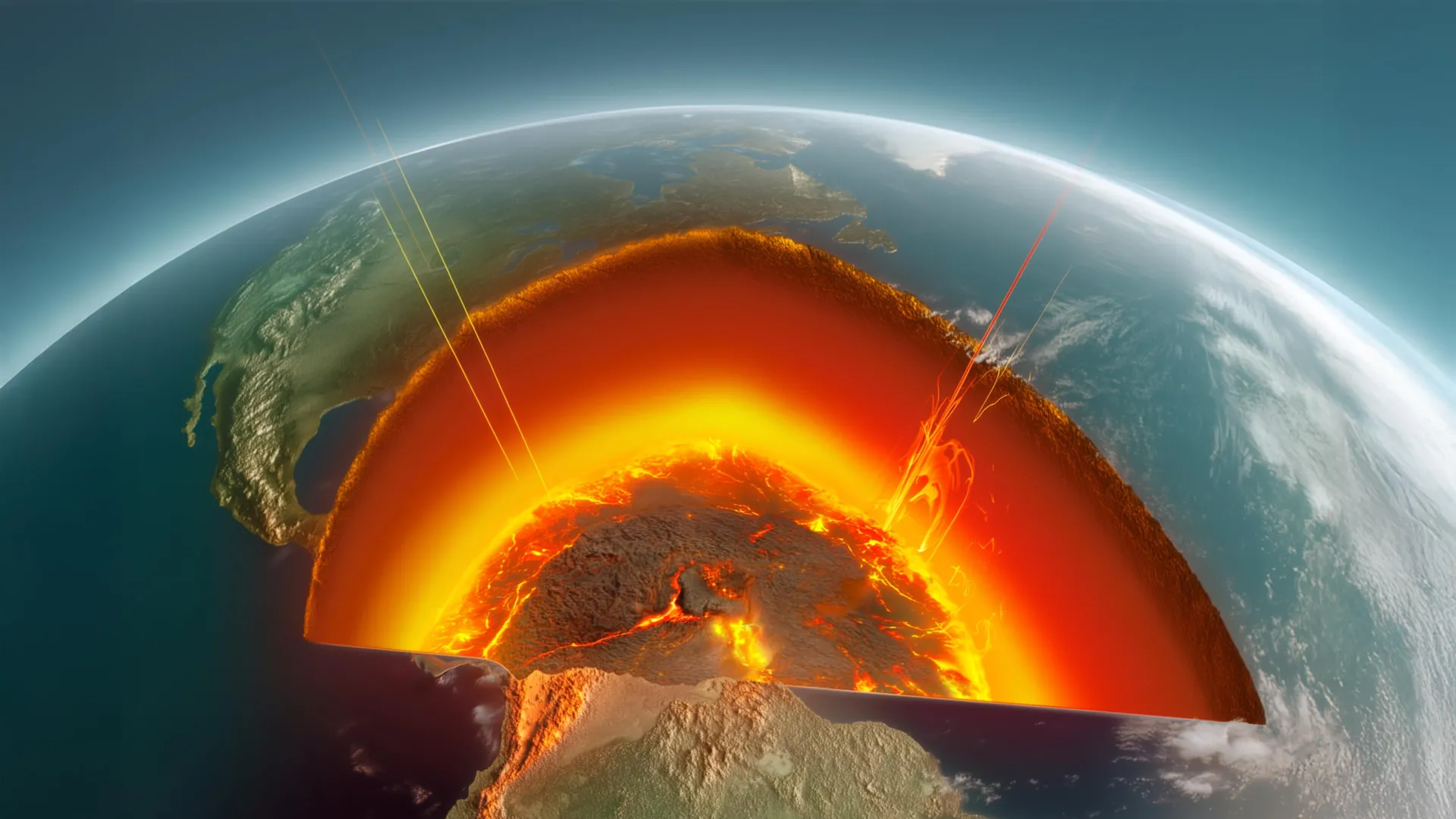
When deep-seated mantle plume magmas or large igneous provinces rise toward the surface, the dramatic drop in pressure causes the excess oxygen to unbind.
This pressure-release degassing offers a mechanical explanation for how massive volcanic outgassing episodes billions of years ago supplied oxygen directly to the young planet's crust and atmosphere, helping set the stage for complex life.