In Brief:
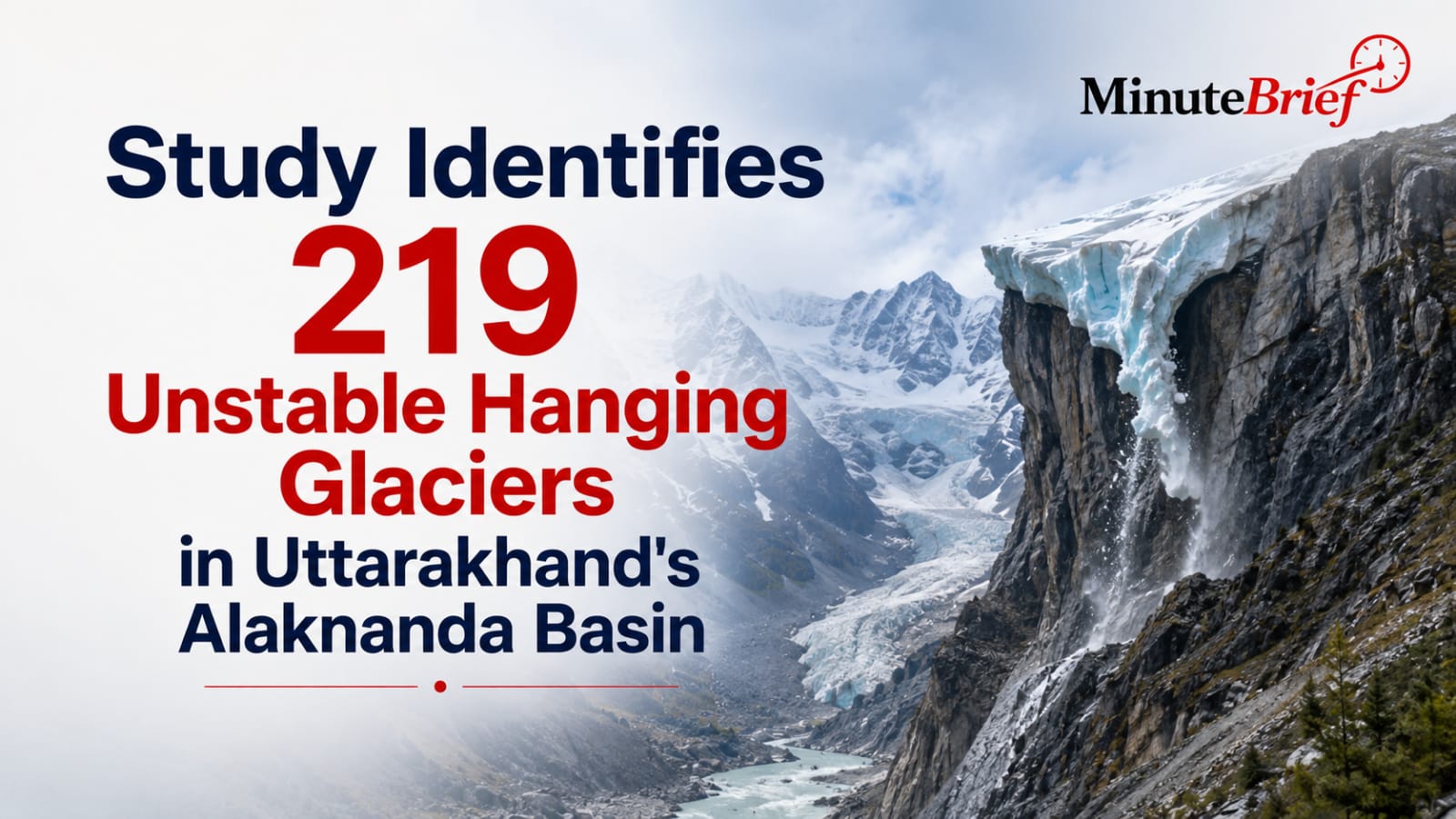
- Researchers identified 219 hanging glaciers in the Garhwal Himalayas covering 71.7 sq km, with nearly one-third concentrated in the high-risk Upper Alaknanda basin.
- Computer simulations indicate potential ice avalanche flows exceeding 50 meters in height near the Badrinath-Mana sector, threatening critical infrastructure and settlements.
- Exposure to avalanche-related hazards in the basin is projected to increase, with 120% more infrastructure area and a 17% population growth expected in at-risk zones by 2030 compared to 2000.
A basin-scale assessment published in Nature by an interdisciplinary team of researchers has mapped 219 hanging glaciers in Uttarakhand's Alaknanda basin. Glaciers perched on steep mountain faces are increasingly unstable as rising regional temperatures cause permafrost degradation and subglacial warming. The study estimates that the basin contains approximately 0.74 cubic kilometers of hanging ice mass prone to sudden detachment. Large-scale break-offs pose severe cascading risks, including river blockages, secondary glacial lake outburst floods (GLOFs), and massive ice-rock avalanches along vulnerable valleys housing pilgrim routes and urban settlements.
Source: Outlook India