In Brief
- Scientists engineered yeast to turn plastic waste into edible protein cookies.
- The technology can help address plastic pollution and food insecurity.
- The cookies are protein-rich and 3D-printed as part of NASA’s food challenge.
- This innovation aims to support deep-space missions and extreme environments.
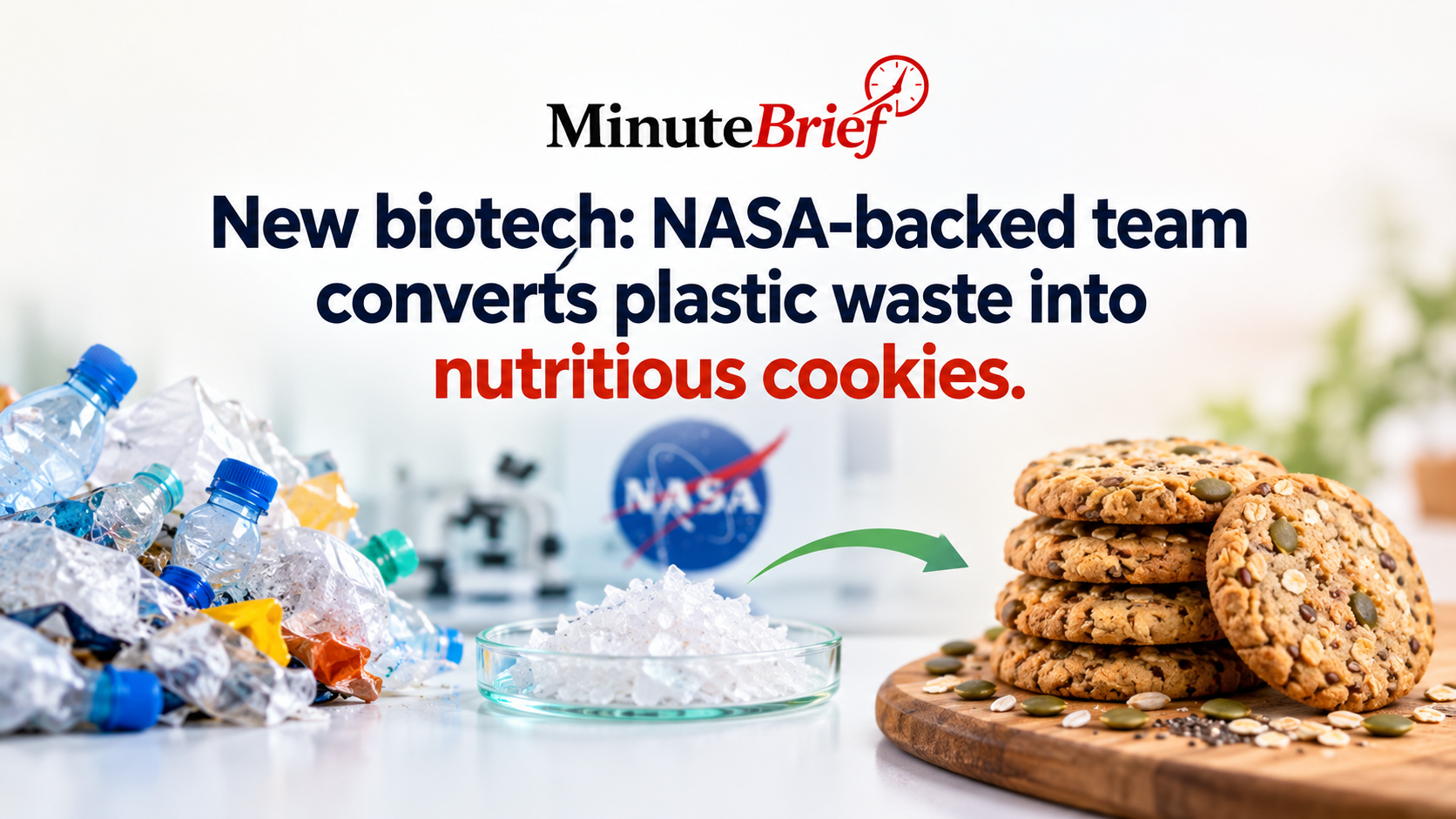
Scientists have successfully engineered yeast capable of converting polyethylene terephthalate (PET) plastic and agricultural waste into ingredients used to produce 3D-printed, protein-rich cookies called µBites. This development is part of NASA’s Deep Space Food Challenge, aiming to create sustainable food sources for long-duration space missions.
The engineered yeast produces not only proteins but also fats, vitamins, and vanilla flavoring from waste materials. This innovative system offers a potential dual solution for plastic pollution and food scarcity on Earth.
Researchers emphasise that this technology could supply nutritious food in extreme environments, such as deep-space missions, while also contributing to environmental sustainability by recycling plastic waste.
The project demonstrates a novel approach to addressing multiple global challenges by transforming plastic pollutants into valuable food resources, reflecting advancements in biotechnology and space exploration needs.