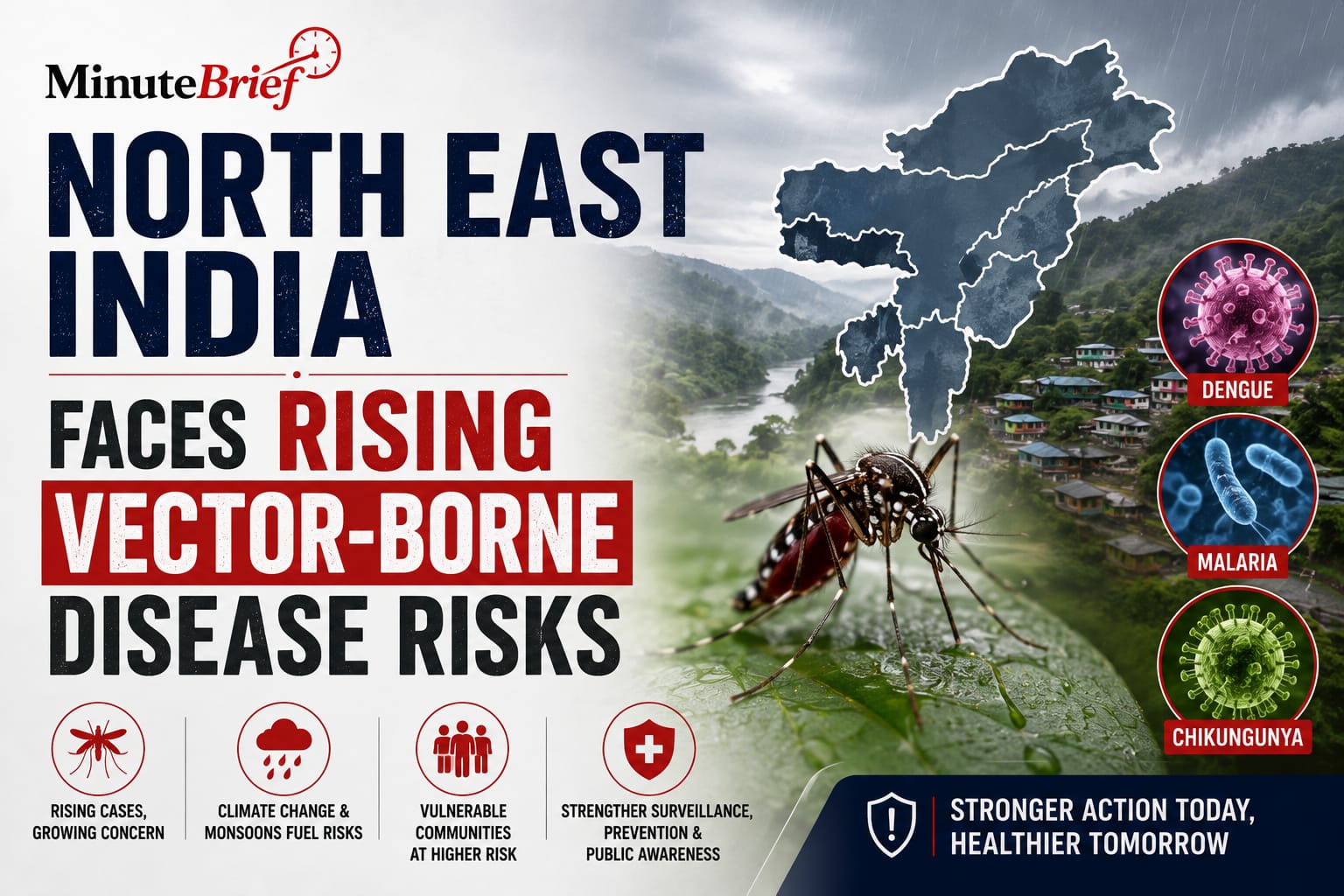
In Brief
- Vector-borne diseases are spreading to new areas across Northeast India.
- Urbanization and climate change contribute to an increased risk of infection.
- Dengue and chikungunya cases continue to rise in the region.
- Japanese encephalitis remains a major health concern despite declining national malaria rates.
The Northeast region of India faces a growing threat from vector-borne diseases as these illnesses spread into previously unaffected areas. According to a health panel, factors such as rapid urbanization and climate change are driving this escalation, particularly impacting local populations.
There has been a notable increase in dengue infections alongside a rise in chikungunya cases. While national malaria prevalence continues to decline, Japanese encephalitis remains a significant public health risk in the Northeast.
To tackle these challenges, the health panel recommended implementing innovative surveillance methods and targeted interventions to address information gaps affecting diverse and vulnerable populations, aiming to improve overall disease monitoring and control strategies.