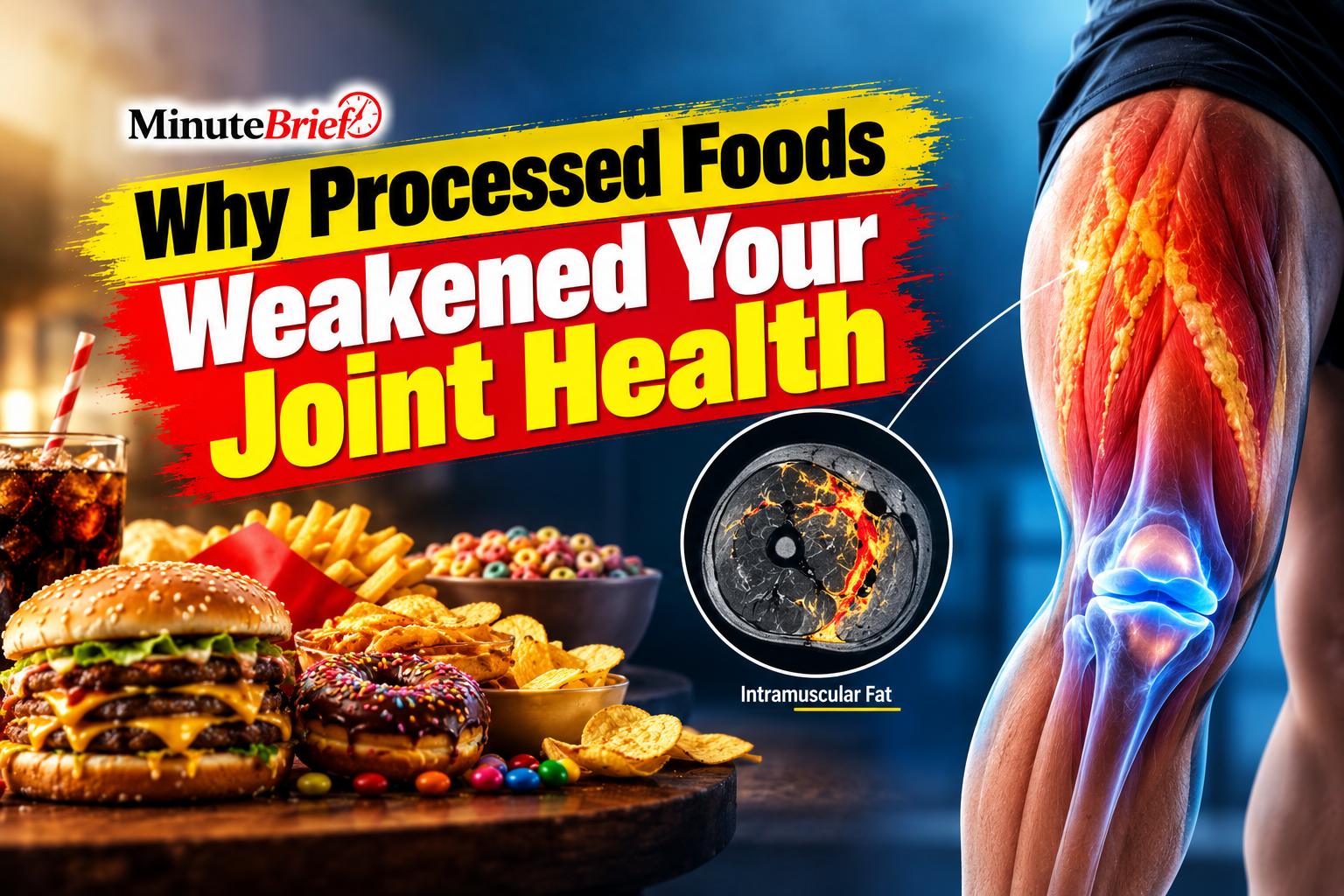
A high intake of ultra-processed foods may lead to unseen fat buildup inside your thigh muscles—a change that could increase your risk of developing knee osteoarthritis.
According to a study published in Radiology by researchers at the Radiological Society of North America (RSNA), diet quality plays a distinct role in muscle health, independent of how many calories you consume or how active you are.
What the Study Found
Researchers analyzed MRI scans and dietary data from 615 adults at risk for knee osteoarthritis (average age 60, average BMI 27). Key takeaways include:
- Substantial Daily Intake: Ultra-processed foods made up roughly 41% of the total food consumed by participants over a year.
- Direct Association: Higher consumption of ultra-processed foods directly correlated with increased fat stored within thigh muscles (intramuscular fat).
- Calorie-Independent Impact: The association held true even after accounting for total calorie and fat intake, physical activity, and demographic factors.
- Routine MRI Detection: Fatty degeneration—seen as streaks of fat embedded within healthy muscle tissue—was visible on standard, widely available non-enhanced MRI scans.
Common Ultra-Processed Foods
These industrially processed products often combine sugar, salt, fat, and artificial additives to target the brain’s reward system, making them easy to overeat:
- Packaged snacks, chips, and candies
- Breakfast cereals and mass-produced breads
- Margarines and processed spreads
- Hot dogs, ready-to-eat meals, and frozen pizzas
- Soft drinks and energy drinks
Why It Matters for Knee Health
Knee osteoarthritis is a major global health burden strongly linked to weight and lifestyle. When fat replaces healthy muscle tissue in the thighs, it can weaken the support structure surrounding the knee joint.
While weight loss programs usually focus solely on caloric restriction and exercise, these findings highlight that diet quality is equally critical. Swapping out ultra-processed foods for natural ingredients may help preserve thigh muscle strength and protect joint function over time.