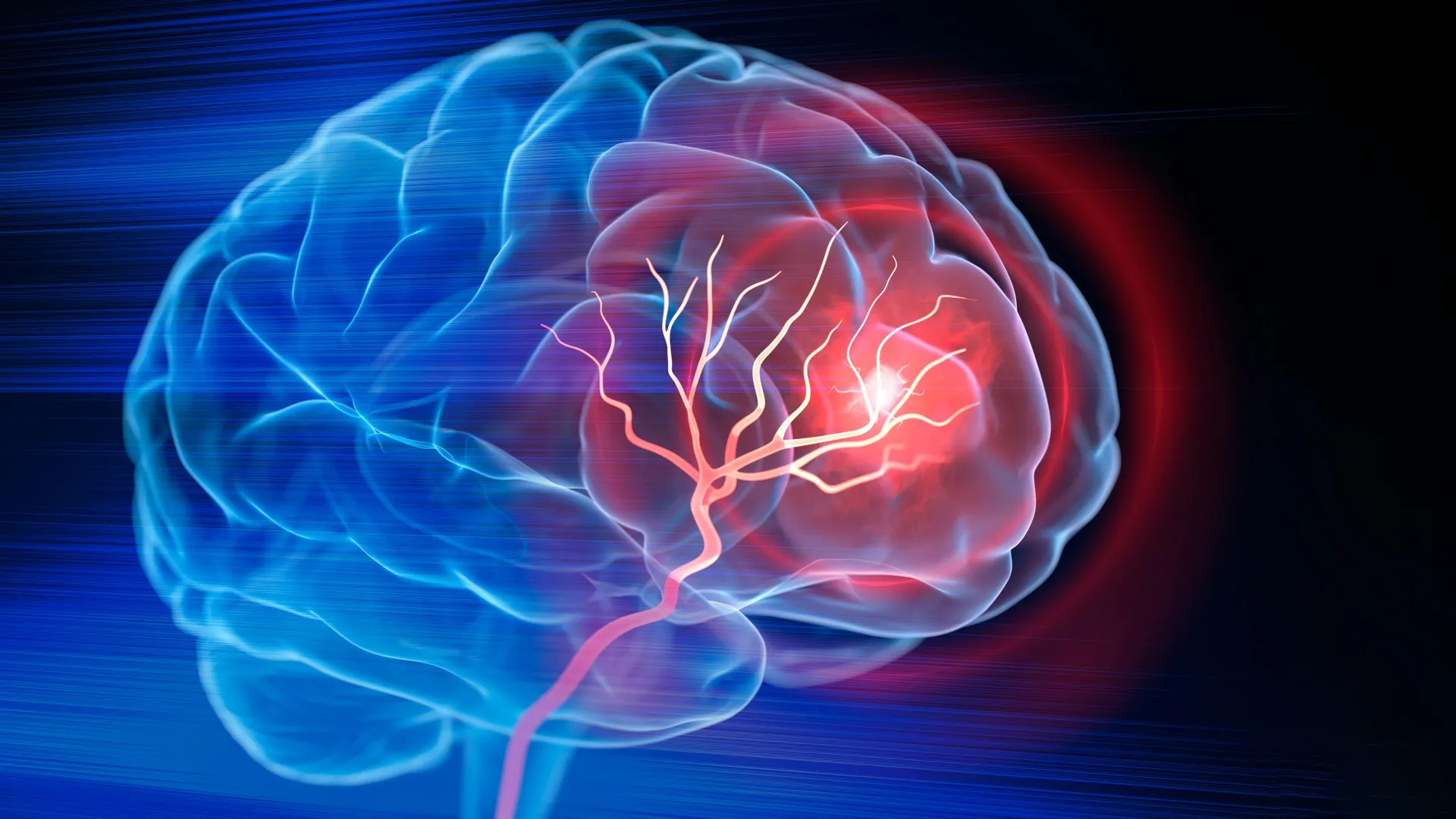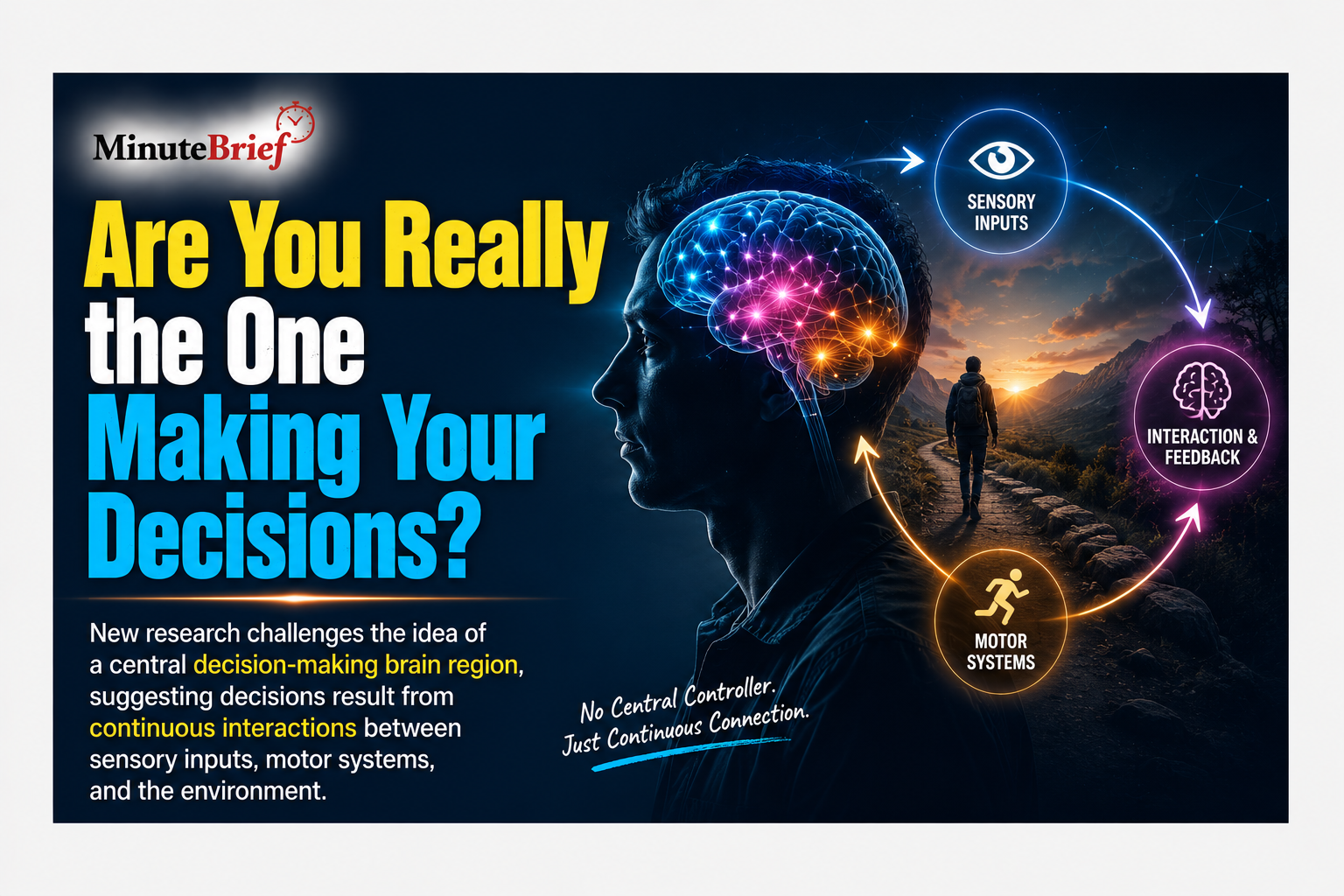
What feels like a conscious choice might not come from a central control hub in your brain after all. New research in the Journal of Cognitive Neuroscience suggests that decision-making is an illusion created by the real-time interaction of our senses, motor systems, and surroundings.
The Myth of the "Decision Center"
Traditionally, science assumed a three-step pipeline: Perception - Cognition (Making a choice) - Action.
However, Indiana University neuroscientist Tom James argues that while sensory and motor functions have clear brain mechanisms, there is no distinct "decision maker" region executing that middle step.
How Action Selection Actually Works
Instead of a command center, behavior emerges naturally through continuous feedback between the body and environment:
- The Robot Analogy: A simple robot programmed only to sense walls and move will look like it's strategically choosing a path, even though it possesses no internal decision-making system.
- Abstract Concepts: Much like an object's "center of mass," a "decision" is a useful label for complex behavior, not a physical mechanism you can isolate.
- Avoiding Logical Loops: Assuming an internal controller exists requires explaining what makes choices inside that controller—leading to an endless loop.
Rather than looking for a central switch, scientists are now focusing on how perception and movement dynamically work together to shape human behavior.
Source: Science Daily