In Brief
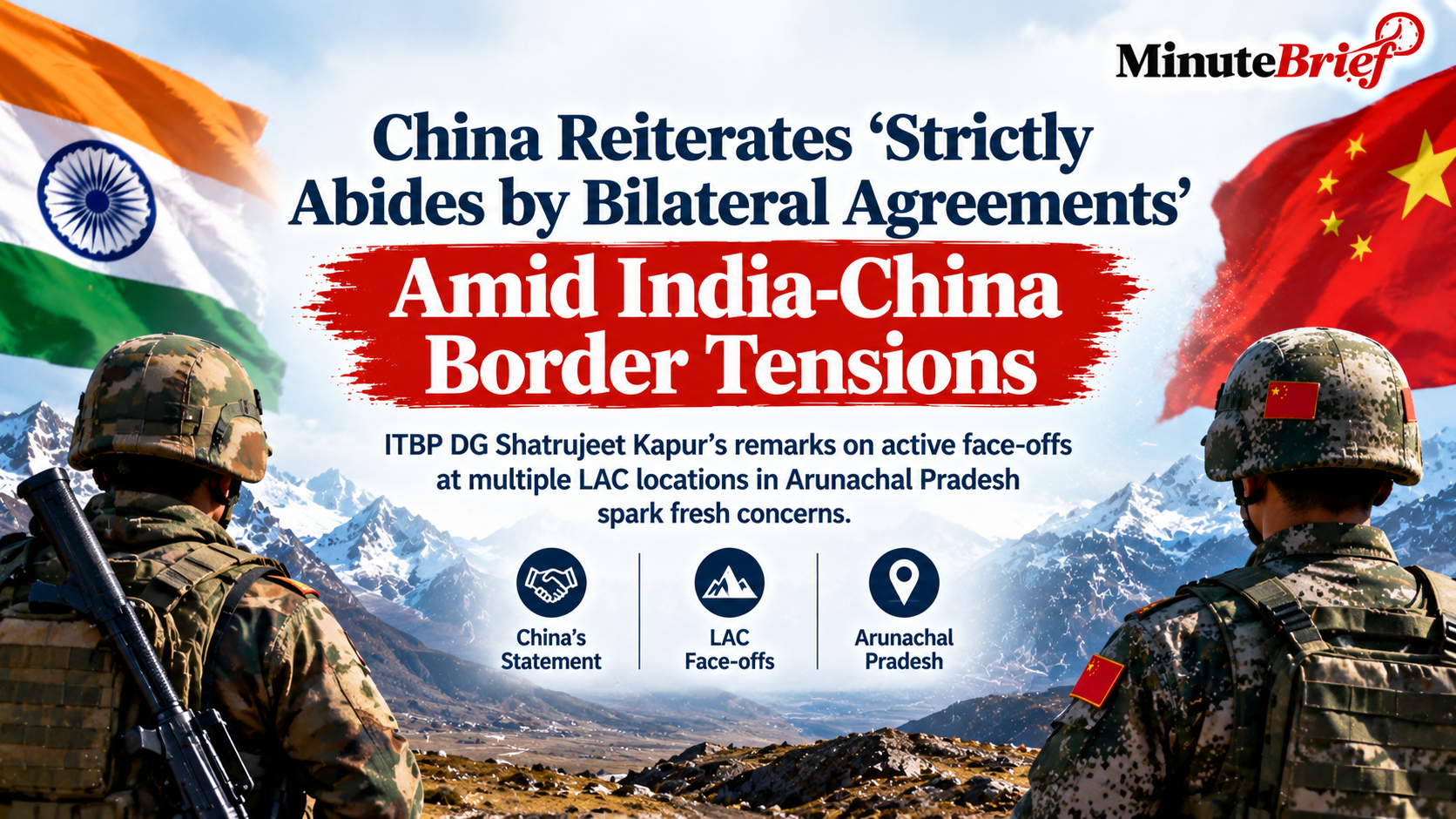
- ITBP Chief Shatrujeet Kapur officially acknowledged ongoing border skirmishes and face-offs at several points in Arunachal Pradesh during a media interaction.
- Reports and official acknowledgments noted that face-offs persisted even during Chinese President Xi Jinping’s visit to New Delhi for international engagements.
- The Ministry of External Affairs (MEA) asserted that border tensions typically escalate when Chinese forces diverge from established, mutually agreed patrolling patterns.
- In its official statement, China claimed that it strictly complies with existing bilateral understandings and conducts routine, lawful patrol activities along the border region.
ITBP Confirmation Sparks Diplomatic and Political Focus
Indo-Tibetan Border Police (ITBP) Director General Shatrujeet Kapur formally confirmed that localized face-offs between Indian security personnel and the People's Liberation Army (PLA) continue to occur at multiple vulnerable points along the Line of Actual Control (LAC) in Arunachal Pradesh.
The acknowledgment brought renewed public and political attention to eastern sector border dynamics, prompting domestic opposition leaders to demand parliamentary discussions on security updates.
MEA Clarifies Patrolling Deviations
Addressing the operational realities along the frontier, the Ministry of External Affairs (MEA) explained that friction points typically emerge when Chinese forces deviate from traditional patrol paths.
In response to the developments, Beijing released a diplomatic statement asserting that its forces operate strictly within the bounds of bilateral agreements and boundary accords, emphasizing routine patrols. Meanwhile, New Delhi continues to utilize existing diplomatic and military communication channels—including the Working Mechanism for Consultation and Coordination (WMCC)—to manage friction and prevent operational miscalculations.