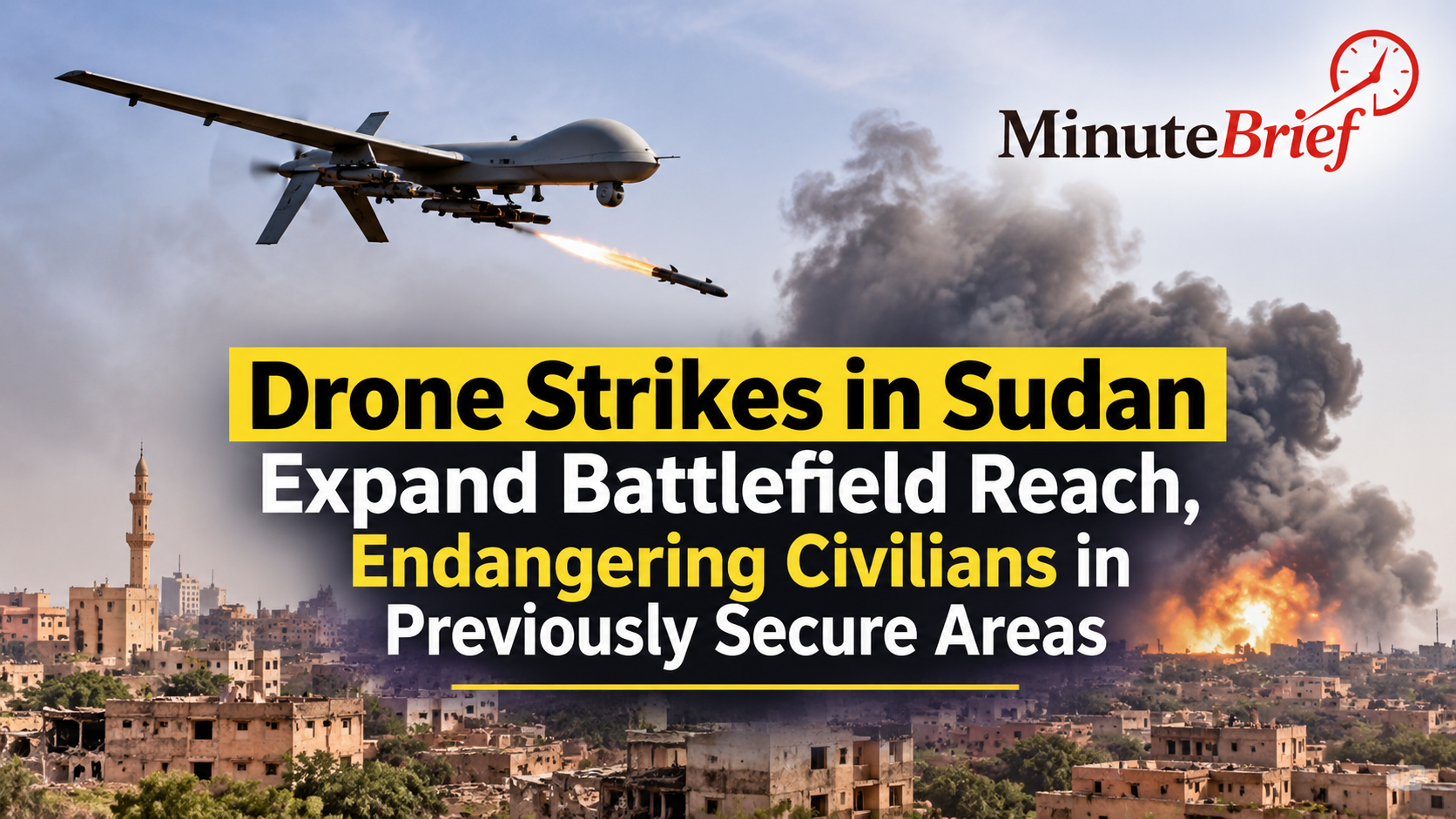
In Brief
- Drone strikes in Sudan disrupt supply lines and target civilian areas.
- Markets, hospitals, and homes face increasing risks amid conflict.
- Unmanned warfare expands battlefield into previously secure zones.
- Rising drone attacks worsen Sudan's deepening humanitarian crisis.
Drone warfare is fundamentally altering the conflict landscape in Sudan by eliminating traditional safe zones that civilians once relied on. Unmanned strikes have increasingly targeted key civilian infrastructure such as markets, hospitals, transport hubs, and even homes, amplifying the dangers faced by non-combatants. These developments are particularly alarming given Sudan's already fragile humanitarian situation.
The use of drones has disrupted critical supply lines, complicating access to food, medical supplies, and essential services. The expanding reach of unmanned aerial attacks means that locations previously considered secure are now vulnerable, heightening overall instability and fear among the population. This shift in warfare tactics underscores the challenges in protecting civilians during armed conflicts that employ advanced technology.
The sustained drone strikes contribute to the escalating humanitarian crisis, as they not only inflict physical damage but also impede relief efforts. International observers and aid organizations emphasize the urgent need for de-escalation and protection of civilian areas to prevent further deterioration of the crisis in Sudan.