In Brief
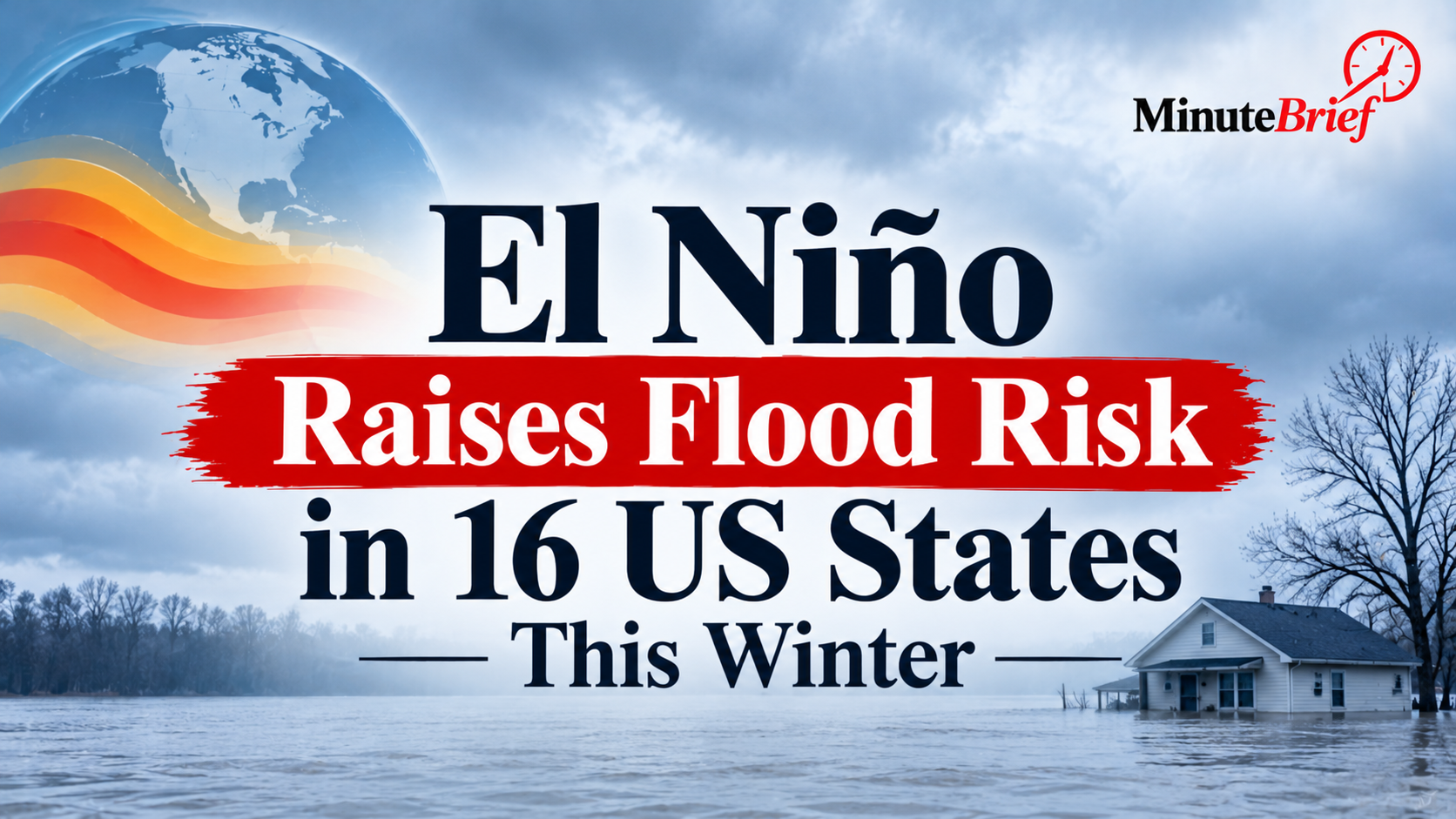
- El Niño increases flood risk in 16 US states this winter.
- Southern states and California face heavier precipitation, northern areas warmer.
- Pacific Northwest expected to have drier, milder conditions.
- Reduced water supply and wildfire risk rise in Pacific Northwest.
Potential Historic Strength Into Early 2027
Equatorial Pacific sea surface temperatures continue to climb, with NOAA’s November 2026 ENSO advisory confirming that a powerful El Niño is firmly established and likely to last into spring 2027. NASA satellite data similarly indicates rapid warming in the central and eastern Pacific, raising the possibility that this winter’s event could rival or exceed the historic 1997–98 El Niño.
Diverging Weather Patterns Across the U.S.
The shifting Pacific jet stream is expected to reshape North American weather patterns from December 2026 through February 2027:
- South, Southeast, and East Coast: Above-average precipitation is forecast from the Southwest across the Gulf Coast and Southeast—including Florida, Georgia, and the Carolinas—and up the Eastern Seaboard, elevating river and urban flood risks across 16 states.
- California and the West Coast: Heightened winter storm activity combined with exceptionally high astronomical tides between November 2026 and February 2027 threatens coastal flooding, beach erosion, and mudslides near recent wildfire burn scars.
- Northern Tier and Rockies: Above-normal temperatures are favored across the Pacific Northwest, Northern Rockies, Midwest, and Northeast. Reduced mountain snowpack could worsen drought conditions in the Northern Rockies and Pacific Northwest by spring and summer 2027.
Preparedness and Warning Upgrades
Ahead of the winter season, the National Weather Service (NWS) rolled out its operational Probabilistic Precipitation Portal and introduced "Particularly Dangerous Situation" phrasing for high-confidence blizzards and ice storms. Emergency managers have been urged to prepare for compound coastal flooding, freezing rain events in transition zones, and sudden cold outbreaks if polar vortex winds weaken.