In Brief
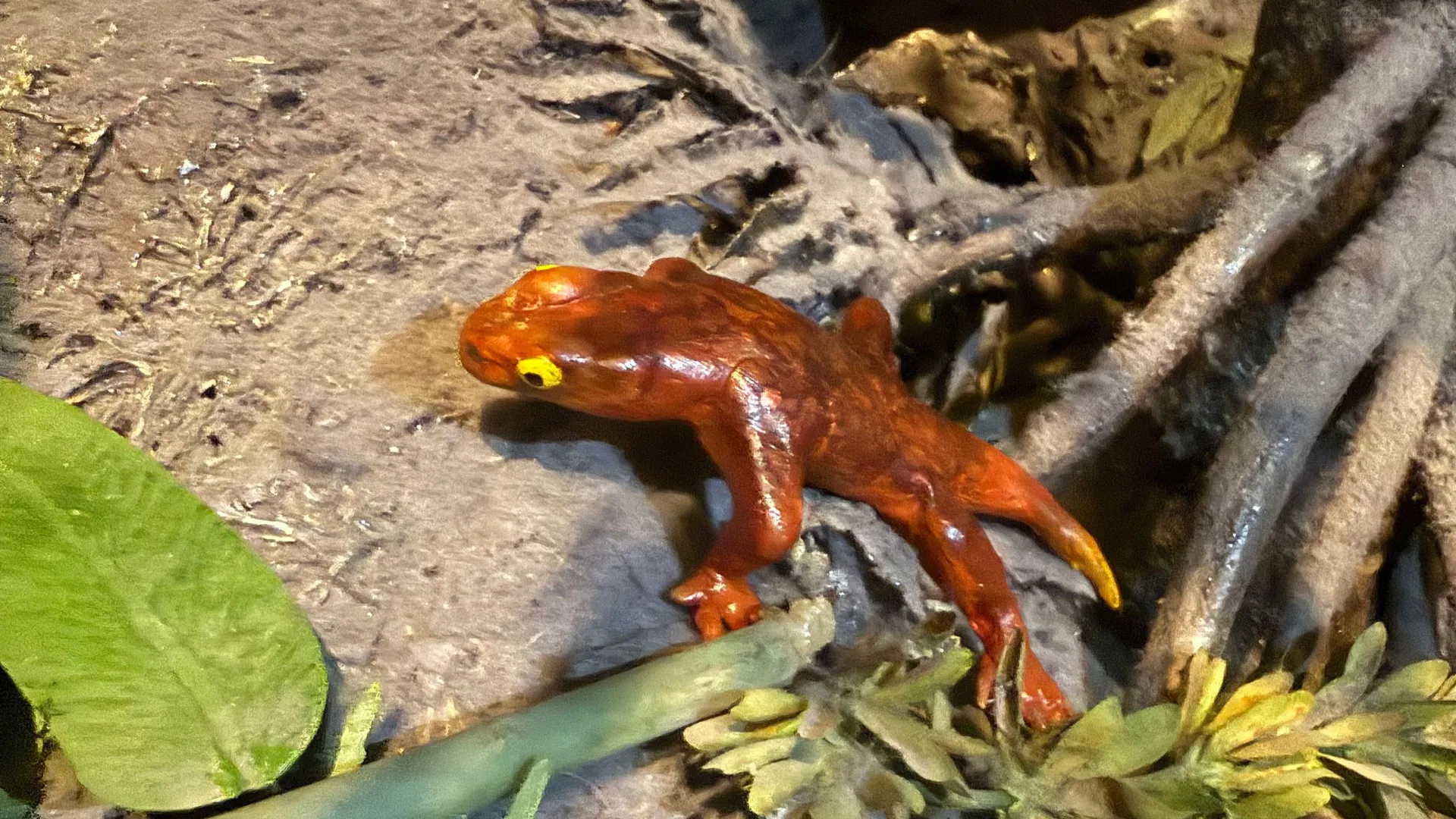
- Field Museum researchers discovered a new amphibian ancestor species from 309 million years ago.
- The find provides fresh insight into the evolution of frogs and salamanders.
- The species lived in what is now the Chicago area, then a swampy landscape.
- This discovery enhances understanding of amphibian diversity before dinosaurs appeared.
A Prehistoric Discovery Hidden in Museum Drawers
More than 300 million years ago during the late Carboniferous period, the Chicago region sat near the equator as a lush, swampy delta teeming with giant insects, early land vertebrates, and aquatic life. Rapid burial in sediment at the Mazon Creek Lagerstätte preserved organisms in unprecedented detail inside hardened mineral nodules.
While working through the Field Museum’s Women in Science internship program under assistant curator Arjan Mann, student researchers Allison Sefcovic and Payton Kohlberg examined a donated Mazon Creek specimen long cataloged as Amphibamus grandiceps. Co-author Calvin So noted that A. grandiceps had become a paleontological “waste bin taxon”—a catchall label for multiple early amphibian relatives. Careful comparison showed the fossil possessed a distinct number of vertebrae and unique cranial and skeletal proportions, officially separating it as a new genus and species.
Bridging Ancient Tetrapods and Living Amphibians
Describing the fossil’s condition, lead author Allison Sefcovic highlighted the preservation of delicate features such as dorsal scales, tiny belly ribs (gastralia), and distinct eye impressions. Alongside companion research on Mazon Creek amphibamiforms, the fossil also exhibits toe pads similar to those used by modern amphibians to grip surfaces.
Together, these traits confirm that key anatomical adaptations shared by today’s frogs, salamanders, and caecilians were already taking shape in swampy ecosystems 309 million years ago—demonstrating how revisiting existing museum collections can unlock major chapters in vertebrate evolution.