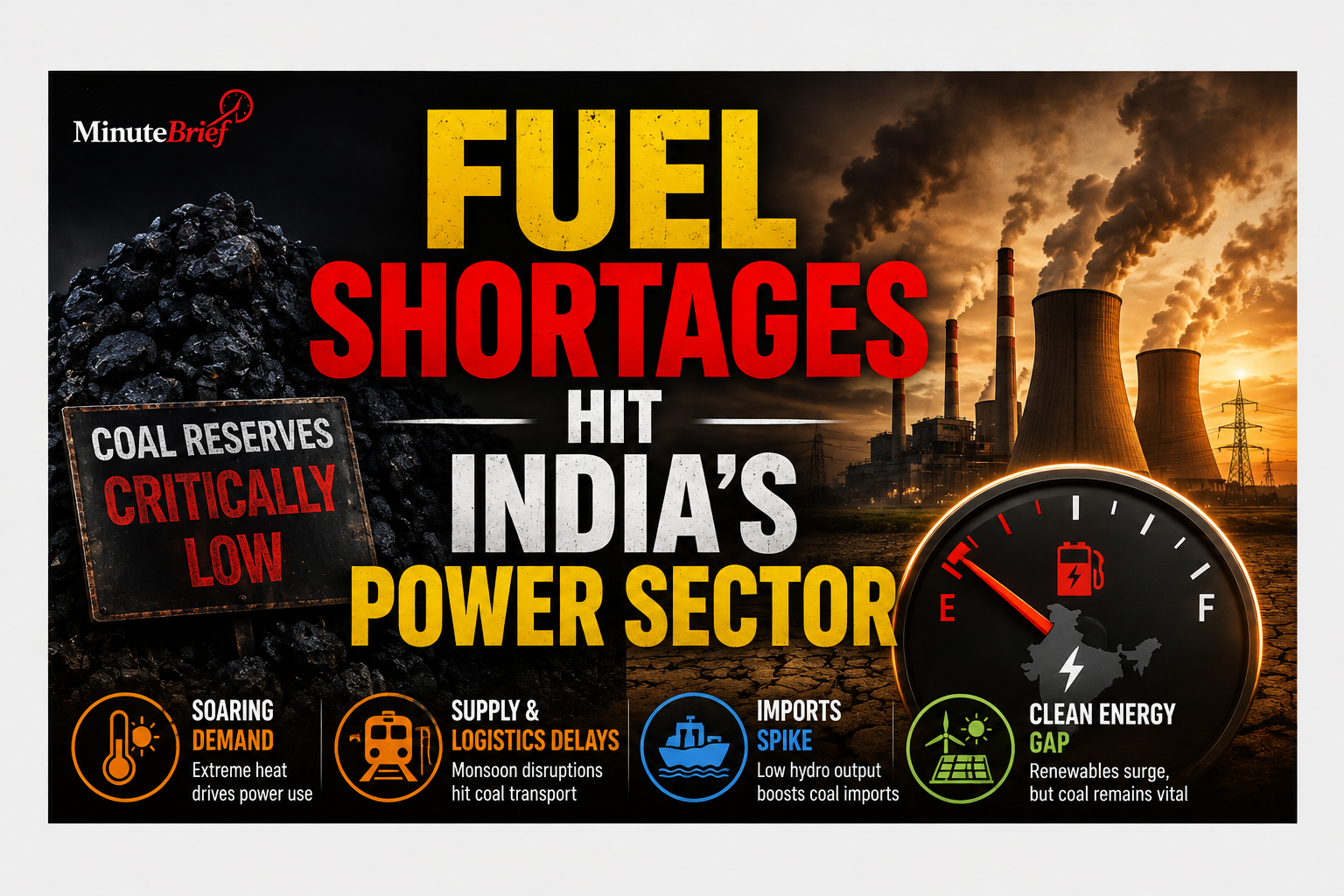
Nearly 40% of India's coal-fired power stations are running on critically low fuel reserves as a spell of unseasonably hot weather—linked to El Niño—drives up electricity demand across the country, according to government data released on Monday.
Data from the Central Electricity Authority shows that as of September 19, the number of plants with critical coal inventories rose to 74, up from around 60 the previous week. A plant is classified as having "critical" stocks if its fuel reserves drop below 25% of required levels or if it has less than three days' worth of generation supply remaining.
Key Factors Behind the Shortage
- Soaring Demand: Peak power demand in India hovered between 230 GW and 250 GW over the past week, driven by high temperatures and increased air-conditioning use. This follows an all-time record peak of 270.70 GW set in May.
- Supply & Logistics Delays: Erratic monsoon rainfall disrupted domestic coal transportation earlier this month, leading the coal and railway ministries to step up efforts to boost deliveries to affected plants.
- Hydro Output & Import Spikes: Subdued hydroelectric generation forced power utilities to rely heavily on thermal power, pushing coal imports in August to a 15-month high to bridge the gap.
- Clean Energy Gap: Although renewable energy generation surged roughly 21% between April and August, its intermittent nature means coal power remains essential for providing steady, round-the-clock electricity.
Analysts at Crisil note that the drop in power plant coal reserves appears to be a temporary supply-chain bottleneck rather than a structural shortage of coal. Government ministries continue to coordinate rail shipments to stabilize reserves as demand remains elevated.