A major study published in the European Heart Journal suggests that widespread consumption of common food preservatives found in ultra-processed foods may carry unexpected cardiovascular risks.
Researchers from INSERM and Sorbonne Paris Nord University tracked more than 112,000 adults in France over an average of seven to eight years to examine how long-term exposure to routine preservatives influences heart health.
Key Findings From the Study
- Widespread Exposure: Preservatives are nearly impossible to avoid in modern diets—99.5% of participants consumed at least one food preservative during the study's monitoring period.
- Non-Antioxidant Preservatives: Participants consuming the highest levels of non-antioxidant preservatives (used to prevent bacterial growth and mold) had a 29% higher risk of hypertension and a 16% higher risk of cardiovascular disease compared to those with the lowest intake.
- Antioxidant Preservatives: High intake of antioxidant preservatives (used to prevent food browning and rancidity) was associated with a 22% higher risk of high blood pressure.
The 8 Preservatives to Watch Out For
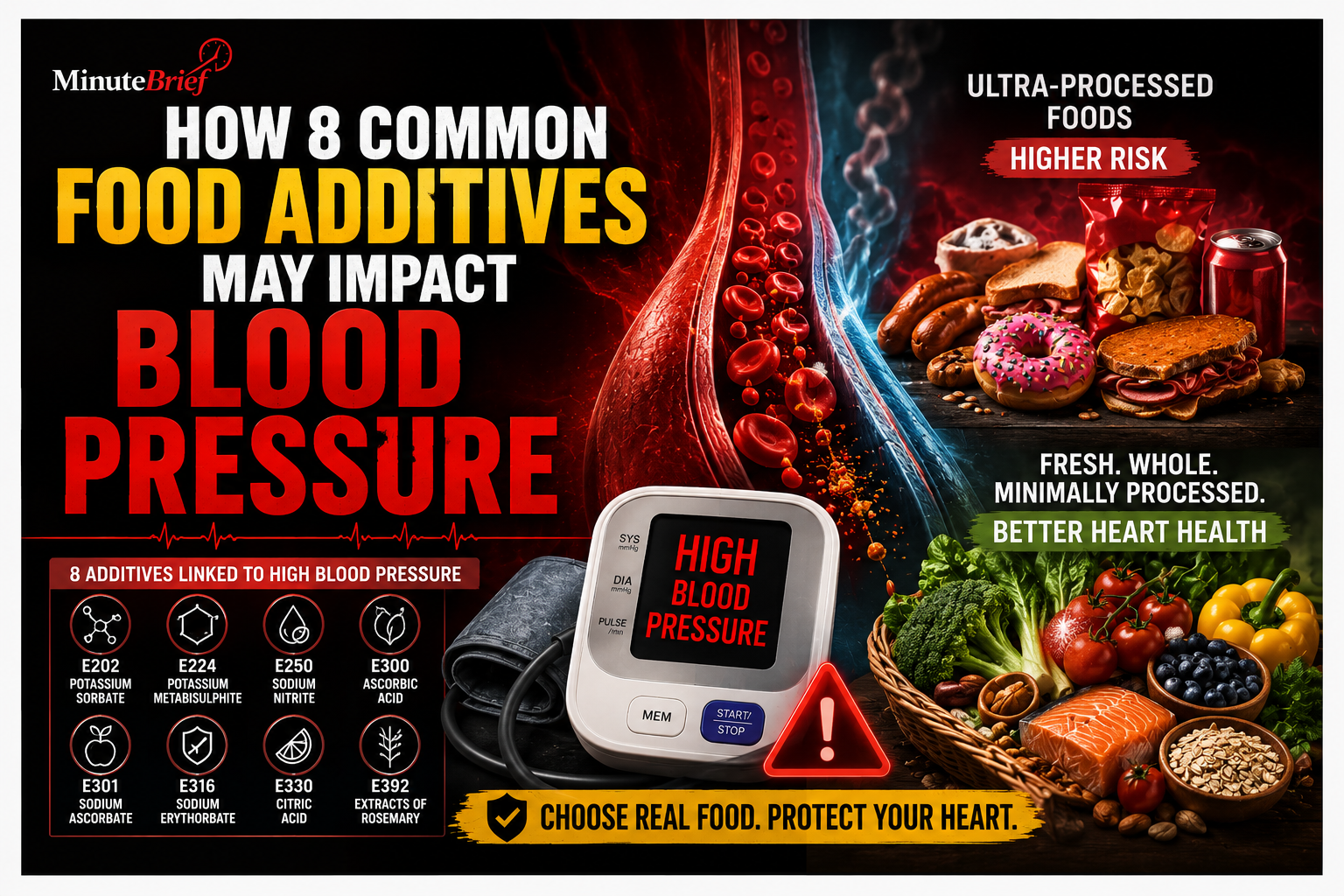
While researchers analyzed 17 commonly used preservatives, eight specific additives stood out for their link to increased high blood pressure:
- Potassium sorbate (E202)
- Potassium metabisulphite (E224)
- Sodium nitrite (E250)
- Ascorbic acid (E300) – Also specifically associated with an increased risk of overall cardiovascular disease, such as heart attack and stroke.
- Sodium ascorbate (E301)
- Sodium erythorbate (E316)
- Citric acid (E330)
- Extracts of rosemary (E392)
How Might Preservatives Affect the Body?
Because the study was observational, it shows a strong statistical association rather than direct cause and effect. However, biological evidence suggests two main mechanisms:
- Oxidative Stress: Certain additives can cause reactive molecules to build up in the body, damaging cellular health over time.
- Metabolic Changes: Researchers suspect some preservatives may alter pancreatic function or disrupt the gut microbiota (the beneficial bacteria in the digestive tract), influencing blood sugar regulation and systemic inflammation.
What Should Consumers Do?
Health experts and lead authors of the study recommend focusing on fresh, whole, and minimally processed foods while avoiding unnecessary additive-heavy products whenever possible. The study’s authors have also called on global regulatory bodies, including the FDA and EFSA, to re-evaluate the health risks associated with routine preservative exposure in the food supply.