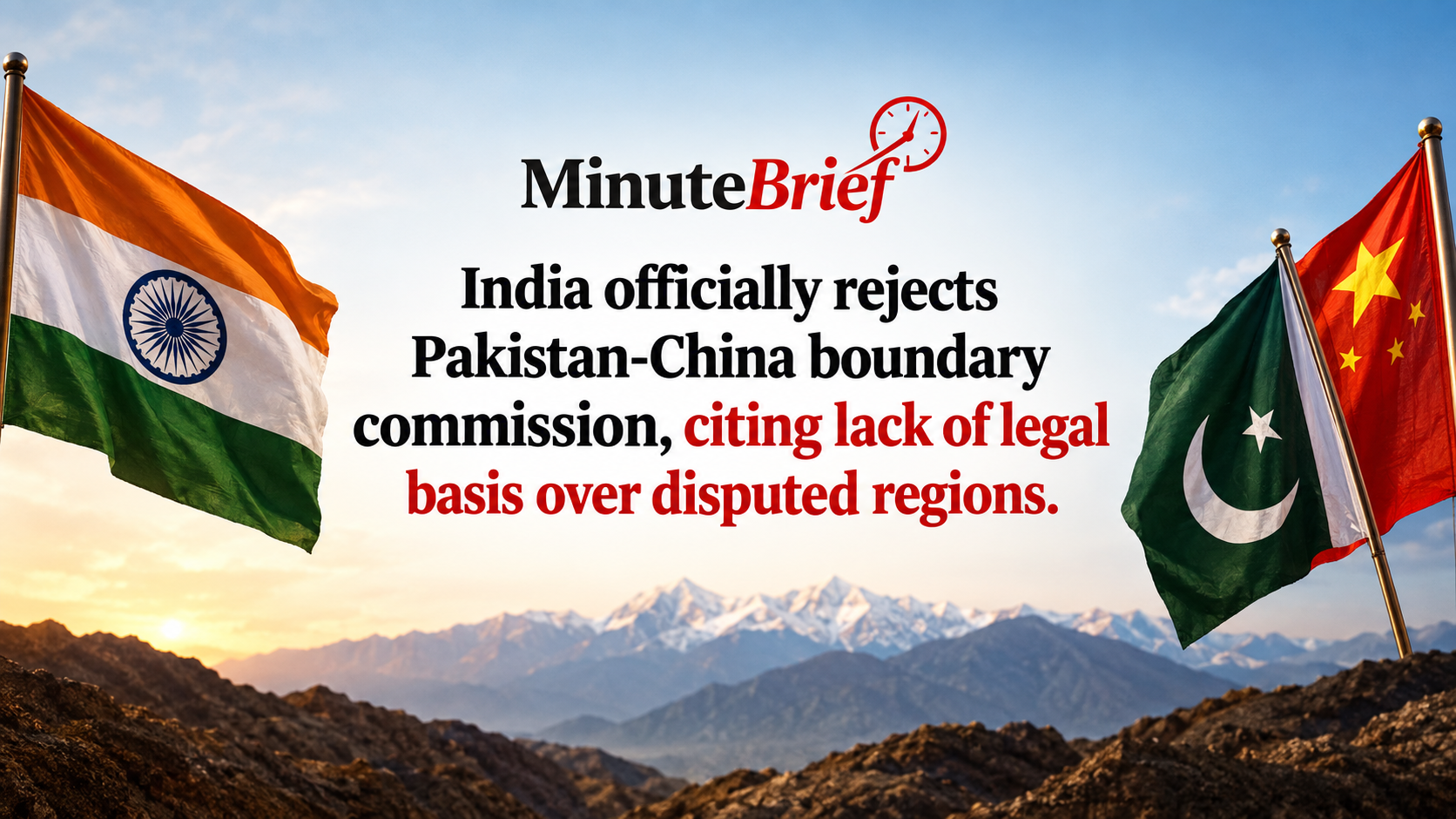
In Brief
- India rejects Pakistan-China Boundary Joint Commission as without legal basis.
- MEA states Jammu and Kashmir and Ladakh remain integral parts of India.
- No boundary exists between Pakistan and China, affirms India's official stance.
- India firmly opposes any attempts to alter its territorial sovereignty through such commissions.
The Ministry of External Affairs (MEA) of India has officially rejected the establishment of a Pakistan-China Boundary Joint Commission. The MEA termed the commission as "without any legal basis," emphasizing that it holds no validity or recognition from the Indian government.
India stated there is no boundary between Pakistan and China. It reiterated that Jammu and Kashmir and Ladakh "are and will always remain integral and inalienable parts of India." This reaffirmation underscores India’s firm stance on its territorial integrity and sovereignty.
The rejection of the commission follows concerns that the joint body, formed by Pakistan and China, could imply a boundary agreement between the two countries on territory claimed by India. Indian authorities have made clear that any such move does not affect India’s claims or control over the region.
The statement also conveys India’s broader policy against any unilateral or bilateral actions that attempt to change the status of disputed territories without its consent. Indian officials continue to uphold constitutional and legal facts regarding its territorial boundaries.