In Brief
- Ashoke Sen received the Oskar Klein Medal for his work in string theory.
- The award is given by Stockholm University and the Nobel Committee for Physics.
- The Oskar Klein Medal honours outstanding contributions to theoretical physics.
- Sen's recognition highlights India's role in global scientific research.
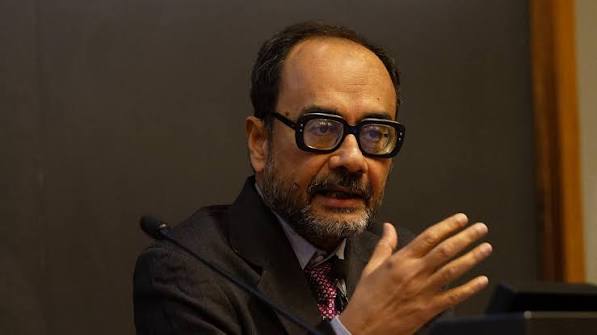
Indian theoretical physicist Ashoke Sen has been honoured with the prestigious Oskar Klein Medal for his pioneering work in string theory on 22 October. The award, presented by Stockholm University in collaboration with the Nobel Committee for Physics of the Royal Swedish Academy of Sciences, recognises exceptional achievements in theoretical physics.
Sen's contributions have significantly advanced the understanding of string theory, a framework that attempts to reconcile quantum mechanics and general relativity by positing that fundamental particles are one-dimensional strings. His work has helped clarify the mathematical structure and physical implications of the theory.
The Oskar Klein Medal is awarded to scientists who have made notable breakthroughs in theoretical physics, commemorating the legacy of the Swedish physicist Oskar Klein. Receiving this medal places Sen among an elite group of physicists recognised for their deep impact on the field.
This accolade highlights the growing prominence of Indian scientists on the international research stage, reflecting the country's expanding role in cutting-edge physics. Sen’s achievements have inspired numerous researchers and students within India and abroad, strengthening the global scientific community’s ties.