In Brief:
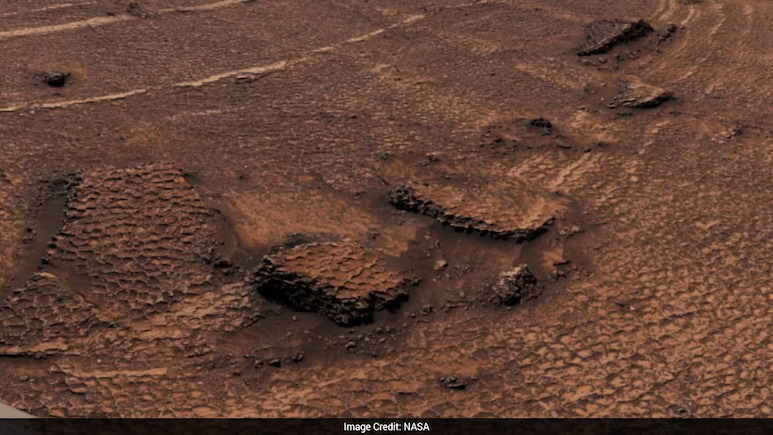
- NASA's Curiosity rover found a vast, honeycomb-like pattern of fractures in Mars' "Valle Grande."
- The 1.5 - 3 inch shapes span continuously around the 20-foot "Miraflores" butte, far exceeding past observations.
- Captured via a 360-degree panorama during sols 4,930 and 4,931.
- Scientists suspect ancient mud cracks, temperature cycles, or sediment compression.
NASA’s Curiosity rover has discovered a vast expanse of honeycomb-like polygonal fractures on Mars as it climbed a valley named "Valle Grande." The geometric shapes, measuring about 1.5 to 3 inches (4 to 8 centimeters) across, stretch continuously across the landscape and wrap around the nearby 20-foot-tall "Miraflores" butte captured in a 360-degree panorama during the 4,930th and 4,931st Martian days (sols) of the mission. This honeycomb terrain is significantly larger in scale than similar features previously observed.
Scientists, including mission project scientist Ashwin Vasavada, are analyzing the shapes and chemistry of the formations to determine their origin, noting that such patterns can form from ancient mud cracks, temperature cycles, or sediment compression that squeezed out water.
Source: NDTV