In Brief
- The Dengue Early Warning System (DEWS) merges six years of historical epidemiological data with daily weather metrics using a machine-learning algorithm.
- DEWS models each district independently to factor in distinct environmental variables, categorizing risk into four levels: low, moderate, high, and very high.
- The system aims to transition public health management from reactive outbreak response to proactive resource allocation and mosquito control.
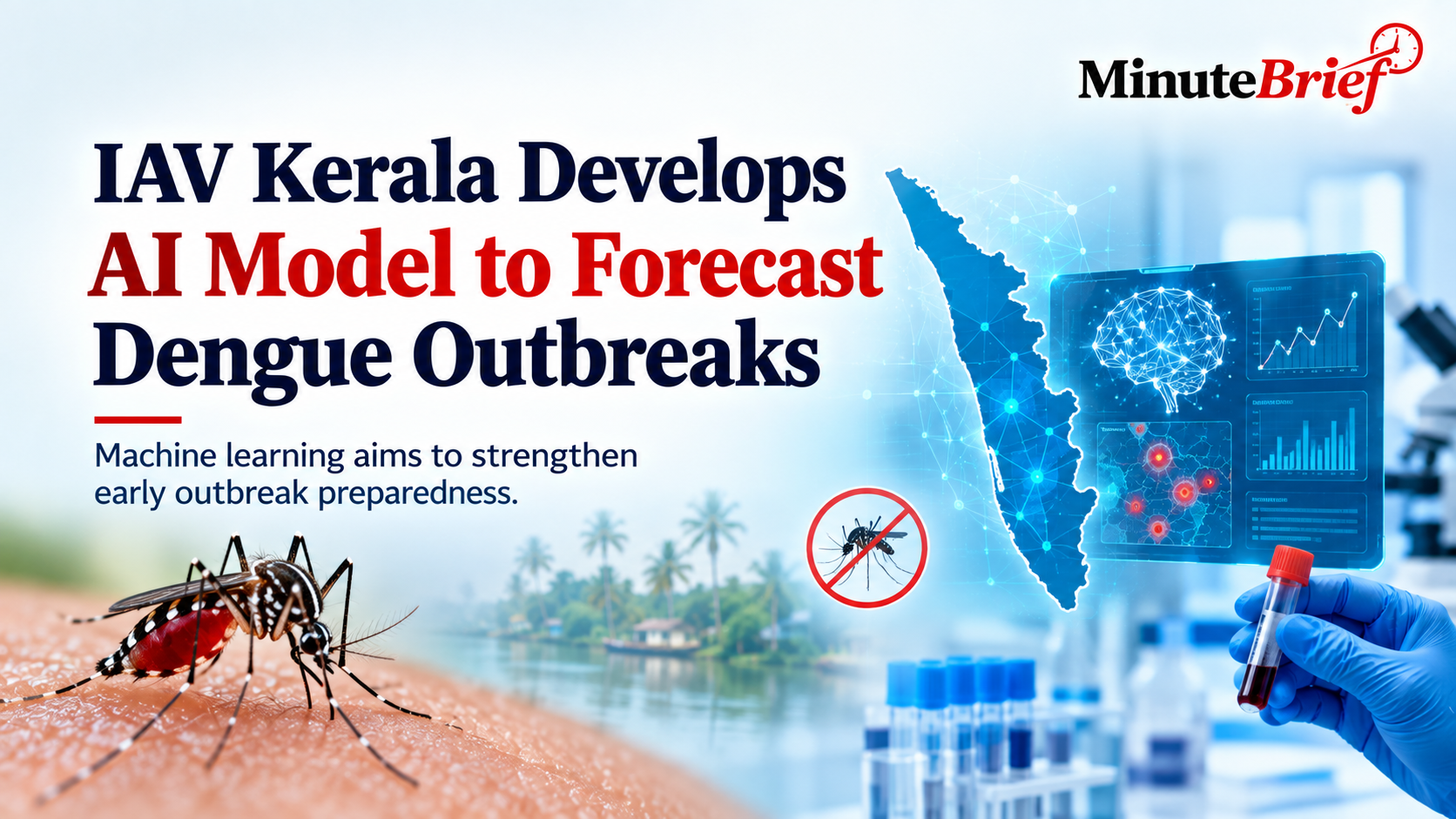
Scientists at the Institute of Advanced Virology (IAV), an autonomous institution under the Government of Kerala based in Thiruvananthapuram, have launched a web-based forecasting system called the Dengue Early Warning System (DEWS) to predict dengue transmission trends in advance. Led by Dr. Abhinand C.S. from the Department of Virus Genomics, Bioinformatics and Statistics, the research team built a machine-learning framework that combines six years of epidemiological data (March 2020 to February 2026) provided by the State Surveillance Unit (SSU) with meteorological records from the India Meteorological Department.
The platform processes daily local climate metrics—including temperature, rainfall, and relative humidity—which directly impact vector survival, breeding dynamics, and viral replication rates within Aedes mosquitoes. DEWS evaluates each of Kerala’s 14 districts as an isolated unit to account for specific geographical topographies, water bodies, and drainage systems. The system translates these predictions into four distinct risk tiers (very high, high, moderate, and low) to help district health officers deploy preventive larvicides, allocate hospital beds, and execute targeted vector control before infection spikes occur. According to IAV Director Dr. E. Sreekumar, the platform is undergoing yearly validation and may eventually be expanded to track other Aedes-borne viral infections such as chikungunya and Zika.