In Brief
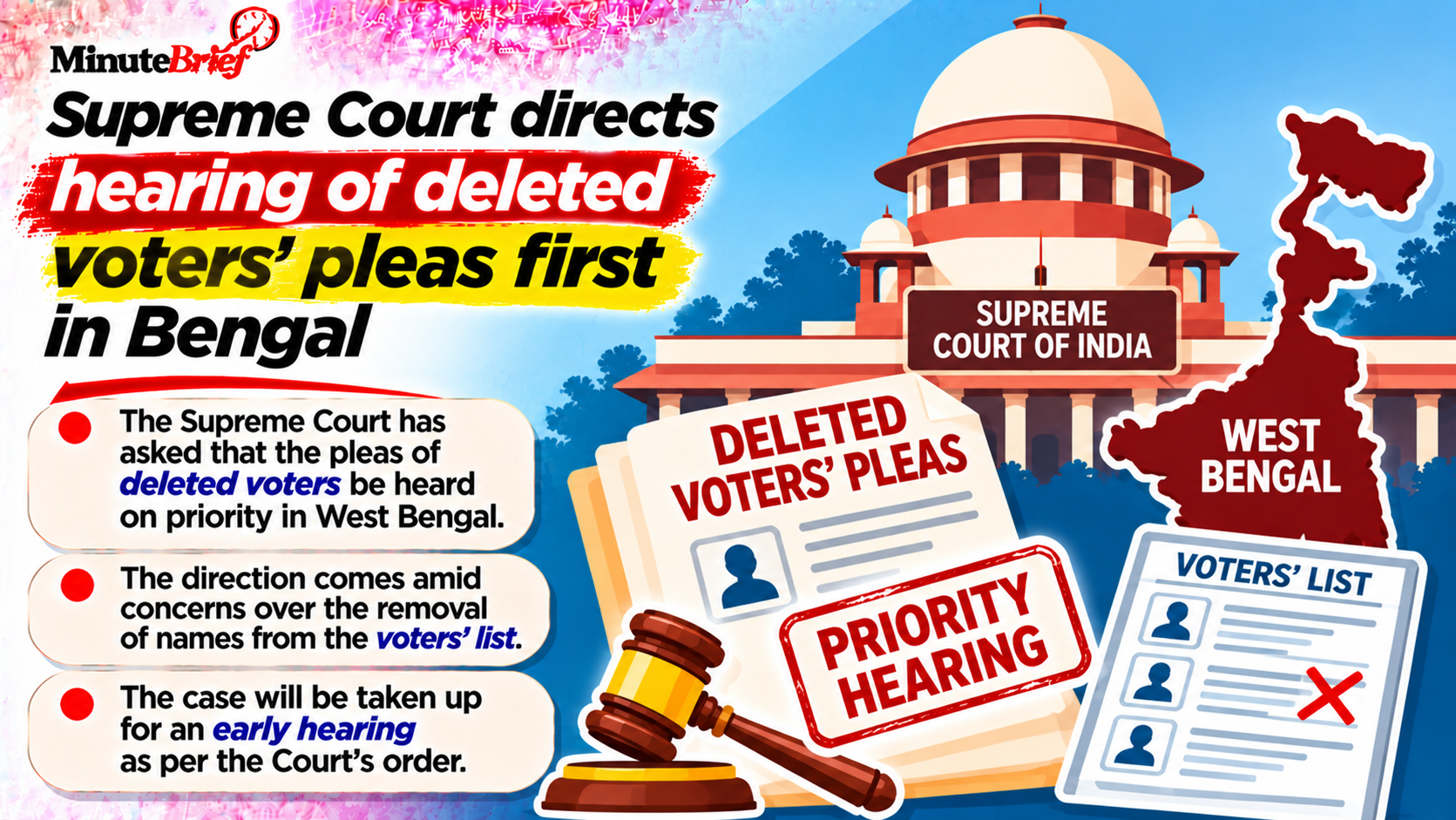
- Supreme Court directs priority hearing of deleted voters’ pleas in Bengal's SIR tribunals.
- ECI instructed to increase tribunals and relocate them to Kolkata hubs for quicker appeal disposal.
- Directive aims to address backlog of appeals by deleted voters efficiently.
- Bench orders Calcutta High Court and ECI to implement measures to expedite resolution.
The Supreme Court of India has directed the Election Commission of India (ECI) and the Calcutta High Court to prioritise hearing appeals filed by voters whose names were deleted from the electoral rolls in West Bengal. This directive specifically targets the State Information Reports (SIR) tribunals responsible for adjudicating such disputes. The court emphasised expeditious disposal of the backlog of pending appeals affecting deleted voters.
To facilitate this, the Supreme Court ordered the ECI to increase the number of SIR tribunals and to relocate them to central hubs within Kolkata. This measure is intended to streamline the appeals process and ensure faster and more accessible hearings for affected individuals.
Background
West Bengal has seen a significant number of electoral roll deletion cases, with voters challenging their removal from the lists. The accumulation of pending appeals at SIR tribunals prompted the Supreme Court to intervene to uphold the rights of voters and ensure proper electoral representation. The court’s intervention aims to strengthen the efficacy and fairness of the electoral process in the state.
Why it matters
Electoral roll deletions directly impact citizens’ democratic rights to vote. Delays in hearing appeals can disenfranchise eligible voters unjustly. The Supreme Court’s order seeks to safeguard these rights by mandating swift tribunal hearings and enhancing accessibility through tribunal relocation. Improved tribunal infrastructure and procedural efficiencies will contribute to restoring public confidence in the election system. This also reflects judicial oversight ensuring fairness in electoral roll management beyond administrative actions.