In Brief
- The Supreme Court clarified the application of Article 22(2) of the Indian Constitution regarding police custody and liberty protections.
- The 24-hour limit to present a detained individual before a Magistrate starts from the moment of actual physical detention, not when the formal arrest entry is logged.
- The ruling aims to prevent law enforcement agencies from delaying judicial oversight through delayed formal arrest documentation.
Constitutional Clarification on Pre-Arrest Custody
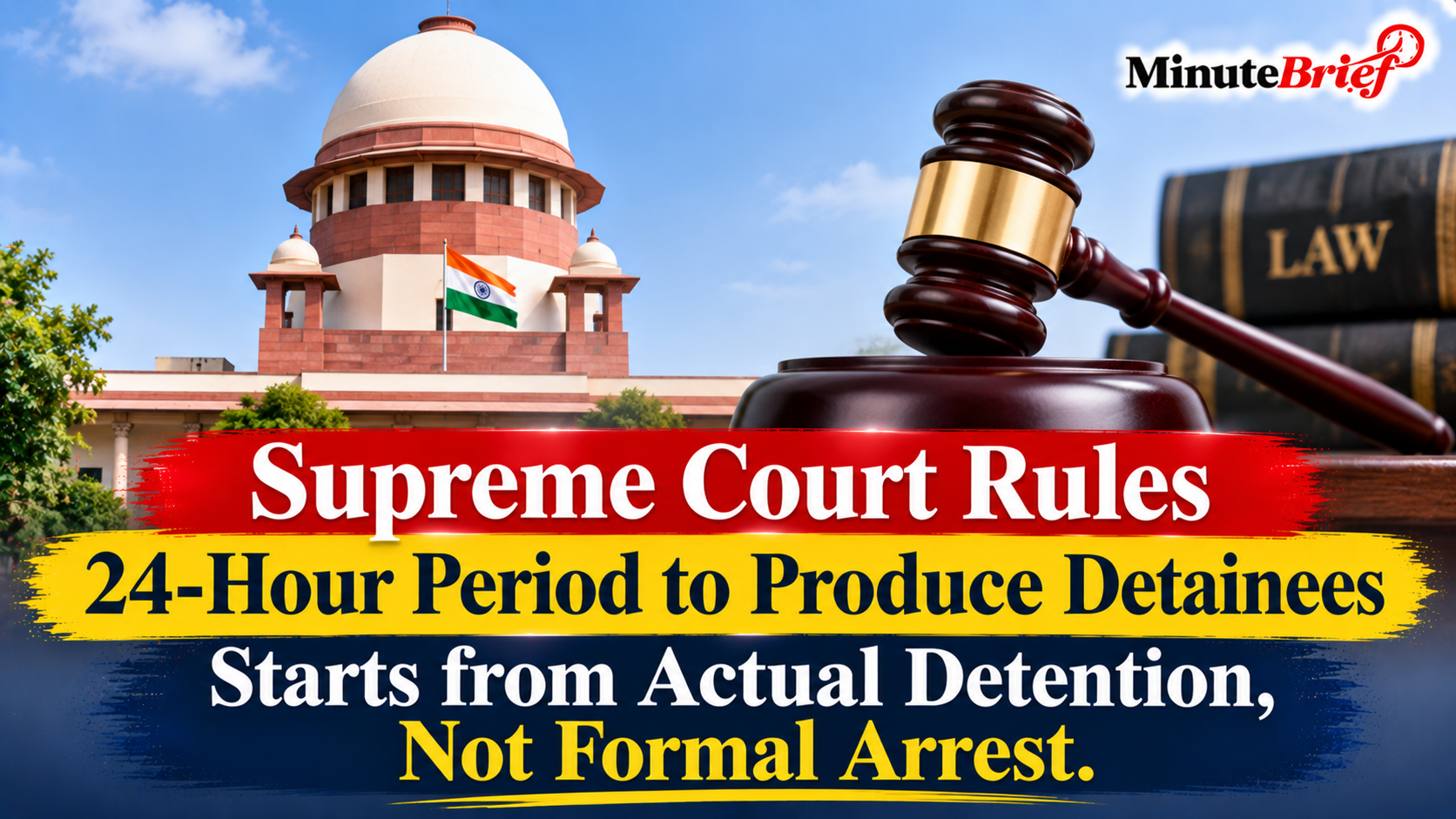
In a major legal precedent reinforcing personal liberty safeguards, the Supreme Court ruled on November 5 regarding the procedural timeline for law enforcement detentions. The apex court held that the 24-hour window mandated under Article 22(2) of the Indian Constitution starts as soon as an individual is physically detained, not when officers formally register an arrest.
Article 22(2) grants every arrested or detained person the fundamental right to be presented before the nearest Magistrate within 24 hours of detention. The court's clarification addresses historical ambiguities where investigative authorities recorded formal arrests hours or days after taking individuals into actual physical custody.
Significance for Civil Liberties and Legal Procedure
Legal experts view the ruling as a crucial check on arbitrary police powers and potential custodial delays. By tying the 24-hour constitutional timer directly to physical detention, the court ensures that judicial oversight begins immediately, protecting citizens from unrecorded or prolonged pre-arrest custody.
Next Steps
Lower courts and police departments across all jurisdictions will now be required to adapt their booking and reporting protocols to align strictly with the physical timeframe of initial detention.