In Brief
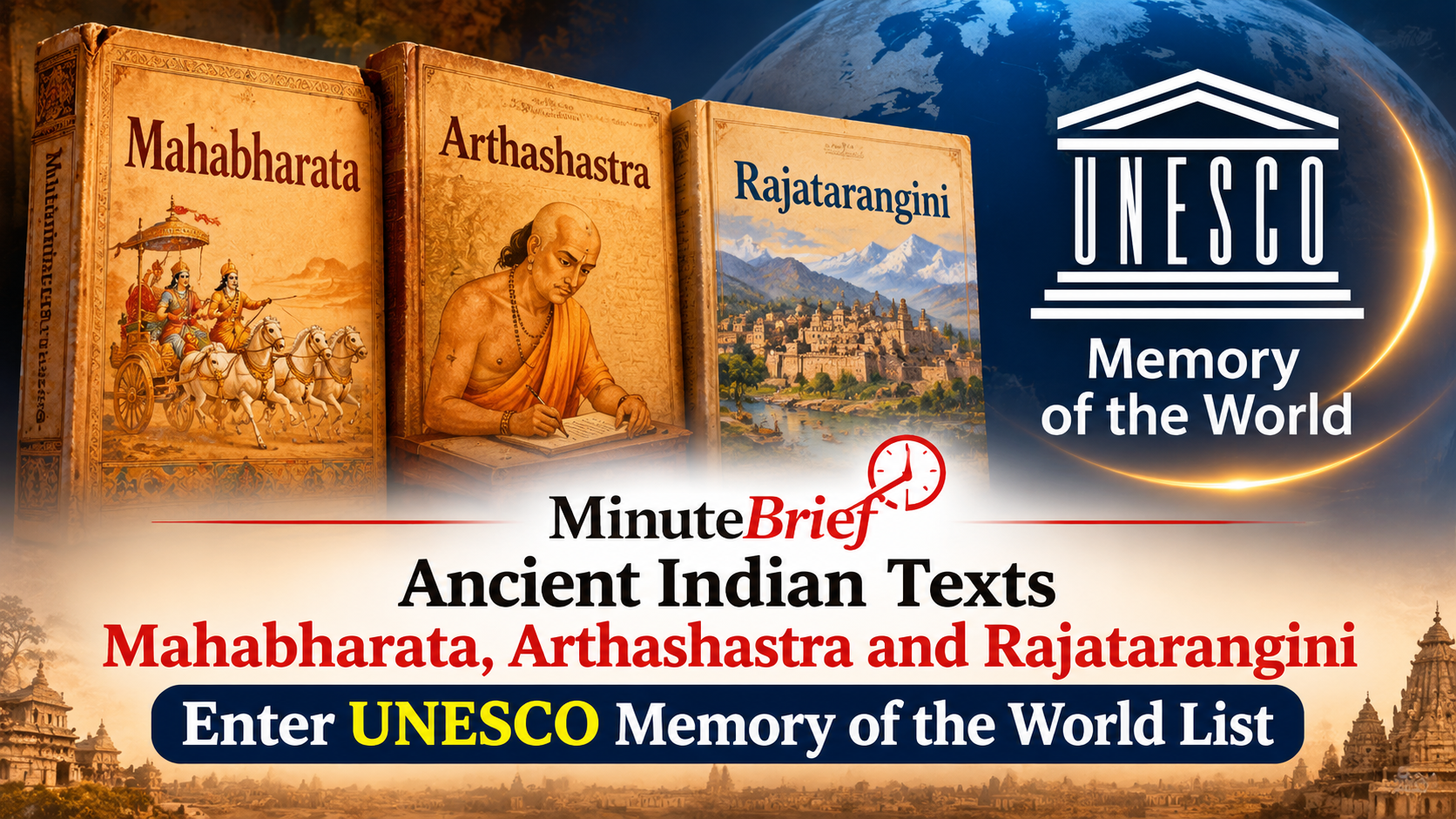
- UNESCO added Mahabharata, Arthashastra, Rajatarangini to its Memory of the World Register.
- This recognition underscores India's contributions to literature, history, and political philosophy.
- The inscriptions reflect India's rich cultural and intellectual heritage.
- The inclusion promotes global awareness and preservation of these ancient texts.
UNESCO Recognition Highlights India’s Literary and Historical Heritage
UNESCO has officially inscribed three monumental ancient Indian texts—the Mahabharata, the Arthashastra, and the Rajatarangini—on its Memory of the World Register. This move acknowledges their significant place in global heritage, reaffirming India's longstanding tradition of recording history, literature, philosophy, and political thought.
The Mahabharata, an epic poem of vast literary and religious importance, details the historic struggles between two sets of cousins that have shaped cultural narratives across South Asia. The Arthashastra, attributed to Kautilya, serves as an ancient treatise on statecraft, economic policy, and military strategy, reflecting sophisticated political philosophy. The Rajatarangini chronicles the history of Kashmir through detailed accounts spanning centuries, representing one of the earliest historical records from the region.
This inclusion in the Memory of the World Register not only honours the texts’ cultural and scholarly significance but also promotes efforts to preserve and disseminate their content globally. It highlights the depth of India's contributions to world civilization in areas ranging from political theory to historiography and classical literature.