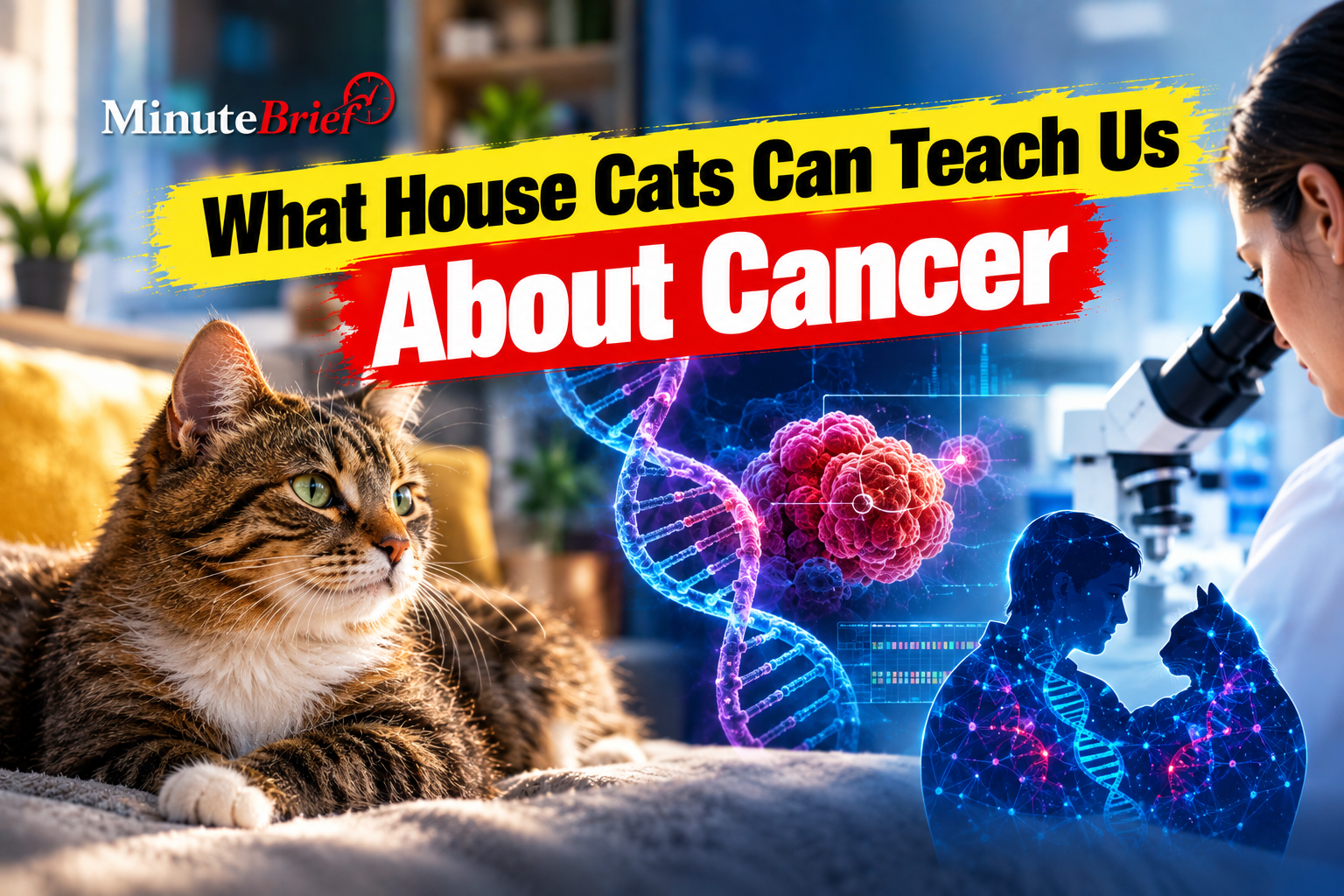
When your cat lounges in your living room, they share more than just your living space—they share your environment, breathing the same air and encountering the same household chemicals. Now, a major international study published in Science shows that cats also share striking genetic similarities with humans when it comes to cancer, opening new possibilities for precision treatments in both species.
Opening the Feline Genetic "Black Box"
Historically, medical science knew significantly less about the genetic drivers of feline cancer compared to cancers in humans or dogs. To close this gap, researchers analysed tumour samples from nearly 500 domestic cats across five countries.
Led by researchers at institutions including the University of Guelph, the Wellcome Sanger Institute, and the University of Bern, the study mapped feline cancer genetics on an unprecedented scale. They discovered that many of the key "driver genes"—the mutated genes that cause cells to grow and divide uncontrollably—are identical to those found in human tumours.
Striking Parallels in Mammary Cancer
One of the study's clearest findings involved aggressive feline mammary cancers (breast cancer in cats):
- The FBXW7 Mutation: More than 50% of the feline mammary tumours examined carried a mutation in the FBXW7 gene, which normally helps regulate cell growth.
- Human Link: In humans, mutations in the FBXW7 gene in breast cancer are similarly linked to poorer prognoses.
- Treatment Implications: Tissue tests revealed that specific chemotherapy drugs were more effective against cat mammary tumours carrying the mutated FBXW7 gene—a potential key insight for targeted therapies.
Beyond breast cancer, researchers identified genetic overlaps across blood, bone, lung, skin, gastrointestinal, and central nervous system cancers.
The "One Medicine" Approach
Because pet cats naturally develop cancer while living in the same environments as humans, studying their health offers unique insights into how everyday environmental exposures interact with genetics.
This research highlights the growing importance of the One Medicine concept—the idea that human and veterinary medicine can directly inform one another. By sharing genetic databases and treatment responses, discoveries made in feline oncology could help advance precision cancer care for pets and humans alike.